
Ethereum News Today: SEC Discusses ERC-3643 Token Standard With Crypto Industry Leaders
 Aime Summary
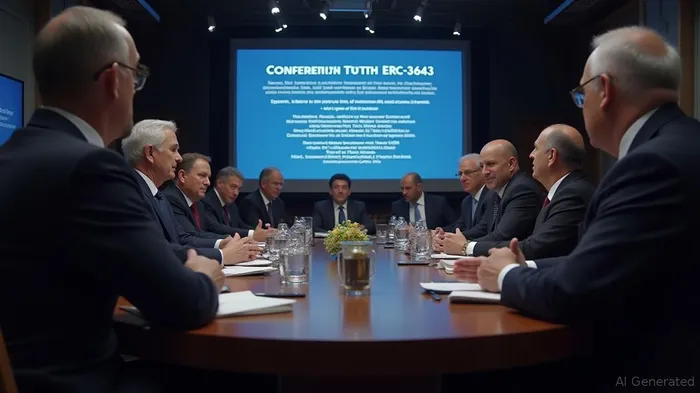
The US Securities and Exchange Commission (SEC) convened a meeting with several prominent figures from the crypto industry last Thursday to discuss ERC-3643, a proposed EthereumETH-- token standard designed to support the compliant issuance and trading of tokenized securities. The closed-door session included representatives from ChainlinkLINK-- Labs, the ERC-3643 Association, the Enterprise Ethereum Alliance, Etherealize, and the Law Firm Decentralized.
During the meeting, the SEC Crypto Task Force, along with the industry representatives, explored how the blockchain token standard ERC-3643 could address regulatory concerns related to identity, control, and compliance within the digital asset industry. Chainlink presented ERC-3643 to the SEC, proposing it as a standard that is compliant for capital markets using Ethereum’s blockchain. The standard, spearheaded by the ERC-3643 Association, incorporates built-in mechanisms to enforce regulatory requirements within tokenized securities and real-world asset (RWA) environments.
Chainlink also introduced its Automated Compliance Engine (ACE), a smart contract feature that integrates regulatory checks directly into token behavior. This technology automates identity verification, jurisdictional compliance, and transaction monitoring without compromising the decentralized nature of blockchain systems. The proposals discussed during the meeting covered several functional aspects of tokenized security laws, including identity management, compliance automation, registry maintenance, and asset control.
Dennis O’Connell, president of the ERC-3643 Association, noted that the SEC was surprisingly receptive to these concepts. “There was a noticeable shift in tone,” he said, highlighting the agency’s openness to discussions on open standards and compliance of onchain securities. O’Connell emphasized that the meeting was the result of months of quiet coordination between blockchain developers and SEC staff, indicating a collaborative effort to bring the US into leadership in this area.
O’Connell also remarked that the SEC under former chair Gary Gensler had previously overlooked the importance of open standards as used in other regulated industries like finance and telecommunications. The meeting signaled a potential change in the SEC’s approach, with a greater focus on fostering innovation and compliance within the digital asset space.
Following the meeting, SEC Chairman Paul Atkins spoke about the possibility of an “innovation exemption” from current regulations to encourage the tokenization of assets. This discussion came after the US House of Representatives passed the stablecoin-based GENIUS Act, which was subsequently signed into law by President Donald Trump. The new legislation aims to formalize the sector’s place within the financial system and could unlock more efficient payment pipelines and improve crypto-backed financial services.
Atkins mentioned that the SEC is in “mild talks” about executing regulatory exemptions to incentivize companies to experiment with blockchain-based securities. “Staff is considering what other changes may be appropriate to incentivize tokenization,” Atkins said, citing the need to create space for tokenized equity platforms. This move indicates a growing recognition within the SEC of the potential benefits of tokenization and the need for regulatory frameworks that support innovation in the digital asset industry.

Comprender rápidamente la historia y el origen de diversas monedas conocidas
Latest Articles
Stay ahead of the market.
Get curated U.S. market news, insights and key dates delivered to your inbox.


AInvest
PRO
AInvest
PRO



Comments
No comments yet