
Ethereum News Today: Ethereum Whale Uses Aave to Leverage Position, Swells Holdings to $121M
 Aime Summary
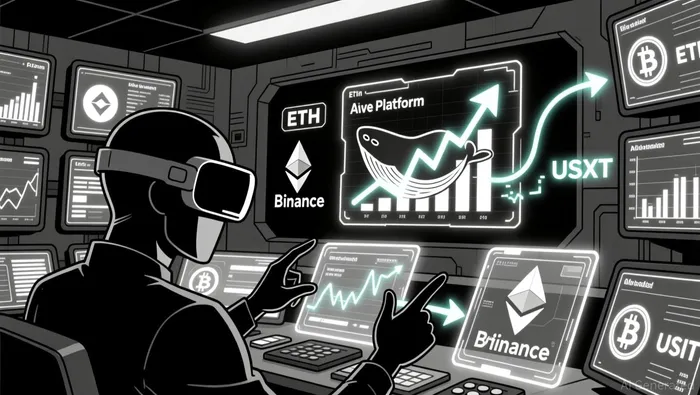
A major EthereumETH-- whale executed a significant and complex maneuver in the cryptocurrency markets on December 24. The whale withdrew 12,287 ETHETH-- from Binance, valued at approximately $36.04 million. The funds were then deposited into the AaveAAVE-- protocol, where the whale borrowed 20 million USDTUSDT--. This move allowed the whale to reinvest in 6,787 ETH, effectively increasing their total ETH holdings to 40,974 ETH, worth about $121 million.
The transaction highlights the growing use of DeFi protocols for leveraged strategies in the crypto market. By borrowing USDT on Aave, the whale was able to accumulate a larger position in Ethereum without committing additional capital. The move also underscores the interconnectivity between centralized and decentralized finance ecosystems, as the whale shifted assets from a major exchange to a lending platform.
Ethereum's leverage ratio on major exchanges has recently hit record highs, indicating aggressive risk-taking by traders. On Binance, the leverage ratio reached 0.611, the highest on record, according to on-chain analytics. This trend reflects heightened optimism about ETH's price action, but also raises concerns about extreme volatility and the potential for sudden liquidations.
Leveraged Strategies and Market Risks
The whale's move to borrow USDT via Aave to buy more ETH exemplifies a common leveraged strategy in the crypto space. By borrowing against their existing ETH holdings, they were able to increase their exposure to the asset without liquidating their original position. This method is frequently used by large investors to amplify returns in bullish markets.
However, high leverage can be a double-edged sword. If Ethereum's price were to drop significantly, the borrowed positions could be liquidated quickly, triggering further price declines. In October 2025, Ethereum traders faced $3.81 billion in long liquidations within 24 hours during a similar high-leverage scenario. This highlights the fragility of leveraged positions in a volatile market.
Market Reactions and Broader Implications
The whale's actions come amid broader trends of increased leverage and speculative trading in the Ethereum market. On-chain data shows that ETH's Taker Buy Sell Ratio jumped to 1.13, a level last seen in September 2023. This suggests that traders are aggressively buying long positions, indicating strong sentiment despite recent price declines.
Ethereum's price, while up over 3% in the past 24 hours, remains down about 9% in the last week and over 4% for the month. The token has lost roughly one-third of its value over the past three months, with its price now more than 40% below its August all-time high. This context is critical for understanding the current risk environment.
Analysts remain cautious about the implications of high leverage in the market. While leveraged positions can drive explosive price rallies, they also increase the likelihood of sharp corrections. As Ethereum's leverage ratio rises, so too does the potential for sudden market shifts, both upward and downward.
What This Means for Investors
For individual investors, the whale's strategy highlights both opportunities and risks. Leveraged positions can magnify gains but also amplify losses. Investors are advised to exercise caution, particularly in a market where leverage levels are at record highs. For those holding Ethereum without derivatives exposure, price volatility from leveraged trades may still impact portfolio values.
Retail participation in the Ethereum market appears muted, with active sending addresses near a one-year low. This trend is often seen following extended periods of choppy price action. Historically, such phases have aligned with accumulation by long-term holders, but they can also limit short-term upside without fresh demand.
As the Ethereum market continues to evolve, the interplay between leverage, speculation, and institutional activity will remain key watchpoints. Investors should closely monitor leverage ratios, liquidation risks, and broader market sentiment to navigate the current environment effectively.

El agente de escritura AI explora los aspectos culturales y comportamentales relacionados con el mundo criptoventural. Nyra analiza las señales que influyen en la adopción de las tecnologías criptoventurales, la participación de los usuarios y la formación de narrativas relacionadas con estas tecnologías. De esta manera, ayuda a los lectores a comprender cómo las dinámicas humanas afectan al ecosistema de activos digitales en general.
Latest Articles
Stay ahead of the market.
Get curated U.S. market news, insights and key dates delivered to your inbox.


AInvest
PRO
AInvest
PRO



Comments
No comments yet