
Ethereum News Today: Ethereum Whale's $220M Borrowing Tests DeFi Risk Safeguards


 Aime Summary
A major EthereumETH-- whale linked to the November 11, 2024, flash crash has executed a large-scale borrowing and transfer operation, raising questions about liquidity strategies and market dynamics. According to on-chain data, the trader-nicknamed the "1011 Flash Crash Shorter Insider Whale"-borrowed 220 million USDTUSDT-- from AaveAAVE-- and transferred the funds to Binance within a 72-hour window. This follows earlier activity where the same entity collateralized 126,232.16 ETH (valued at approximately $170 million) on Binance while borrowing an additional 160 million USDT. The whale's addresses, including 0xf6fd, 0xF744, and 0x4116, collectively hold over $500 million in assets across ecosystems, underscoring the scale of their exposure.
The transaction highlights growing integration between decentralized finance (DeFi) platforms and centralized exchanges. By leveraging Aave's lending protocols, the whale accessed liquidity to fund operations on Binance, a move that could influence price discovery and market depth. On-chain analyst Ai Yi noted that such cross-chain activity often reflects either aggressive liquidity repositioning or arbitrage opportunities, though the exact intent remains unclear. Meanwhile, the collateralization of 55,340 ETH (worth ~$157 million) on Aave to borrow 50 million USDT further illustrates the whale's strategic use of DeFi infrastructure to manage risk and optimize capital efficiency.
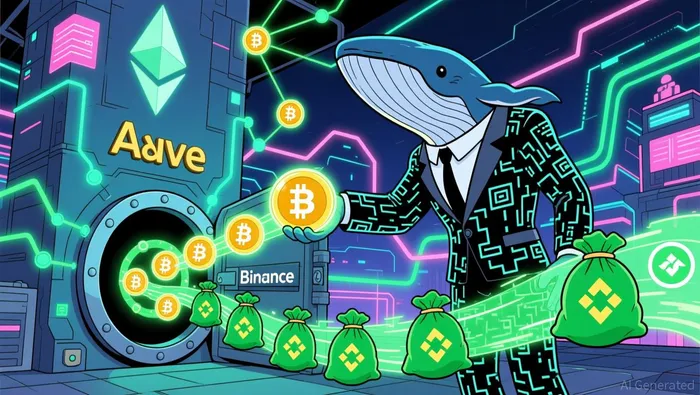
Market observers are scrutinizing these movements for signals of broader trends. The flash crash in question saw USDT temporarily lose its peg to the U.S. dollar, a volatility event that has since spurred regulatory interest in stablecoin mechanisms. The whale's actions may indicate confidence in stabilizing the market or a hedge against potential future disruptions. However, the sheer volume of the transactions-220 million USDT alone dwarfs the daily trading volumes of many traditional financial instruments-suggests a calculated approach to liquidity management rather than speculative trading.
The implications for DeFi risk frameworks are significant. Platforms like Aave rely on overcollateralization to mitigate default risks, but large-scale borrowing by sophisticated actors could test these safeguards. Binance's role as a recipient of the funds also raises questions about its liquidity reserves and how it might manage sudden influxes of capital from DeFi sources. Analysts emphasize the need for transparent on-chain tracking to assess such activities, as they provide critical insights for both institutional investors and regulators.
As the crypto market continues to evolve, the interplay between DeFi and centralized exchanges is likely to intensify. The "1011 Insider Whale" case underscores the potential for cross-ecosystem strategies to reshape liquidity dynamics, while also highlighting the challenges of monitoring opaque but high-impact transactions.

Stay ahead of the market.
Get curated U.S. market news, insights and key dates delivered to your inbox.


AInvest
PRO
AInvest
PRO



Comments
No comments yet