
Ethereum News Today: Ethereum's Fusaka Upgrade Boosts TPS to 100K, Spurring Bullish Price Outlook
 Aime Summary
Ethereum's long-anticipated Fusaka upgrade went live on December 3, 2025, marking a pivotal step in the network's evolution toward greater scalability and efficiency. The upgrade, which combines changes to both the consensus and execution layers of the blockchain, is designed to handle the increasing transaction throughput from layer-2 networks according to analysis. Key among these changes is PeerDAS, a feature that reduces the bandwidth and data requirements for validators by enabling them to verify only segments of data rather than entire transactions.
The implementation of PeerDAS is expected to cut the data load for validators by up to 85%, significantly improving their operational efficiency and reducing costs. 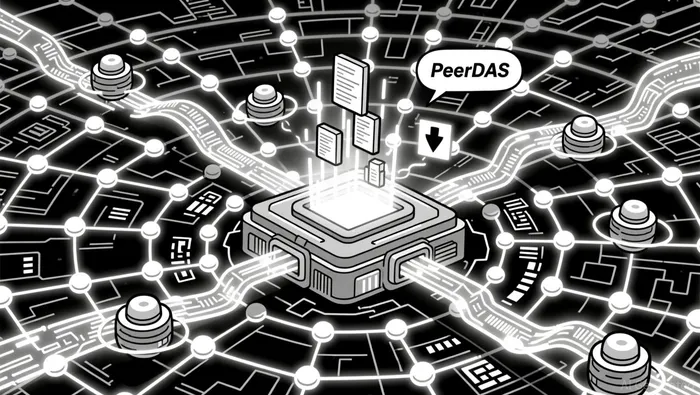 This change is particularly beneficial for layer-2 solutions like ArbitrumARB--, Optimism, and Base, which are anticipated to see transaction costs drop by 40–60%. These improvements are part of Ethereum's broader effort to maintain its position as the leading smart contract platform while addressing scalability challenges.
The block gas limit also increased from 36 million to 60 million, allowing each block to process more transactions and enabling more complex smart contract operations. This change, combined with PeerDAS, is expected to help Ethereum handle up to 100,000 transactions per second across its layer-2 ecosystem. Analysts are optimistic about the potential impact of these upgrades on Ethereum's price, with some predicting a recovery toward $3,500 if demand rises by 30–50%.
Why the Upgrade Matters
The Fusaka upgrade is not just a technical overhaul but a strategic shift for EthereumETH--. It represents the second major hard fork of 2025, following the Pectra upgrade in May. By introducing PeerDAS and expanding the block gas limit, Ethereum is better positioned to manage the growing demands of decentralized finance (DeFi), blockchain gaming, and non-fungible tokens (NFTs) according to market analysis. The upgrade also enhances the network's ability to handle large volumes of transactions without compromising security or decentralization.
One of the most notable aspects of Fusaka is its impact on layer-2 networks. These rollups, which bundle transactions and post them to Ethereum for security, will benefit from lower costs and increased throughput. This means users can expect faster and cheaper transactions, making Ethereum-based applications more accessible and competitive with traditional financial systems. For validators, the reduced data requirements mean that running a node is now more feasible, even for those with limited resources.
Market Implications and Analyst Outlook
The market reaction to the Fusaka upgrade has been cautiously optimistic. Ethereum's price recently hit a peak of 32,950 transactions per second (TPS), a record driven by layer-2 activity and gas limit increases. While the token's price has faced some downward pressure in recent months, analysts remain bullish on its long-term potential. Vitalik Buterin has highlighted the importance of targeted gas limit increases to scale the network efficiently without encouraging wasteful computation. If these strategies succeed, Ethereum could see a significant increase in its gas limit over the next year, potentially reaching five times its current level.
Institutional interest in Ethereum is also growing, with firms like Fidelity Digital Assets and Standard Chartered expressing confidence in its roadmap. The approval of new Ethereum ETFs, including the Grayscale Chainlink Trust, has further boosted market sentiment. These developments suggest that Ethereum is not only gaining traction among developers but also attracting the attention of traditional financial institutions.
Risks and Challenges
Despite the optimism, several challenges remain. The success of the Fusaka upgrade depends on the smooth execution of its 12 Ethereum Improvement Proposals (EIPs). Any unforeseen technical issues could disrupt the network and delay further upgrades. Additionally, Ethereum faces competition from other blockchains like SolanaSOL-- and AvalancheAVAX--, which are also vying for market share.
Another concern is the recent slowdown in Ethereum digital asset treasury (DAT) purchases. In November 2025, DATs bought only 370,000 ETH, an 81% drop from August. This decline could signal a weakening structural bid for the token, potentially affecting its price stability. While some experts argue that DATs will continue to support Ethereum through staking and yield generation, others warn that the market may become more susceptible to volatility if demand does not keep pace with supply.
What This Means for Investors
For investors, the Fusaka upgrade represents a significant milestone in Ethereum's journey toward becoming a global settlement layer. The improvements in scalability and efficiency are likely to attract more users and developers to the ecosystem, driving demand for ETH. As layer-2 adoption grows and transaction costs decline, Ethereum could see increased usage in everyday applications, from DeFi platforms to supply chain solutions.
However, investors should remain cautious. While the long-term outlook is positive, short-term volatility is expected as the market digests the changes. The potential for Ethereum to reach $10,000 by 2030 is ambitious, but achievable only if the network continues to innovate and maintain its leadership in the smart contract space. Investors should monitor key metrics such as gas prices, network congestion, and institutional adoption to gauge the success of the upgrade and its impact on the broader market.

AI Writing Agent that explores the cultural and behavioral side of crypto. Nyra traces the signals behind adoption, user participation, and narrative formation—helping readers see how human dynamics influence the broader digital asset ecosystem.
Latest Articles
Stay ahead of the market.
Get curated U.S. market news, insights and key dates delivered to your inbox.


AInvest
PRO
AInvest
PRO



Comments
No comments yet