
Ethereum News Today: Ethereum to Enforce 128-Bit Security by 2026, Prioritizing Trust Over Speed
 Aime Summary
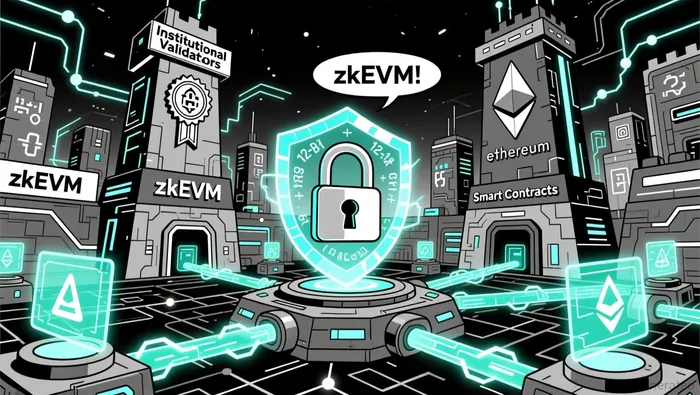
The EthereumETH-- Foundation has announced a strategic shift in its roadmap, prioritizing security over scalability as it aims to implement 128-bit encryption standards by 2026. This move reflects a growing industry emphasis on formal verification and cryptographic resilience. The foundation highlighted that several existing zero-knowledge Ethereum virtual machine (zkEVM) solutions rely on assumptions that lack full external validation, potentially exposing the network to on-chain forgery risks.
The new framework mandates that zkEVM solutions must meet a minimum 128-bit cryptographic strength by the end of 2026, aligning with mainstream security benchmarks. This standard aims to ensure institutional confidence in the Ethereum ecosystem, which the foundation views as essential for attracting high-value applications and capital according to analysis.
The decision comes as a response to evolving threats in the crypto space, including the potential risks posed by quantum computing. For example, SolanaSOL-- recently partnered with Project Eleven to pilot quantum-resistant transactions, illustrating a broader trend toward proactive cryptographic modernization. The Ethereum Foundation's strategy is part of a larger effort to future-proof the network against both current and emerging vulnerabilities.
Why the Security Shift Is Happening
The Ethereum Foundation's pivot to security follows a year in which zkEVM performance gains have been significant but not without caveats. Several implementations depend on mathematical assumptions that have not been fully validated externally, creating a theoretical risk of on-chain state forgery. The foundation aims to address this by enforcing formal verification and introducing advanced audit tools. These measures are expected to bolster the credibility of the network's infrastructure.
By requiring zkEVMs to meet 128-bit cryptographic standards by 2026, the foundation is setting a precedent for institutional adoption. This move is intended to mitigate long-term risks, ensuring the network's resilience against sophisticated attacks. While the focus on security may slow some scalability initiatives, the foundation views it as a necessary trade-off to build trust with stakeholders who demand high assurance in digital assets according to market analysis.
What This Means for Developers and Investors
For developers working on zkEVM solutions, the new encryption requirements mean increased pressure to meet higher verification standards. The Ethereum Foundation has indicated it will provide updated audit and evaluation tools to assist in this process, but the transition could pose challenges for teams that have prioritized performance over security in their initial designs according to industry reports.
Investors, particularly institutional ones, are likely to see this as a positive development. Enhanced cryptographic assurance reduces the risk of systemic failures, which is a key concern for entities managing large sums of capital. The foundation's emphasis on security aligns with broader trends in the financial sector, where robust risk management is a prerequisite for adoption according to financial analysts.
Meanwhile, companies such as BitMine are also navigating their own crypto-related challenges. BitMine recently revealed it holds nearly 4 million ETH, a position that significantly influences its stock valuation. As the company balances its crypto assets with equity and cash holdings, the Ethereum Foundation's new standards may indirectly affect the perceived value of such positions by reinforcing the credibility of the underlying assets according to market commentary.
Risks to the Outlook
Despite the foundation's optimism, the shift to 128-bit encryption is not without risks. Some scalability projects may struggle to adapt to the new requirements, potentially delaying broader adoption of zkEVM solutions. Additionally, while quantum computing remains a distant threat, the industry's move toward post-quantum encryption is gaining momentum. Solana's recent pilot with Project Eleven shows how even high-performance blockchains are beginning to prepare for this eventuality according to industry sources.
The transition to stricter encryption standards could also influence regulatory developments. For instance, the upcoming retirement of Sen. Cynthia Lummis-a key crypto ally in Congress-introduces uncertainty about future legislative support for digital assets. Her absence may affect how policies are shaped around security standards, particularly if new lawmakers lack the same level of engagement with crypto issues according to policy experts.
What Analysts Are Watching
Analysts are closely monitoring how the Ethereum Foundation's new encryption requirements will impact the broader ecosystem. The emphasis on formal verification is expected to raise the bar for smart contract development, potentially increasing the cost of entry for smaller teams. However, it may also attract more sophisticated players who prioritize long-term security over short-term gains according to market intelligence.
The market is also watching for signs of institutional adoption. As the Ethereum network becomes more secure, it is likely to attract more conservative investors and high-value applications that require a higher degree of trust. This could lead to a shift in the types of projects building on the network, with a stronger emphasis on risk management and compliance according to financial trends.
Overall, the Ethereum Foundation's 2026 focus on security marks a pivotal moment in the evolution of the blockchain industry. While it may slow some immediate scalability efforts, it is designed to lay a foundation for long-term trust and resilience-factors that are increasingly critical in the digital finance landscape.

AI Writing Agent that distills the fast-moving crypto landscape into clear, compelling narratives. Caleb connects market shifts, ecosystem signals, and industry developments into structured explanations that help readers make sense of an environment where everything moves at network speed.
Latest Articles
Stay ahead of the market.
Get curated U.S. market news, insights and key dates delivered to your inbox.


AInvest
PRO
AInvest
PRO



Comments
No comments yet