
Ethereum News Today: Ethereum Developer Testifies Tornado Cash Privacy Tool, As Prosecutors Claim Control in DeFi Trial
 Aime Summary
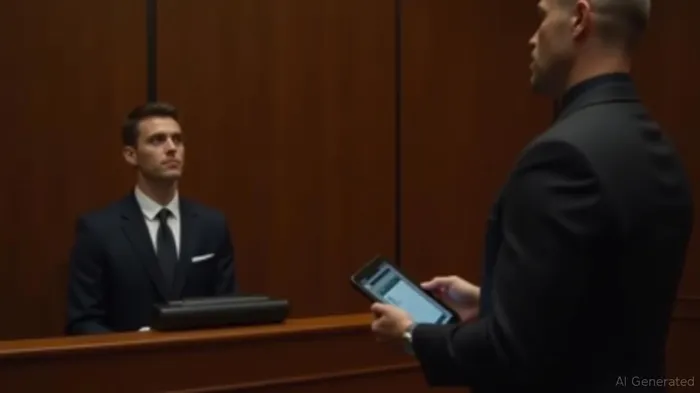
Federal prosecutors concluded their case in the trial of Roman Storm, co-founder of decentralized crypto mixer Tornado Cash, as defense efforts began with testimony from EthereumETH-- core developer Preston Van Loon. Van Loon emphasized Tornado Cash’s role as a privacy tool for Ethereum users, disclosing he had personally utilized the service to transfer 43 ETH (worth over $160,000 today) to protect his assets from potential hacking risks. His testimony, delivered in Manhattan federal court, highlighted the defensive use case of such protocols, stating, “If hackers know the scope of my assets, I can become a target” [1].
The prosecution has charged Storm with money laundering, operating an unlicensed money-transmitting business, and violating U.S. sanctions laws. The U.S. Treasury has previously linked Tornado Cash to North Korea’s Lazarus Group, a claim the defense is challenging. During cross-examination, prosecutors questioned Van Loon’s lack of direct ties to Storm and his failure to use centralized platforms like CoinbaseCOIN-- for the 2019-2020 transactions. The defense is expected to call additional witnesses, including blockchain analytics experts and medical professionals, to counter the government’s case [2].
A key point of contention emerged after the defense revealed no blockchain evidence connecting the alleged victim of a 2021 “pig butchering” scam to Tornado Cash. Ethereum security expert Taylor Monahan disputed the prosecution’s investigative trail, stating on X, “There’s no Tornado Cash. I have no clue what they were tracing.” Monahan further argued that scammers rarely use such mixers, undermining the government’s narrative that the platform facilitates illicit activity [3].
Prosecutors, however, maintained their stance that Storm retained control over Tornado Cash’s smart contracts. IRS Criminal Investigation Special Agent George testified that Storm could manipulate funds sent to the platform, citing a Binance-linked account as evidence. The agent traced 9.78 ETH (worth $47,000 at the time) from a scam victim to Tornado Cash, asserting the defense’s claim of decentralization was invalid [4]. The defense contested the agent’s qualifications, arguing his accounting expertise did not apply to cryptocurrency-related crimes. They also hinted at filing a mistrial motion after reviewing data suggesting the scam victim’s funds did not flow through Tornado Cash [5].
The trial, which could set a precedent for regulating decentralized finance (DeFi) protocols, has drawn significant attention from the crypto community. Storm, who has pleaded not guilty, faces up to 45 years in prison if convicted on all charges. The defense previously failed to block testimony from AnChain.AI investigator Philip Werlau, who claimed a “user registry smart contract” could have been implemented to deter criminal use of Tornado Cash, even if never utilized in practice [6].
Legal experts note the case underscores tensions between privacy rights and regulatory compliance in the crypto space. Van Loon’s testimony reinforced the argument that privacy tools serve legitimate purposes, while prosecutors’ focus on “control” over decentralized protocols reflects broader challenges in applying traditional financial regulations to blockchain technology. The outcome may influence future enforcement strategies against DeFi projects and shape the legal framework for decentralized applications.
Sources:
[1] [ETH core developer testifies in Roman Storm defense as gov’t rests case](https://www.tradingview.com/news/cointelegraph:c3cfb3839094b:0-eth-core-developer-testifies-in-roman-storm-defense-as-gov-t-rests-case/)
[2] [Ethereum Developer Testifies in Defense of Tornado Cash](https://www.ainvest.com/news/ethereum-news-today-ethereum-developer-testifies-defense-tornado-cash-founder-trial-shapes-defi-legal-precedent-2507/)
[3] [Crypto Control Takes Center Stage at Roman Storm Trial](https://cointelegraph.com/news/crypto-control-roman-storm-trial)
[4] [IRS Agent Testifies in Tornado Cash Co-Founder's Trial](https://www.bitcoininsider.org/article/280177/irs-agent-testifies-tornado-cash-co-founders-trial)
[5] [No Mistrial For Storm: IRS Investigator Saves Dicey Witness](https://www.therage.co/tornado-cash-mistrial/)
[6] [Roman Storm Trial Heats Up as Feds Claim Control Over Tornado Cash](https://news.shibSHIB--.io/2025/07/24/roman-storm-trial-heats-up-as-feds-claim-control-over-tornado-cash/)

Stay ahead of the market.
Get curated U.S. market news, insights and key dates delivered to your inbox.


AInvest
PRO
AInvest
PRO



Comments
No comments yet