
Ethereum News Today: DOJ Trial of Tornado Cash Founder Sparks DeFi Regulation Debate Over Privacy Tech Accountability
 Aime Summary
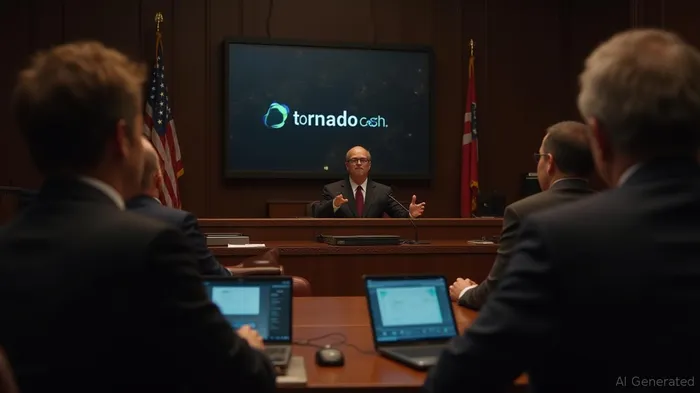
The U.S. Department of Justice (DOJ) trial of Roman Storm, co-founder of the Ethereum-based privacy tool Tornado Cash, has intensified debates over the regulatory future of decentralized finance (DeFi) and privacy-enhancing technologies. Charged with conspiracy to commit money laundering, Storm faces scrutiny for his role in developing a protocol prosecutors allege facilitated illicit transactions, including those linked to North Korea’s Lazarus Group. The case underscores growing tensions between advocates of financial privacy and regulators seeking to combat money laundering through decentralized tools [1].
Storm’s defense asserts that Tornado Cash operates as neutral technology akin to virtual private networks (VPNs), emphasizing its decentralized nature and the absence of centralized control. “Smart contracts are not property,” he stated, arguing that prosecuting open-source protocols could set a precedent that stifles innovation in DeFi [2]. The DOJ, however, contends that the platform’s ability to obscure transaction trails poses risks to financial oversight, framing the trial as a test of accountability in decentralized systems.
The legal battle has ripple effects across the crypto ecosystem. Investors and developers are recalibrating strategies amid heightened regulatory uncertainty. Dragonfly Capital, a venture firm that invested in Tornado Cash’s developers, is under DOJ scrutiny, signaling a shift toward targeting not just individuals but also entities supporting privacy-focused tools. Tom Schmidt of Dragonfly Capital warned of a “chilling effect” on innovation, noting that such actions could deter early-stage crypto investment [3].
Market reactions highlight the stakes. Ether (ETH), the primary asset used on Tornado Cash, has faced volatility as the trial unfolds. Privacy-related DeFi projects now operate under greater regulatory vigilance, prompting cautious investor behavior. Meanwhile, the Ethereum Foundation’s $750,000 contribution to Storm’s legal defense—part of a broader $3.2 million grassroots fundraising effort—reflects community concerns over the case’s implications for decentralized finance’s future [4].
Regulators and industry stakeholders are calling for balanced frameworks. Legal experts stress the need for clarity in compliance requirements, urging policymakers to address illicit activity without stifling open-source development. The trial’s outcome could reshape innovation paths, with potential outcomes including stricter regulations on privacy tools or a reinforced legitimacy for decentralized protocols [5].
Critics of the DOJ’s approach argue that existing legal frameworks are ill-suited for decentralized technologies, pointing to gaps in evidence analysis and procedural fairness. Defense experts have challenged the prosecution’s case, emphasizing the inherent complexity of applying traditional legal principles to blockchain-based systems [6].
As the trial progresses, crypto startups are prioritizing compliance strategies to navigate an evolving regulatory landscape. The case has amplified calls for guidelines that distinguish between malicious activity and legitimate privacy tools, with stakeholders advocating for a nuanced approach to accountability. The broader implications extend beyond Tornado Cash, shaping how regulators, developers, and investors balance privacy, compliance, and innovation in the digital financial system.
Source:
[1] [The Tornado Cash Trial: A Defining Moment for ...] [https://www.onesafe.io/blog/tornado-cash-trial-roman-storm-crypto-privacy]
[2] [Is the Tornado Cash Trial a Landmark Moment for ...] [https://www.onesafe.io/blog/tornado-cash-trial-developer-implications]
[3] [Roman Storm's Fundraising Reaches $3.2M Amid DOJ ...] [https://www.ainvest.com/news/roman-storm-fundraising-reaches-3-2m-doj-tornado-cash-money-laundering-trial-2507/]
[4] [DOJ Weighs Charges Against Dragonfly Over Tornado ...] [https://www.ainvest.com/news/doj-weighs-charges-dragonfly-tornado-cash-investment-crypto-regulation-tightens-2507/]
[5] [Roman Storm's Trial Could Shape the Future of ...] [https://news.ssbcrack.com/roman-storms-trial-could-shape-the-future-of-cryptocurrency-privacy-and-regulation/]
[6] [Defense expert pushes back on US analysis in Tornado ...] [https://www.mlex.com/mlex/financial-crime/articles/2370303/defense-expert-pushes-back-on-us-analysis-in-tornado-cash-co-founder-s-trial]

Stay ahead of the market.
Get curated U.S. market news, insights and key dates delivered to your inbox.


AInvest
PRO
AInvest
PRO



Comments
No comments yet