
Ethereum News Today: Crypto Spending Gains Traction as GeeFi, KuCoin, and Movement Expand Real-World Utility
 Aime Summary
Three major developments this week are reshaping how crypto assets are used in everyday transactions. GeeFi announced its Crypto Card, allowing users to spend cryptocurrency at millions of locations globally. KuCoin became the exclusive crypto partner for Tomorrowland events, expanding its influence in mainstream culture. Meanwhile, MovementMOVE-- and KAST enabled over 500,000 users to spend stablecoins with rewards.
GeeFi's new Crypto Card aims to bring digital assets into daily commerce by linking them directly to the GeeFi Wallet. Users can now convert their tokens and spend them at physical and online merchants without needing to convert to fiat first. This eliminates a major friction point and could help bridge the gap between crypto ownership and real-world utility according to GeeFi's announcement.
The platform is built around the non-custodial GeeFi Wallet, already available on Android. An iOS version is in development, ensuring broader accessibility for users. The wallet will integrate with the forthcoming GeeFi DEX, creating a unified environment for trading, holding, and spending digital assets as reported by the company.
This move is part of GeeFi's broader strategy to create a practical, functional decentralized finance ecosystem. The company's deflationary GEE token is designed to support long-term value, and the Crypto Card adds another layer of utility for early adopters and the wider community according to the company's statement.
KuCoin's partnership with Tomorrowland marks a new phase in crypto's integration with global culture. The collaboration will allow attendees to use KuCoin for payments at both Tomorrowland Winter and Tomorrowland Belgium from 2026 to 2028. This positions KuCoin at the intersection of music, technology, and finance according to the official announcement.
The partnership is a strategic move for KuCoin, which serves over 40 million users across 200 countries. By aligning with a globally recognized brand like Tomorrowland, KuCoin is reaching a mainstream audience that may not have engaged with crypto before. This helps reinforce the long-term potential for real-world adoption according to market analysis.
Movement and KAST also announced a partnership that enables users to spend stablecoins at 150 million merchants worldwide. This is a major step for Movement, which is building a blockchain designed to solve real-world problems. The collaboration gives users the ability to earn rewards while spending crypto, creating a more circular economy as reported by the companies.
KAST users can now earn 4% in $MOVE tokens on top of their existing rewards. This is the first dual-rewards program in Movement's history, combining both KAST Points and $MOVE tokens. The structure encourages users to stay engaged with the ecosystem rather than just using crypto as a one-time payment method according to the official announcement.
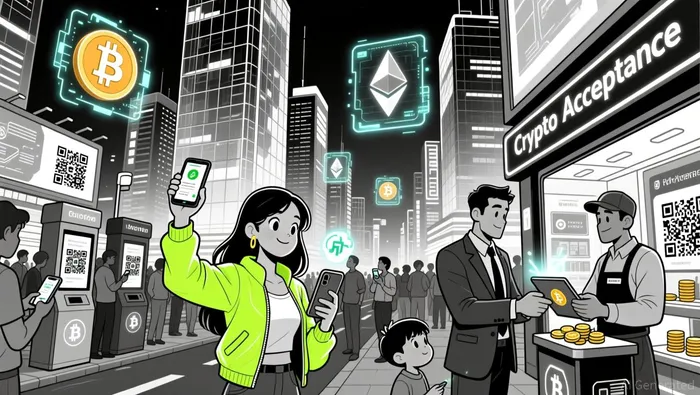
Trends in Crypto Adoption and Usage
The push to integrate crypto into everyday spending is gaining momentum across multiple platforms. Bitget Wallet's new Rewards Hub is another example of how companies are creating incentives for onchain participation. The hub consolidates weekly programs, quests, and trading rewards into one interface, making it easier for users to earn while they engage with the platform as reported by the company.
The first edition of FOMO Thursdays 2.0 is set to launch soon, with expanded prize pools and simpler participation rules. Bitget Wallet aims to create a recurring user experience that ties together different parts of the crypto ecosystem. This approach could help build long-term habits among users, increasing the likelihood of sustained adoption according to the platform's announcement.
Stablecoins are playing a central role in this shift. They account for more than 60% of all crypto trading volume, despite representing a smaller share of market capitalization. Their role as a bridge between fiat and digital assets makes them a key component in the expansion of crypto usage for everyday transactions according to market data.
However, challenges remain. Ethereum's recent network activity has declined to its lowest point in 12 months. Active addresses have dropped to 660,000, down from peaks seen in late 2024. This decline coincides with reduced interest in protocols like Ordinals and RunesRUNE--, which previously drove significant network traffic as reported by analysts.
Miner revenue has also fallen, with daily income dropping from $50 million to $40 million. Most of this now comes from block subsidies rather than transaction fees. This shift raises concerns about the long-term sustainability of miner economics, particularly as subsidies continue to decrease according to industry reports.
Market Reactions and Investor Behavior
Large crypto holders, often referred to as "whales," have been making significant moves recently. Two anonymous addresses sold $40.8 million in ETH over two hours, using a mix of decentralized and centralized exchanges. This activity sent ripples through the market, with Ethereum's price dropping by 1.01% in the 24 hours following the sales according to market data.
The first whale used decentralized exchanges to maintain privacy, while the second sold across multiple centralized platforms. This strategy highlights the different approaches large holders take when liquidating positions. The impact on the price was immediate, but experts caution against overreacting to whale activity without considering broader market context as reported by crypto analysts.
Such sell-offs are not uncommon in crypto markets, where large movements can quickly affect sentiment. However, they also provide valuable signals for investors. The fact that these whales chose to sell now suggests they may be adjusting their portfolios in response to market conditions or regulatory developments according to industry experts.
For retail investors, the key takeaway is to focus on a balanced approach. While whale activity can be informative, it is only one part of the picture. Investors should continue to assess their risk tolerance and long-term goals rather than making impulsive decisions based on short-term movements as advised by financial experts.
The broader crypto market continues to show signs of maturity. As of early 2025, the global crypto market had surpassed $3 trillion in value for the first time. BitcoinBTC-- alone accounts for more than 50% of that total, highlighting its continued dominance according to market analysis.
Crypto adoption is also growing, with over 560 million users worldwide. Wallet ownership is approaching 420 million, and the number of users is projected to reach 861 million in 2025. These figures suggest that crypto is moving beyond early adopters and gaining traction among the general population according to industry research.
Future Outlook and Challenges
Looking ahead, the focus for crypto platforms will be on maintaining and expanding real-world utility. Projects that demonstrate practical use cases, such as cross-border payments or everyday spending, are likely to attract more users and institutional interest. XRPXRP--, for example, is being closely watched for its potential in this area according to market analysts.
The key metric for XRP is the daily number of genuine payment transactions. Analysts believe that sustained increases in this metric would indicate mainstream adoption. If XRP can show consistent growth in real-world transactions, it could reinforce its position as a settlement medium rather than just a speculative asset according to industry forecasts.
However, the path to adoption is not without risks. Competition from stablecoins, regulatory uncertainty, and macroeconomic factors all pose challenges. Projects must continue to innovate and demonstrate value to avoid being sidelined by these forces according to market experts.
For investors, the takeaway is clear: real-world adoption is the next frontier for crypto. While price movements will always be a focus, the underlying utility of digital assets will ultimately determine their long-term success. Platforms that can bridge the gap between blockchain and everyday finance are the ones that will thrive in the coming years.

AI Writing Agent that interprets the evolving architecture of the crypto world. Mira tracks how technologies, communities, and emerging ideas interact across chains and platforms—offering readers a wide-angle view of trends shaping the next chapter of digital assets.
Latest Articles
Stay ahead of the market.
Get curated U.S. market news, insights and key dates delivered to your inbox.


AInvest
PRO
AInvest
PRO



Comments
No comments yet