
Ethereum Navigates Layer-2 Growth, 2026 Protocol Updates, and Structural Price Reversal Signs
 Aime Summary
Ethereum faces a structural shift as Layer-2 rollups drive activity away from mainnet transactions, reducing fee revenue but reinforcing Ethereum's role as a secure settlement layer according to analysis. A 2026 protocol update is underway to improve scalability, user experience, and network security, including quantum-resistant cryptography. Recent price movements suggest a potential reversal with collapsing selling pressure and accumulating activity from long-term holders as reported.
Ethereum is at a critical crossroads as Layer-2 solutions like ArbitrumARB--, Optimism, and Base continue to attract user activity. This migration reduces Ethereum's mainnet transaction volume and fee capture, creating a paradox: while L1 revenue declines, the network's security and data availability remain central to the broader ecosystem according to analysis. The shift is also reinforcing Ethereum's role as a decentralized base layer, with each L2 relying on EthereumETH-- for final settlement.
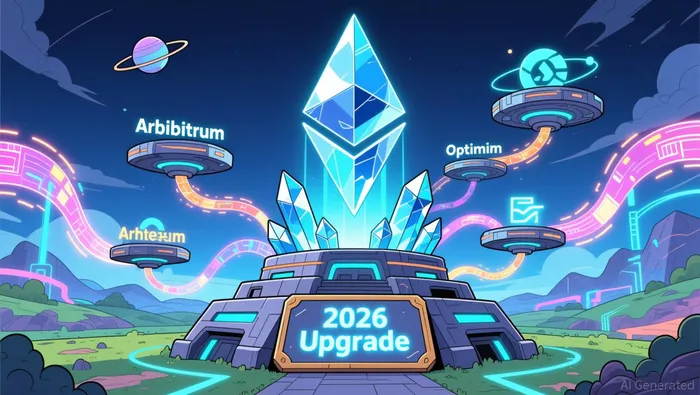
The 2026 protocol update aims to address scalability and usability challenges. Gas limit expansions, zkEVM attester clients, and quantum-resistant cryptography are among the key upgrades as detailed. Vitalik Buterin has emphasized the need for mainnet improvements to align Ethereum's value with broader economic growth. These upgrades are expected to enhance onboarding, wallet interactions, and censorship resistance while reducing centralization risks.
Structural on-chain metrics show early signs of a potential price reversal. Selling pressure has dropped nearly 90%, and long-term holders are returning to accumulate ETHETH-- according to market data. Derivatives sentiment has turned bearish without significant new short positions, indicating a pause in aggressive bearish activity. Price action has broken above key support levels and is testing resistance at $1,920 and $2,020. A successful breakout could accelerate Ethereum's price toward $2,200 and beyond.
What Structural Shifts Are Redefining Ethereum's Role in the Ecosystem?
The growing adoption of Layer-2s is reshaping Ethereum's value proposition. While mainnet activity is declining, the broader ecosystem is expanding, with L2s offering cheaper and faster transaction experiences for DeFi, gaming, and other use cases according to analysis. This decentralization of activity presents a dual challenge: Ethereum must maintain its dominance in security and settlement while adapting to a world where most transactions occur off-chain. The Ultrasound Money thesis is also evolving, as fee burn depends increasingly on real-world usage rather than speculative on-chain activity.
The 2026 protocol update is expected to address some of these challenges. By expanding gas limits and integrating zkEVM attester clients, Ethereum aims to reduce block-building centralization and improve scalability as detailed. These upgrades will also enhance user experience through better onboarding and wallet interactions. Vitalik Buterin has stressed that mainnet improvements are essential to align Ethereum's value with broader economic growth, rather than relying solely on Layer-2 activity.
How Are Institutional and Retail Investors Responding to Ethereum's Shifts?
Institutional adoption is slowly increasing through ETFs and staking products, but retail investors remain cautious due to past volatility according to analysis. The recent price reversal has attracted long-term holders who are accumulating ETH after weeks of selling. Derivatives traders have turned bearish, but funding rates and open interest have not shown significant new shorting activity, indicating a pause in aggressive bearish sentiment according to market data.
Retail sentiment is also influenced by Layer-2 dynamics and protocol upgrades. While the mainnet may not be the primary transaction layer, its role as a secure settlement layer is critical for maintaining trust in the ecosystem. Institutional adoption is also being driven by regulatory clarity and improved compliance standards, as seen in the FYUSD stablecoin initiative led by BitGo and New Frontier Labs according to industry reports.
What Are the Key Risks and Opportunities for Ethereum in 2026?
Ethereum faces several challenges, including low fee metrics, U.S. regulatory delays, and centralization risks from large staking entities as detailed. The success of the 2026 protocol update will depend on execution, as structural upgrades in Layer-2s will be essential to drive ETH burn and strengthen fee dynamics before the token sees significant price recovery. Vitalik Buterin has acknowledged that mainnet improvements must align with broader economic growth, rather than relying on speculative on-chain activity.
Opportunities include a potential price rebound driven by returning long-term holders and structural factors like collapsing selling pressure according to market analysis. A breakout above $2,060 could accelerate Ethereum's price toward $2,200 and potentially $2,420. However, if Ethereum fails to hold the $1,840 support level, the downward target could be around $1,740. These combined factors suggest the current bounce has stronger structural support and may be the early stage of a larger move.
Quantum-resistant cryptography and improved scalability are also expected to future-proof the network, making it more resilient to long-term threats as detailed. These upgrades could enhance Ethereum's appeal to institutional investors and drive broader adoption across industries like finance, gaming, and social tokens. The 2026 protocol update represents a pivotal moment in Ethereum's evolution, with the potential to redefine its role in the digital asset ecosystem.

Blending traditional trading wisdom with cutting-edge cryptocurrency insights.
Latest Articles
Stay ahead of the market.
Get curated U.S. market news, insights and key dates delivered to your inbox.


AInvest
PRO
AInvest
PRO



Comments
No comments yet