
Ethereum Market Context As Hyperliquid And Just Execute Deflationary Buybacks
 Aime Summary
Digital asset markets are witnessing a resurgence of aggressive tokenomics strategies aimed at reducing circulating supply. Hyperliquid recently executed a net deflationary event on April 9, 2026, driven by buybacks that exceeded validator rewards. Simultaneously, the JUST platform on TRONTRX-- reported a total locked value of $11.01 billion while continuing its JSTJST-- token burn mechanism. These developments occur as EthereumETH-- investors monitor supply dynamics across the broader decentralized finance landscape.
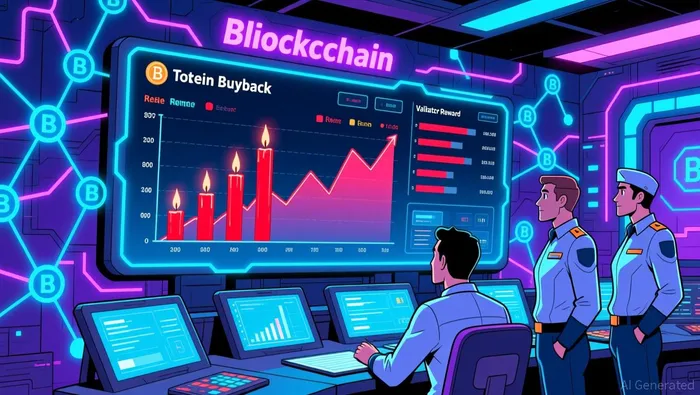
The Hyperliquid protocol removed 15,663 HYPE tokens from circulation using funds generated directly from trading fees. This specific mechanism ensures that buyback volumes outpace the issuance of new tokens to validators. Such a supply reduction strategy is designed to strengthen the token's value proposition against demand generated by trading activity. The event marks a significant shift in how derivatives platforms manage their native asset economics.
In parallel, the JUST platform on TRON has solidified its position as a core pillar of the ecosystem with robust growth metrics. The platform now accounts for 41.96% of the total TRON DeFi ecosystem's locked value. Concurrently, cumulative JST burns have exceeded 1.08 billion tokens, representing over 10% of the total supply. This ongoing deflationary effect is intended to strengthen the token's value foundation through sustained supply reduction.
How Do Fee-Driven Buybacks Influence Token Supply Dynamics?
The implementation of buybacks funded by trading fees represents a direct correlation between protocol revenue and token scarcity. Hyperliquid's April 9 event demonstrated that when fee revenue exceeds validator rewards, the net token supply contracts. This creates a deflationary pressure that can theoretically support price appreciation if demand remains constant. The mechanism effectively transfers value from active traders to token holders by reducing the total available supply.
For the JUST platform, the buyback and burn mechanism has been operating steadily alongside high utilization rates. The cumulative burn of 1.08 billion tokens accounts for 10.96% of the total supply, significantly altering the token's distribution. This approach provides support for long-term development by aligning token scarcity with platform usage. The combination of high locked value and active supply reduction creates a distinct economic model compared to inflationary issuance structures.
What Are The Implications For Broader Ethereum Ecosystem Liquidity?
While these deflationary events occur on alternative chains, they influence liquidity flows within the broader Ethereum ecosystem. Investors often compare tokenomics across Layer 1s and DeFi protocols to assess relative value and risk. The success of Hyperliquid and JUST mechanisms may encourage similar strategies among other decentralized platforms. This competitive dynamic could lead to a wider adoption of fee-backed buyback models across the industry.
The total locked value on JUST reaching $11.01 billion highlights the growing capital allocation in non-Ethereum DeFi solutions. As capital moves between ecosystems, the supply dynamics of native tokens become a key metric for valuation. Ethereum-based assets may face increased scrutiny regarding their own supply issuance rates in response to these competitor actions. Market participants are closely watching how these supply reductions impact trading volumes and price stability.
Which Risks Limit The Effectiveness Of Token Burn Strategies?
Despite the apparent benefits of supply reduction, several risks limit the long-term effectiveness of these strategies. The sustainability of buybacks depends entirely on continued high trading fees and platform revenue generation. If trading volumes decline, the funding available for buybacks may evaporate, halting the deflationary process. This reliance on market activity creates a cyclical dependency that can amplify volatility during downturns.
Furthermore, the concentration of supply reduction in specific platforms may not translate to broad market stability. The JUST platform's 10.96% supply reduction is significant but isolated to the TRON ecosystem. Investors must consider whether these localized deflationary events can sustain value against broader macroeconomic headwinds. The effectiveness of these mechanisms also depends on sustained user adoption and the absence of regulatory interventions.
The April 9 deflationary event on Hyperliquid serves as a case study for how protocols can actively manage their tokenomics. By executing buybacks that exceed validator rewards, the protocol directly impacts supply dynamics. Similarly, the JUST platform's steady burn mechanism demonstrates a long-term approach to value preservation. These examples provide a framework for evaluating supply-side strategies in the evolving digital asset market.
As the market evolves, the interplay between trading activity and token supply will remain a critical area of analysis. The success of these mechanisms relies on maintaining high levels of engagement and revenue generation. Investors should monitor how these strategies develop and whether they can withstand periods of reduced market activity. The broader implications for Ethereum and other major assets will depend on the scalability of these models across different chains.

Blending traditional trading wisdom with cutting-edge cryptocurrency insights.
Latest Articles
Stay ahead of the market.
Get curated U.S. market news, insights and key dates delivered to your inbox.


AInvest
PRO
AInvest
PRO



Comments
No comments yet