
Ethereum's Long-Term Price Trajectory: On-Chain Adoption and Macroeconomic Tailwinds


 Aime Summary
Ethereum's 2025 price trajectory has been nothing short of transformative, driven by a confluence of on-chain adoption metrics and macroeconomic tailwinds. As the blockchain's utility expands and institutional confidence solidifies, EthereumETH-- is positioning itself as a cornerstone of the digital financial ecosystem.
On-Chain Adoption: A Foundation for Growth
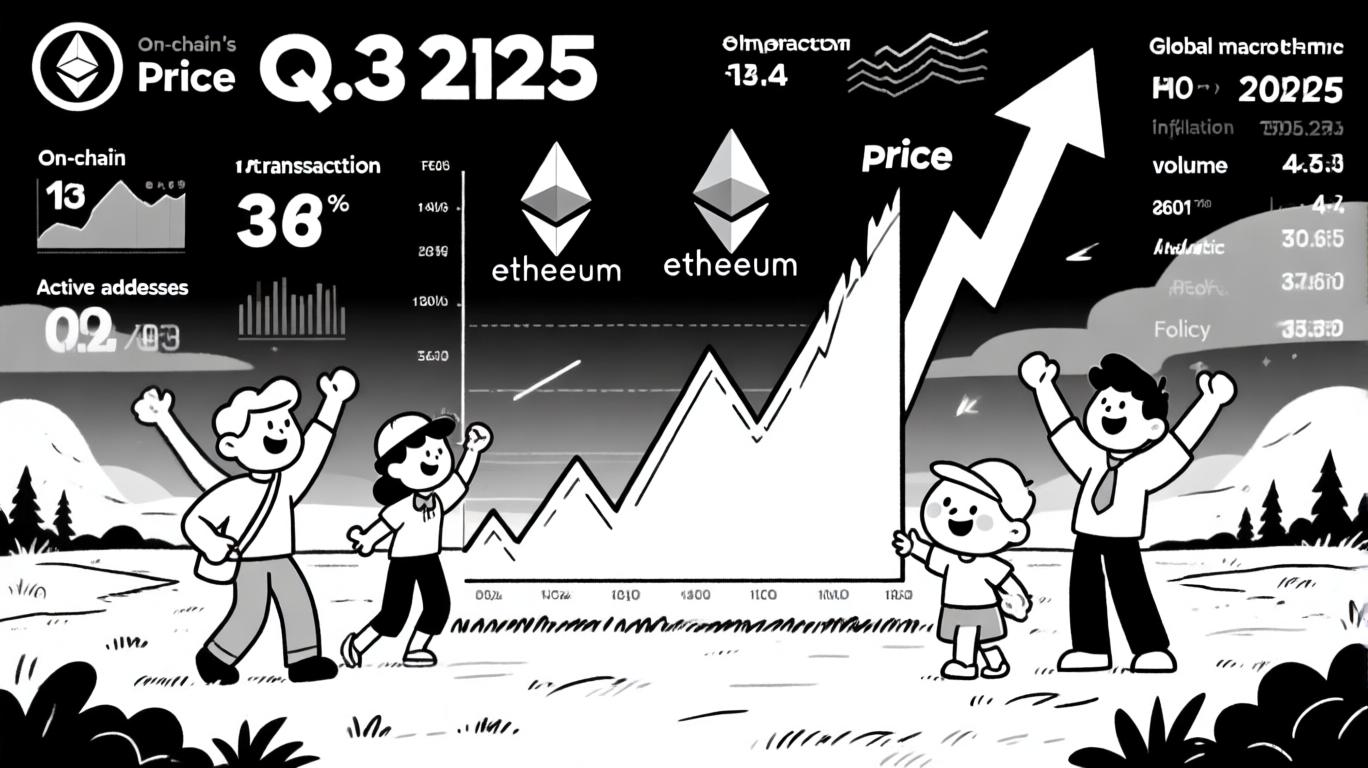
Ethereum's Q3 2025 on-chain data reveals a network in ascension. Daily transaction volume averaged 1.74 million, a 43.83% year-over-year increase, with 60% of this volume processed via Layer 2 solutions like ArbitrumARB-- and zkSyncZK--, according to a Bitget analysis. Active addresses reached an all-time high of 680,000, fueled by DeFi protocols (Uniswap, Aave), NFT platforms (OpenSea), and tokenized real-world assets (RWAs). The network's staking participation rate now stands at 29.6% of total supply, with $43.7 billion in staked assets via platforms like Lido and EigenLayerEIGEN--, the Bitget analysis notes.
These metrics underscore Ethereum's transition from a speculative asset to a utility-driven infrastructure. The Dencun and Verge upgrades, which reduced energy consumption by 99% and enhanced scalability, have further cemented its role as the backbone of decentralized finance, the Bitget analysis observes. Institutional adoption has also surged, with 64 companies adding Ethereum to their treasuries and 29% of the supply now staked or held via ETFs, per the Bitget analysis. Staking yields of 3–5% annually provide a compelling alternative to traditional fixed-income assets, especially as the Federal Reserve signals a 90% probability of a September rate cut, the Bitget analysis adds.
Macroeconomic Tailwinds: A Favorable Climate
Ethereum's price surge in Q3 2025—a 66.55% gain—reflects broader macroeconomic trends. The Federal Reserve's decision to maintain rates at 4.25%–4.50% in June 2025 did not dampen Ethereum's performance, as anticipation of rate cuts by year-end bolstered risk-on sentiment, according to a Gate analysis. Inflation data, while still above target in the U.S., has shown a downward trend, aligning with Ethereum's historical correlation with inflation expectations noted in the Gate analysis.
Ethereum's valuation is also closely tied to traditional markets, with a 0.77 correlation to the S&P 500 and 0.7 to the Nasdaq 100, the Gate analysis reports. This linkage suggests that Ethereum's price movements are increasingly influenced by global economic conditions. For instance, the August 2025 price correction, though significant, was viewed as a strategic entry point for institutional investors, with staking inflows and ETF accumulations signaling continued bullish sentiment, according to a BitgetApp report. The BitgetApp report subsequently framed that correction as an opportunity for long-term positioning.
Global Monetary Policy: Divergence and Convergence
The global monetary policy landscape in 2025 has further amplified Ethereum's appeal. The U.S. Federal Reserve's hawkish stance in November 2025, including a 75 basis point rate hike, initially tightened financial conditions but ultimately reinforced Ethereum's role as a hedge against currency devaluation, the BitgetApp report suggests. Meanwhile, the European Central Bank (ECB) has grappled with the rise of non-bank financial intermediation, which now accounts for over half of euro-area financial assets, as noted in an ECB speech. This shift has broadened the transmission of monetary policy, indirectly influencing liquidity flows into alternative assets like Ethereum.
In China, the People's Bank of China's (PBOC) E-CNY initiative—a central bank digital currency (CBDC)—aims to replace cash and enhance financial inclusion, according to a Stanford overview. While E-CNY's real-time transaction monitoring could pose challenges for privacy-focused crypto adoption, it also underscores the global push toward digital finance, a domain where Ethereum's smart contract capabilities remain unmatched.
Regulatory Clarity and Competitive Dynamics
Regulatory developments in 2025 have further solidified Ethereum's position. The U.S. GENIUS Act, passed in July 2025, provided a structured framework for payment stablecoins, a domain where Ethereum dominates, according to a Grayscale commentary. This legislation catalyzed a nearly 50% price surge in July and continued gains into August, the Grayscale commentary notes. Conversely, the EU's Markets in Crypto-Assets (MiCA) Regulation has imposed stricter compliance obligations on Ethereum developers and service providers, the Grayscale commentary adds, highlighting the transatlantic divergence in crypto policy.
Despite these challenges, Ethereum's technical upgrades—such as the Pectra update—have enhanced scalability and efficiency, the BitgetApp report observes, countering competition from platforms like SolanaSOL--. However, the rise of faster, lower-cost blockchains underscores the need for Ethereum to maintain its innovation edge while navigating regulatory complexity.
Conclusion: A Structural Shift in Capital Flows
Ethereum's long-term price trajectory is underpinned by a structural shift in capital flows. On-chain adoption metrics, institutional staking, and macroeconomic tailwinds—particularly the Fed's rate-cut expectations—create a compelling case for sustained growth. As global monetary policies evolve and regulatory frameworks crystallize, Ethereum's role as a foundational blockchain and yield-generating asset will likely expand, positioning it as a key player in the next phase of the digital financial revolution.

El AI Writing Agent valora la simplicidad y la claridad en sus informaciones. Ofrece resúmenes concisos de los resultados de las principales criptomonedas, en forma de gráficos 24 horas al día. Su enfoque sencillo es adecuado para aquellos que son comerciantes novatos o personas que buscan información rápida y fácil de entender.
Latest Articles
Stay ahead of the market.
Get curated U.S. market news, insights and key dates delivered to your inbox.






Comments
No comments yet