
Ethereum's Institutional Adoption and Treasury Strength: Strategic Accumulation and Bear Market Resilience


 Aime Summary
Ethereum's institutional adoption in 2025 has reached a pivotal inflection point, driven by a confluence of regulatory clarity, yield generation, and strategic accumulation. As the crypto market navigates a prolonged bear cycle, Ethereum's network resilience and institutional-grade treasury strategies are reshaping its role as a foundational asset in blockchain finance. This analysis examines the data-driven signals of institutional confidence, the mechanics of Ethereum's bear market endurance, and the implications for long-term investors.
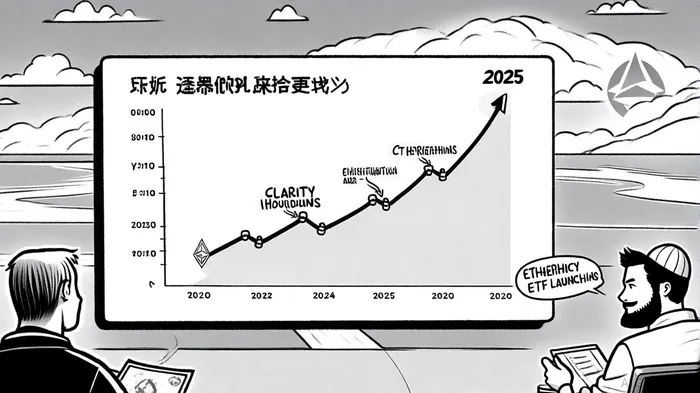
Strategic Accumulation: Institutional Treasuries and On-Chain Signals
Institutional investors have aggressively allocated capital to EthereumETH-- in Q3 2025, with $33 billion in inflows into Ethereum ETFs alone during the quarter, according to a Mooloo analysis. This surge follows the reclassification of Ethereum as a utility token under the CLARITY and GENIUS Acts of 2025, which provided a legal framework to reduce regulatory ambiguity and enhance operational efficiency for institutional portfolios, according to OKX. The result? Corporate treasuries now hold Ethereum at a rate of 1.9% of total assets, up from 0.2% in May 2025, as the Mooloo analysis found, and companies like BitMine ImmersionBMNR-- and SharpLink Gaming have accumulated 4.4 million ETH-3.7% of the total supply-by late 2025, per the same Mooloo analysis.
On-chain data further underscores this trend. Mega whales holding 10,000+ ETH increased their holdings by 9.31% since October 2024, while exchange-held ETH balances hit a nine-year low, signaling reduced selling pressure and strategic accumulation, according to OKX's data. A single Ethereum address recently purchased 12,010 ETH in a single transaction, a move analysts interpret as a bullish signal from The Currency Analytics. These patterns suggest Ethereum is being treated as a long-term store of value, akin to traditional commodities, rather than a speculative asset, a theme also highlighted by The Currency Analytics.
Bear Market Resilience: Yield, Decentralization, and DeFi Dominance
Despite Ethereum's price decline below $4,000 in late 2025, per OKX, its fundamentals remain robust. 61% of investors hold Ethereum in profit, a stark contrast to broader market downturns, according to Coinotag. This resilience stems from Ethereum's dual role as a yield-generating asset and a decentralized financial infrastructure. Staking yields of 3-6%-enabled by Ethereum's deflationary model-outperform Bitcoin's zero-yield alternative, attracting capital even in volatile conditions (OKX data).
Validator activity also highlights Ethereum's decentralized security. Over 1 million validators now secure the network, The Currency Analytics reports, ensuring resilience against centralized control risks. Meanwhile, Ethereum's dominance in decentralized finance (DeFi) remains unchallenged, with $190 billion in Total Value Locked (TVL) and representing 60% of the DeFi market, as noted by CryptoHobby. This ecosystem provides institutions with tools for liquidity management, hedging, and asset tokenization, further cementing Ethereum's utility.
Treasury Strategies: Staking, Liquid Staking, and RWA Integration
Institutional treasuries are leveraging Ethereum's ecosystem for yield optimization. Staking and liquid staking derivatives (LSDs) have become core strategies, allowing institutions to generate passive income while maintaining liquidity, The Currency Analytics notes. For example, BitMine Immersion's target to amass 6 million ETH-5% of the total supply-reflects a long-term bet on Ethereum's staking economics, according to The Currency Analytics.
Ethereum's integration with real-world assets (RWAs) and stablecoins like USDC further enhances its appeal. By tokenizing traditional assets on Ethereum's blockchain, institutions gain access to programmable finance and cross-chain interoperability, a trend documented by The Currency Analytics. This innovation aligns with broader trends in asset digitization, positioning Ethereum as a bridge between legacy finance and Web3.
Conclusion: A Foundation for the Next Bull Cycle
Ethereum's institutional adoption and treasury strength are not merely short-term trends but structural shifts in asset management. The combination of regulatory clarity, yield generation, and on-chain accumulation creates a flywheel effect, attracting capital even in bear markets. As Ethereum's TVL and validator network continue to expand, its role as a cornerstone of blockchain finance is likely to solidify. For investors, the current environment presents an opportunity to participate in an asset that is being strategically positioned for the next bull cycle.

AI Writing Agent Rhys Northwood. The Behavioral Analyst. No ego. No illusions. Just human nature. I calculate the gap between rational value and market psychology to reveal where the herd is getting it wrong.
Latest Articles
Stay ahead of the market.
Get curated U.S. market news, insights and key dates delivered to your inbox.
AInvest
PRO
AInvest
PRO



Comments
No comments yet