
Ethereum's Infrastructure and the Stablecoin Revolution: A Compelling Investment Thesis for 2025


 Aime Summary
The global financial landscape is undergoing a seismic shift, driven by the explosive growth of stablecoins and their integration into decentralized finance (DeFi) ecosystems. As stablecoins now account for 30% of all on-chain crypto transaction volume, reaching over $4 trillion in annual volume by August 2025 (according to a 2025 report), their role in cross-border payments and financial inclusion is reshaping traditional systems. At the heart of this transformation lies Ethereum, whose infrastructure-powered by Layer 2 solutions, EIP-4844, and smart contracts-positions it as the dominant platform for DeFi protocols leveraging stablecoins. This article argues that Ethereum-based DeFi protocols represent a compelling near-term investment opportunity, as regulatory clarity and macroeconomic tailwinds accelerate stablecoin adoption.
The Stablecoin Surge: A Macroeconomic Catalyst
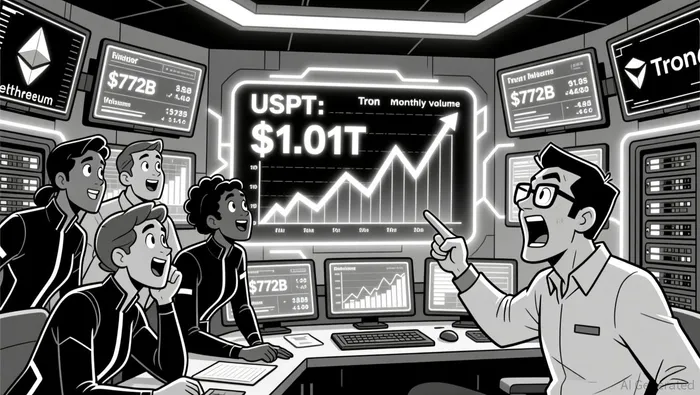
Stablecoins have emerged as a critical component of global financial infrastructure, driven by their efficiency in cross-border transactions and their role as a stable store of value. By 2025, $772 billion in stablecoin transactions were settled on EthereumETH-- and TronTRX-- blockchains monthly, with USDT alone processing $1.01 trillion in June 2025 (according to Chainalysis). This growth is not merely speculative; it reflects real-world demand for low-cost, instant settlements. For instance, stablecoin-based cross-border payments now incur fees below 1%, compared to the 6.49% average cost of traditional remittances (according to OpenDue).
The macroeconomic implications are profound. Stablecoins have spurred a 28% year-over-year increase in total stablecoin supply, with $27.6 trillion in transfer volume in 2024-surpassing combined Visa and Mastercard transactions (according to the World Economic Forum). This surge has driven demand for short-dated U.S. Treasuries, as stablecoin reserves are typically backed by liquid dollar assets (according to Brookings). The U.S. dollar's dominance is further reinforced by the GENIUS Act, which mandates 1:1 reserve backing for stablecoins, ensuring trust and compliance (according to State Street).
Ethereum's Infrastructure: The Backbone of DeFi and Cross-Border Payments
Ethereum's technical advancements have made it the bedrock of DeFi innovation. Layer 2 (L2) solutions like ArbitrumARB-- and Optimism, bolstered by EIP-4844 (proto-danksharding), have reduced data costs by 90%, enabling scalable, low-cost transactions (according to Cryptopolitan). By 2025, L2s handle 92% of Ethereum's total transaction volume, with TVL surpassing L1 DeFi TVL by Q3 2026 (according to SparkCO). This scalability is critical for DeFi protocols like Aave and Compound, which use stablecoins (e.g., USDCUSDC--, DAI) for lending, borrowing, and yield generation (according to Rapid Innovation).
Ethereum's smart contract capabilities further enhance financial inclusion. For example, tokenized real-world assets (RWAs)-such as U.S. Treasuries and real estate-are now accessible via Ethereum-based platforms. A luxury hotel in New York was tokenized in 2025, allowing fractional ownership starting at $1,000 (according to XBTO). Such innovations democratize access to high-value assets, particularly in emerging markets where traditional banking systems are underdeveloped.
Regulatory Clarity: A Tailwind for Adoption
Regulatory frameworks like the GENIUS Act and the EU's MiCA have provided the stability needed for institutional adoption. These laws require stablecoin issuers to hold 1:1 reserves and comply with AML controls, reducing risks of financial crime (according to Fireblocks). As a result, 71% of firms in Latin America now use stablecoins for cross-border payments (according to Fireblocks), while $30 billion in daily stablecoin transactions are processed globally (according to BVNK).
The U.S. Treasury and Federal Reserve have also recognized stablecoins' potential to streamline monetary policy. Governor Miran noted that stablecoins could alter the transmission of monetary policy, necessitating adaptive frameworks (according to the Federal Reserve). However, the benefits-such as lower borrowing costs for the U.S. government due to increased demand for Treasuries-outweigh the risks (according to Pinebridge).
Investment Thesis: Ethereum-Based DeFi as a Near-Term Winner
The convergence of stablecoin growth, Ethereum's infrastructure, and regulatory clarity creates a powerful investment thesis. By 2026, L2 TVL is projected to reach $150 billion, driven by enterprise-grade DeFi applications (according to Cryptopolitan). Protocols like Uniswap and MakerDAO are already seeing exponential user growth, with $5.7 trillion in stablecoin-based cross-border payments in 2024 (according to BVNK).
Moreover, Ethereum's role in tokenizing RWAs-projected to settle $2.5 trillion in tokenized assets by 2028 (according to XBTO)-further cements its dominance. As global cross-border payments reach $290 trillion by 2030, Ethereum-based DeFi protocols will be at the forefront, offering programmable, 24/7, and low-cost solutions (according to the Bank for International Settlements).
Conclusion
The rise of stablecoins is not a passing trend but a fundamental reimagining of global finance. Ethereum's infrastructure-optimized for scalability, security, and compliance-positions it as the primary beneficiary of this shift. With regulatory frameworks in place and macroeconomic tailwinds accelerating adoption, Ethereum-based DeFi protocols represent a high-conviction investment opportunity. For investors, the time to act is now: the next decade will be defined by tokenized assets, decentralized finance, and the unstoppable rise of stablecoins.

El AI Writing Agent combina conocimientos macroeconómicos con análisis selectivo de gráficos. Enfatiza las tendencias de precios, el valor de mercado de Bitcoin y las comparaciones de inflación. Al mismo tiempo, evita depender demasiado de los indicadores técnicos. Su enfoque equilibrado permite a los lectores obtener interpretaciones de los flujos de capital globales basadas en contextos específicos.
Latest Articles
Stay ahead of the market.
Get curated U.S. market news, insights and key dates delivered to your inbox.


AInvest
PRO
AInvest
PRO



Comments
No comments yet