
Ethereum's Gas Fee Surge and the WLFI Token: A New Era of Scalability Challenges and Investment Opportunities


 Aime Summary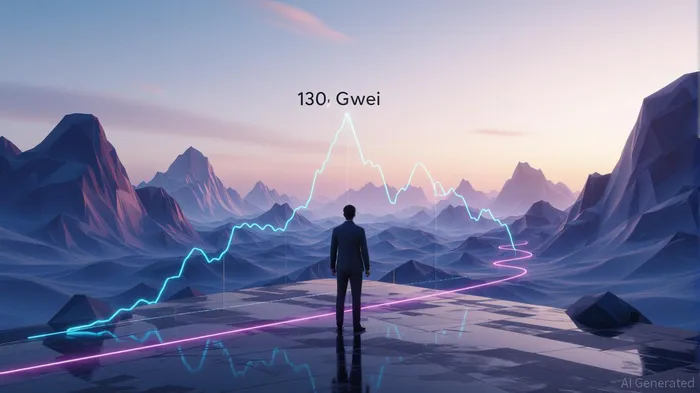
The launch of the Trump-backed WLFI token on September 1, 2025, exposed Ethereum’s unresolved scalability challenges, sending gas fees from near-zero levels to over 130 Gwei—a 60-fold increase—within hours [1]. This surge, driven by high-volume trading and complex smart contract interactions, pushed Ethereum’s daily transaction count to 1.58 million and active addresses to 550,000 [2]. For investors, the event underscores a critical tension: Ethereum’s foundational role in decentralized finance (DeFi) and its persistent vulnerability to congestion during high-profile token events.
Ethereum’s Scalability Struggles and the Role of Layer 2 Solutions
Despite upgrades like EIP-4844 and Dencun, which reduced Layer 2 (L2) fees by 90% and enabled 100,000+ transactions per second (TPS) [3], the WLFI launch revealed gaps in Ethereum’s infrastructure. While L2s like Arbitrum and Base absorbed 60% of Ethereum’s transaction volume by Q2 2025 [4], the WLFI event demonstrated that major on-chain activity can still overwhelm the network. For instance, gas fees on the EthereumETH-- mainnet spiked to $100 per transaction, whereas L2s like Base processed similar operations for $0.08 [5]. This disparity highlights both the potential and the limitations of L2 solutions: they offer cost efficiency but remain dependent on Ethereum’s base layer for security and finality.
Investors in L2 protocols must weigh these dynamics. While projects like Arbitrum and Base have captured $240 billion in TVL by August 2025 [6], their long-term viability hinges on Ethereum’s ability to sustainably scale. A failure to address congestion risks could erode user trust and divert capital to alternatives like SolanaSOL--, which boasts higher throughput at lower costs [7].
DeFi Participation Costs and Retail Investor Behavior
The WLFI-driven gas surge directly impacted DeFi participation. Token swaps on Ethereum cost over $145 at peak times, with even basic transfers exceeding $10 [8]. This volatility forced retail users to adopt cost-saving strategies, such as prioritizing L2 transactions or delaying trades until fees subsided [9]. For institutional investors, the event reinforced the importance of capital efficiency: DeFi protocols with high gas overheads became less attractive, while L2-native platforms gained traction.
However, the WLFI team’s proposed buyback-and-burn mechanism—using protocol-owned liquidity (POL) fees to reduce supply—introduces uncertainty. If successful, it could stabilize WLFI’s price and mitigate further network strain. Yet, the token’s political ties and governance centralization (e.g., the TrumpTRUMP-- family’s 37.5% stake) have drawn regulatory scrutiny [10], adding a layer of risk for investors.
Regulatory and Governance Risks
The WLFI launch also spotlighted regulatory challenges. The SEC and EU regulators have raised concerns about politically branded tokens and their potential for market manipulation [11]. For Ethereum, this scrutiny could accelerate the need for robust governance frameworks, particularly as L2s gain prominence. Projects that fail to align with evolving regulatory standards may face liquidity crises or delistings, further complicating the investment landscape.
Conclusion: Balancing Risks and Opportunities
The WLFI event serves as a case study in Ethereum’s evolving ecosystem. While the network’s scalability issues remain a drag on user experience, the surge in L2 adoption and institutional interest in Ethereum’s Dencun-era upgrades present compelling opportunities. Investors should monitor two key metrics: (1) the adoption rate of L2 solutions and (2) regulatory developments affecting politically linked tokens. For Ethereum, the path forward depends on its ability to balance innovation with stability—a challenge that will define its long-term value proposition.
Source:
[1] WLFI's Volatility and Gas War: Is This the Next Meme-Driven Altcoin Powerhouse? [https://www.ainvest.com/news/wlfi-volatility-gas-war-meme-driven-altcoin-powerhouse-2509/]
[2] ETH Gas Fees Surge 12x to 2.54 Gwei as Trump-Backed WLFI Starts Trading [https://blockchain.news/flashnews/eth-gas-fees-surge-12x-to-2-54-gwei-as-trump-backed-wlfi-starts-trading-ethereum-on-chain-trading-impact]
[3] Ethereum's Gas Fee Decline: A Catalyst for L2 Innovation [https://www.ainvest.com/news/ethereum-gas-fee-decline-catalyst-l2-innovation-long-term-capture-2508/]
[4] The Shifting Power Dynamics in Ethereum's Ecosystem [https://www.ainvest.com/news/shifting-power-dynamics-ethereum-ecosystem-layer-2s-rise-means-investors-2508/]
[5] Ethereum's 100x Potential: Institutional Adoption and DeFi Catalysts [https://www.ainvest.com/news/ethereum-100x-potential-institutional-adoption-defi-catalysts-2509/]
[6] Ethereum's 200% Surge: How Layer 2 and EIP-4844 Are Reshaping the Crypto Landscape [https://www.ainvest.com/news/ethereum-200-surge-layer-2-eip-4844-reshaping-crypto-landscape-2508/]
[7] Ethereum Layer 2 Scaling Solutions: A Comprehensive Security Analysis [https://papers.ssrn.com/sol3/papers.cfm?abstract_id=5395177]
[8] ETH users see gas spike as WLFI smart contract tops [https://www.mitrade.com/insights/news/live-news/article-3-1085902-20250901]
[9] The WLFI Whale Deposit: A Strategic Onchain Signal for ... [https://www.ainvest.com/news/wlfi-whale-deposit-strategic-onchain-signal-liquidity-market-confidence-2509/]
[10] WLFI Proposes Buyback and Burn to Address 30% Price Drop After Launch [https://coincentral.com/wlfi-proposes-buyback-and-burn-to-address-30-price-drop-after-launch/]
[11] Trump-backed token WLFI launches with $7.4B valuation, sends Ethereum gas fees soaring [https://www.bitget.com/news/detail/12560604944784]

Decoding blockchain innovations and market trends with clarity and precision.
Latest Articles
Stay ahead of the market.
Get curated U.S. market news, insights and key dates delivered to your inbox.


AInvest
PRO
AInvest
PRO



Comments
No comments yet