
Ethereum's Fusaka Upgrade Weakens Tokenomics as Spam and Fee Compression Rise
 Aime Summary
The EthereumENS-- Fusaka upgrade enhanced Layer 2 throughput by up to eight times but led to reduced transaction fees and increased spam activity. Short-selling firm Culper Research argues the upgrade worsened Ethereum's tokenomics by reducing validator earnings and enabling malicious network activity. Address poisoning attacks have surged, with low-cost dust transfers making it easier for attackers to deceive users into sending funds to incorrect addresses.
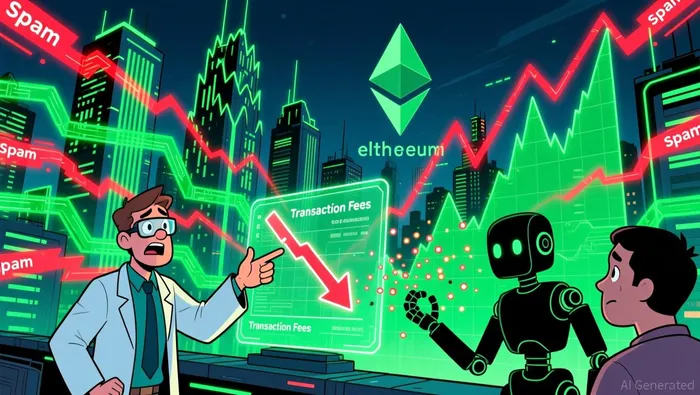
The Ethereum Fusaka upgrade, which went live in December 2025, brought significant improvements to Layer 2 data throughput and transaction latency. While these technical advancements aim to improve scalability and efficiency, they have introduced economic concerns. Gas fees dropped by over 90%, reducing validator earnings and weakening the flywheel effect that incentivizes high-value on-chain activity.
Culper Research has taken a bearish stance on Ethereum, claiming the Fusaka upgrade has weakened its tokenomics. The firm notes that much of the recent transaction growth is attributed to spam and low-value activities like address poisoning and dusting attacks. These actions distort growth metrics and create misleading narratives about network usage, undermining the long-term value proposition of Ethereum.
Address poisoning attacks have surged following the Fusaka upgrade, with attackers exploiting low transaction fees to launch large-scale campaigns. Etherscan has issued warnings to users, advising them to confirm destination addresses before executing transactions and to use address book features to mitigate the risk of falling victim to these attacks. The sharp increase in dust transfers, particularly of USDT and USDC, highlights how attackers can conduct poisoning attempts at minimal cost, increasing the likelihood of successful deceptions.
How Did the Fusaka Upgrade Affect Ethereum's Tokenomics?
The Fusaka upgrade introduced technical improvements that significantly enhanced Ethereum's performance. However, these improvements came at a cost to Ethereum's tokenomics. Validator earnings dropped due to compressed gas fees, leading to reduced network security incentives. Culper Research argues that this weakening of tokenomics could impact Ethereum's long-term value creation.
The drop in gas fees has also enabled spam transactions and low-value activities, which distort transaction growth metrics. While these activities may suggest network adoption, they do not reflect genuine user growth or meaningful economic activity. This has led to skepticism among investors, with short positions in ETH now more than 12 times larger than long positions.
Why Are Address Poisoning Attacks Surging Post-Fusaka Upgrade?
Address poisoning attacks have become more frequent and cost-effective since the Fusaka upgrade. Attackers exploit the reduced transaction fees to send large volumes of dust transfers, creating lookalike addresses that deceive users.
Etherscan has reported cases where users received dozens of address-poisoning attempts in a short period, indicating a high level of automation in these attacks. The victims are often users who make frequent transactions or hold significant token balances, making them prime targets for exploitation.
To mitigate these risks, Etherscan recommends that users adopt address tagging features and double-check destination addresses before transferring funds. These practices can help prevent accidental transfers to spoofed addresses and reduce the chances of falling victim to address poisoning campaigns.
The surge in address poisoning attacks highlights a growing concern for Ethereum users and investors. As the network becomes more scalable and efficient, it also becomes more vulnerable to exploitation through low-cost, high-volume spam and dusting attacks. Addressing these vulnerabilities will be crucial for maintaining user trust and ensuring the long-term security and viability of the Ethereum network.

Blending traditional trading wisdom with cutting-edge cryptocurrency insights.
Latest Articles
Stay ahead of the market.
Get curated U.S. market news, insights and key dates delivered to your inbox.


AInvest
PRO
AInvest
PRO



Comments
No comments yet