
Ethereum's Fusaka Upgrade: Strategic Implications for Emerging Market Tech Exposure and Risk Diversification in Late 2025
 Aime Summary
Technical Foundations: Scaling for Emerging Market Needs
At the core of the Fusaka Upgrade is PeerDAS, a mechanism that allows validators to verify data availability by sampling small portions of transaction data rather than downloading entire datasets. This innovation reduces bandwidth and storage requirements by up to 85%, enabling Ethereum to process up to 8x more data throughput without hardware upgrades. For emerging markets, where infrastructure limitations often hinder blockchain adoption, this scalability is transformative. Layer 2 transaction fees on platforms like Arbitrum and Optimism have already dropped by 75–95%, making decentralized finance (DeFi) and supply chain applications more accessible to unbanked populations and small businesses.
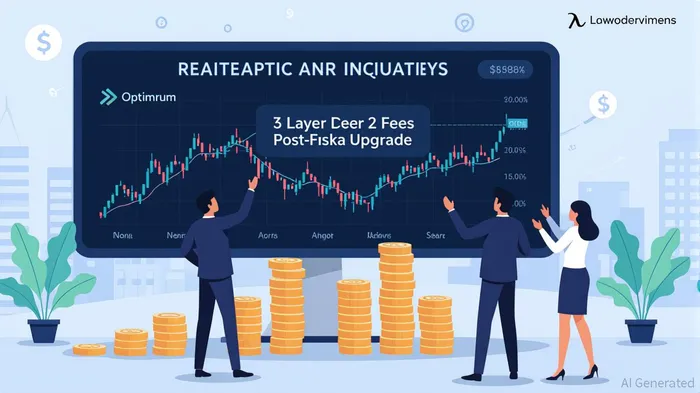 Complementing PeerDAS is EIP-7918, which establishes a reserve price for blob gas fees tied to LayerLAYER-- 1 execution costs. This prevents blob fees from collapsing during low-demand periods, ensuring a predictable revenue stream for validators and aligning economic incentives between Ethereum and L2 networks. For emerging markets, this stability is critical: it reduces the volatility of transaction costs, enabling institutions to deploy blockchain-based solutions for cross-border payments, asset tokenization, and decentralized identity systems with greater confidence.
Regional Case Studies: Financial Inclusion and Supply Chain Optimization
The Fusaka Upgrade's impact is most evident in regions where Ethereum's scalability directly addresses systemic challenges. In India, for example, decentralized lending platforms leveraging L2 networks have expanded access to microloans for rural entrepreneurs, with transaction fees dropping from $0.50 to $0.05 per loan disbursement. Similarly, in Nigeria, Ethereum-based remittance platforms have reduced cross-border transfer costs from 10% to under 2%, enabling millions of unbanked users to participate in the global economy.
In Brazil, the upgrade has catalyzed innovation in supply chain management. By processing 40–60% more transactions per second, Ethereum's improved throughput supports real-time tracking of agricultural exports, reducing fraud and inefficiencies in a sector that contributes 25% of the country's GDP. These use cases underscore how the Fusaka Upgrade's technical advancements are not just theoretical but are actively reshaping economic participation in emerging markets.
Regulatory Clarity: A Catalyst for Institutional Adoption
Global regulatory developments in 2025 have further amplified the upgrade's strategic value. The U.S. Clarity Act and EU's MiCA regulation have classified Ethereum as a digital commodity, providing a legal framework that encourages institutional investment in emerging market blockchain projects. In Southeast Asia and Latin America, where regulatory environments were previously fragmented, the upgrade's economic predictability has spurred governments to pilot Ethereum-based public services. For instance, Brazil's Ministry of Finance has launched a pilot program using Ethereum's L2 networks to tokenize land registries, reducing bureaucratic delays by 70%.
Risk Diversification: Balancing Innovation and Stability
For investors, the Fusaka Upgrade offers a dual strategy for risk diversification. First, it mitigates operational risks by reducing the cost barriers to blockchain adoption in emerging markets. Lower transaction fees and higher throughput mean that projects in sectors like agriculture, healthcare, and education can scale without relying on volatile fiat currencies or centralized intermediaries. Second, the upgrade's alignment with global regulatory frameworks reduces geopolitical risks. As emerging economies adopt Ethereum-based solutions, they gain access to a decentralized infrastructure that is less susceptible to local regulatory shifts compared to traditional tech ecosystems.
However, investors must remain cautious. While the upgrade's technical success is evident, short-term volatility such as the post-upgrade "sell-the-news" dip observed in December 2025 could test market sentiment. Additionally, the reliance on a single blockchain (Ethereum) for diverse use cases introduces concentration risk. Diversifying across Ethereum's L2 networks and complementary blockchains like SolanaSOL-- or CardanoADA-- could provide a more balanced exposure.
Conclusion: A Strategic Inflection Point
The Ethereum Fusaka Upgrade is more than a technical milestone-it is a strategic inflection point for emerging market tech investment. By addressing scalability, cost efficiency, and regulatory alignment, the upgrade positions Ethereum as a cornerstone for financial inclusion and institutional-grade blockchain solutions. For investors, this represents an opportunity to diversify portfolios into high-growth, high-impact sectors while leveraging a technology stack that is increasingly resilient to macroeconomic and geopolitical uncertainties. As 2026 unfolds, the true value of the Fusaka Upgrade will be measured not just in ETH price movements but in the transformative potential it unlocks for billions of unbanked and underserved individuals.

Blanquear la sabiduría tradicional de trading con las perspectivas del futuro de criptomonedas.
Latest Articles
Stay ahead of the market.
Get curated U.S. market news, insights and key dates delivered to your inbox.


AInvest
PRO
AInvest
PRO



Comments
No comments yet