
Ethereum's Fusaka Upgrade Sparks Debate on Tokenomics and Network Performance
 Aime Summary
Ethereum's Fusaka upgrade, which went live in December 2025, has significantly improved Layer 2 data throughput by up to eight times. The upgrade includes features like PeerDAS, which enhances rollup and Layer 2 capacity, and preconfirmations, reducing transaction latency from minutes to milliseconds.
Despite these technical gains, the upgrade has sparked criticism, especially from Culper Research, which argues that Ethereum's tokenomics have deteriorated. The firm highlights a 90% drop in validator earnings due to reduced gas fees, making spam transactions economically viable and undermining network security.
Market observers are divided on the upgrade's impact. Standard Chartered anticipates Ethereum's price could fall to $1,400 before recovering, citing ETF underperformance and delayed Federal Reserve rate cuts. The firm, however, remains optimistic about Ethereum's long-term potential, forecasting it could reach $4,000 by year-end and $40,000 by 2030, driven by stablecoin adoption and regulatory progress.
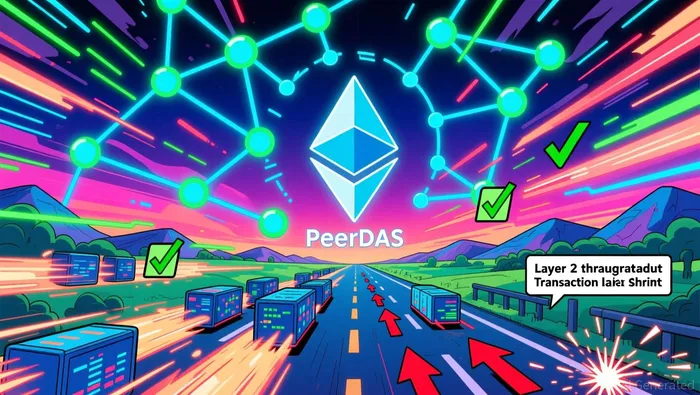
Ethereum's Fusaka Upgrade Increases Layer 2 Throughput?
The EthereumETHFI-- Foundation claims the Fusaka upgrade has improved Layer 2 data throughput by up to eight times, bringing the network closer to instant usability. By using features like PeerDAS, the upgrade enhances data sampling and rollup capacity, which supports scalability and efficiency. These improvements are designed to reduce the need for base layer scaling and improve the overall transaction experience.
The introduction of preconfirmations is another key feature. By reducing latency from minutes to milliseconds, the upgrade enables faster transactions and lower fees, which are essential for broad adoption. This change aligns with Ethereum's long-term vision of becoming a highly scalable and efficient blockchain.
Culper Research's Bearish Thesis on Ethereum's Tokenomics?
Culper Research has taken a bearish stance on Ethereum, claiming the Fusaka upgrade has weakened its tokenomics. The firm notes that gas fees have dropped by over 90%, significantly reducing validator earnings and the flywheel effect that incentivizes high-value on-chain activity. This fee compression has made spam transactions and low-value activities more prevalent, undermining network integrity.
The research group also argues that much of the recent transaction growth is due to address poisoning and dusting attacks, which distort growth metrics and create a misleading narrative. Culper claims that these attacks have become economically viable due to the gas limit increase, which was intended to scale the base layer but has unintentionally enabled malicious activity.
In addition, Culper points to Vitalik Buterin's ETH sales as a potential signal of declining confidence in Ethereum's tokenomics. The firm also highlights growing competition from SolanaSOL-- and Ethereum's own Layer 2 solutions, which may further weaken Ethereum's long-term appeal.
Market Reactions and Long-Term Outlook for Ethereum?
Standard Chartered's analysis suggests Ethereum's price could fall to $1,400 before rebounding. The firm attributes this to ETF underperformance and delays in Federal Reserve rate cuts. However, it remains bullish on Ethereum's long-term potential, predicting it could reach $4,000 by year-end and $40,000 by 2030. This optimism is driven by stablecoin adoption, regulatory progress, and the December Fusaka upgrade's technical benefits.
Despite these positive outlooks, the market remains cautious. Short positions in Ethereum now exceed 12 times long positions, reflecting growing skepticism about the network's economic model. Investors are closely monitoring whether Ethereum's technical upgrades will be enough to offset the challenges posed by declining validator earnings and increased spam transactions.
The debate over Ethereum's tokenomics and performance highlights the complexities of blockchain adoption. While the Fusaka upgrade has made important strides in scalability and efficiency, it has also introduced new challenges that need to be addressed to ensure the network's long-term success.

Blending traditional trading wisdom with cutting-edge cryptocurrency insights.
Latest Articles
Stay ahead of the market.
Get curated U.S. market news, insights and key dates delivered to your inbox.


AInvest
PRO
AInvest
PRO



Comments
No comments yet