
Ethereum Foundation Unveils New Strategy to Drive Ecosystem Growth Amid Institutional Interest
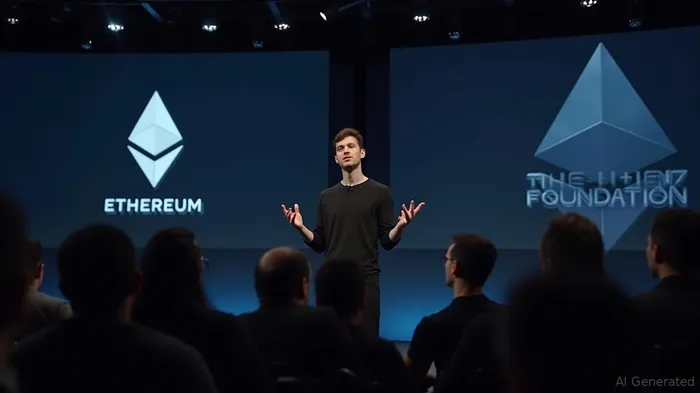
The EthereumETH-- Foundation (EF) has recently unveiled a new strategic vision for its role in the evolution of blockchain technology. The strategy, titled “The Future of Ecosystem Development at the EF,” focuses on four key areas: ecosystem acceleration, ecosystem amplification, ecosystem support, and long-term ecosystem unblocking. This new vision aims to drive the growth and development of the Ethereum ecosystem by fostering innovation and collaboration within the community.
To achieve this, the EF has announced a new organizational structure, expanding its core teams around four pillars: enterprise relations, developer growth, app relations & research, and founder success. This restructuring is designed to enhance the foundation's ability to support and accelerate the growth of the Ethereum ecosystem by providing targeted resources and support to key stakeholders.
Institutional investors, who were previously more inclined towards BitcoinBTC--, are now increasingly turning their attention to Ethereum. This shift is not merely a market trend but reflects a broader change in how institutions view digital assets. The Ethereum Foundation has acknowledged this growing interest, stating that the ecosystem is adapting to meet the needs of enterprises, governments, and everyday users seeking practical solutions and tangible benefits.
The Ethereum network has experienced significant growth, with a surge of $9.7 billion in flows in just one month, and net flows reaching $1.3 billion in the last week alone. This substantial increase indicates a high level of optimism among institutional investors regarding Ethereum’s long-term growth prospects. Additionally, the reduction in transaction costs to approximately $0.10 has made the ecosystem more cost-effective, encouraging innovation on an unprecedented scale.
The foundation has set two primary goals to maximize the impact of Ethereum. The first goal is to increase the number of direct and indirect users who benefit from Ethereum’s underlying values. To achieve this, the foundation plans to collaborate with existing networks and community members to accelerate ecosystem development. Ethereum already has a robust user base and various organizations supporting founders, developers, apps, businesses, and community events, including L2s, accelerators, investors, and instructors.
The foundation aims to work closely with developers, founders, app teams, and enterprises to accelerate the pace of ecosystem growth. Companies like Sharplink GamingSBET-- and Bit DigitalBTBT-- are leading the migration from Bitcoin to Ethereum. Sharplink Gaming holds an impressive reserve of 198,167 ETH, making it one of the largest institutional ETH holders. Bit Digital has also announced an ambitious fundraising target of $172 million and has purchased over 100,000 ETH, highlighting its strategic pivot towards Ethereum staking.
The second goal is to maximize the resilience of Ethereum’s technical and social infrastructure. This is crucial, as Ethereum led all ecosystems in security losses in the first half of 2025, with DeFi platforms losing around $470 million. The report by SlowMist revealed that emerging risks were tied to Ethereum’s EIP-7702 wallet delegation feature, introduced as part of the Pectra upgrade. This feature allows users to authorize smart contracts to act on their behalf without changing their wallet address.
SlowMist noted that the exploit used standard wallet tools to trick users into approving token access in bulk, a risk that anti-phishing tools may not always detect. The firm also highlighted potential risks such as private key leaks, replay attacks across multiple chains, and issues during wallet upgrades. Users must fully understand who they are authorizing and what permissions they grant before signing any delegation to mitigate these risks.

Stay ahead of the market.
Get curated U.S. market news, insights and key dates delivered to your inbox.






Comments
No comments yet