
Ethereum Focuses on Scaling and Accessibility in 2026 Roadmap
 Aime Summary
- Ethereum's 2026 roadmap prioritizes scaling, user experience, and security through engineering-driven improvements, marking a shift from narrative-based development.
- The Glamsterdam hard fork enhances throughput by increasing the gas limit and introducing a parallel execution model, which allows for the processing of non-conflicting transactions simultaneously.
- Vitalik Buterin has advocated for simplifying Ethereum's node architecture to enable broader participation and decentralization by making node operation accessible to everyday users.
Ethereum's focus in 2026 has shifted toward practical engineering solutions to address scalability and security challenges. The network is evolving under competitive pressures, prioritizing hardening of the L1 layer and improving transaction throughput.
The introduction of a parallel execution model through the Glamsterdam hard fork allows EthereumETH-- to process multiple transactions simultaneously, potentially increasing transactions per block exponentially. This shift, however, requires higher hardware and bandwidth demands.
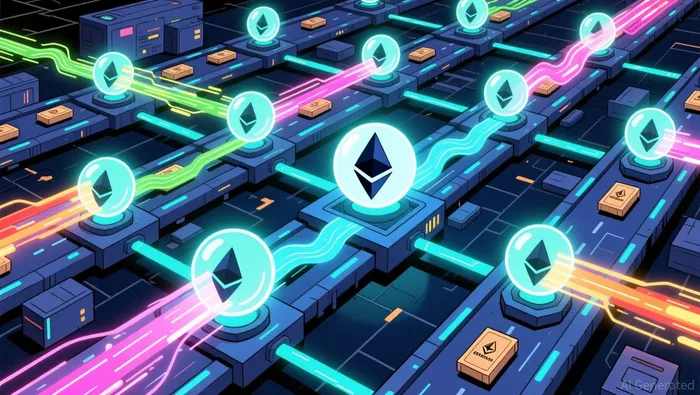
To reduce hardware requirements for nodes, Ethereum is exploring the transition of some validators to SNARK-based execution. This change would help maintain network accessibility while improving efficiency.
What is the significance of Ethereum's 2026 roadmap changes?
Ethereum's roadmap for 2026 is a response to competitive pressures and evolving user needs. By prioritizing scaling and user experience, the network is aiming to maintain its relevance in the digital assets ecosystem.
The shift from narrative-driven development to engineering-driven improvements reflects a broader industry trend where performance and security are becoming more critical than speculative hype.
These changes are expected to attract a wider range of developers and users, particularly those who prioritize fast transaction times and robust security features.
How does Ethereum plan to enhance accessibility for everyday users?
Vitalik Buterin's advocacy for simplifying Ethereum's node architecture is a key step toward making the network more accessible to non-professional users. This simplification aims to lower the technical barriers to running a node.
Making node operation a basic right for all users is not only a technical goal but also a philosophical one. It reflects Ethereum's broader vision of decentralization and inclusivity.
Simplified node architecture could lead to higher participation in the network, enabling more individuals to contribute to Ethereum's security and governance without requiring advanced technical expertise.
What are the challenges associated with Ethereum's new execution model?
While the parallel execution model increases throughput, it also raises the demands on node hardware and bandwidth. This could pose challenges for smaller node operators or those with limited resources.
To address these challenges, Ethereum is exploring SNARK-based execution for some validators. This approach would reduce hardware requirements and maintain network efficiency.
The transition to a more parallel execution model also requires significant software and infrastructure updates, which must be carefully managed to avoid disruptions to the network.

Blending traditional trading wisdom with cutting-edge cryptocurrency insights.
Latest Articles
Stay ahead of the market.
Get curated U.S. market news, insights and key dates delivered to your inbox.


AInvest
PRO
AInvest
PRO




Comments
No comments yet