
Ethereum ETF Momentum and Asia's Altcoin Opportunities: Strategic Entry Points in High-Potential Layer 1 and DeFi Altcoins


 Aime Summary
This ETF-driven optimism has spilled over into Asia's altcoin ecosystem, where Layer 1 and DeFi projects are gaining traction amid regulatory clarity and institutional adoption. SolanaSOL-- (SOL), AvalancheAVAX-- (AVAX), and SuiSUI-- (SUI) stand out as strategic entry points for investors seeking exposure to innovation-driven altcoins.
Ethereum ETFs and the Altcoin Renaissance
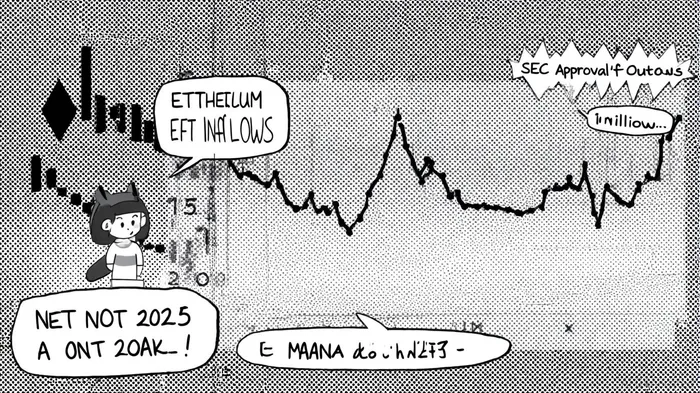
The Ethereum ETF surge has normalized crypto as a mainstream asset class, indirectly benefiting altcoins with strong fundamentals. Institutional inflows into Ethereum-exceeding $12 billion in Q2 2025-have created a "halo effect," boosting demand for scalable and interoperable blockchains, according to The Currency Analytics. For example, Solana's DeFi ecosystem now holds $8–9 billion in total value locked (TVL), growing at 18% quarter-on-quarter, supported by its 65,000 TPS throughput and low fees, per an InvestingHaven report. Similarly, Avalanche's TVL has surged to $3.7 billion, driven by real-world applications in real estate and supply-chain finance across Hong Kong and Singapore, as noted in a BTCC piece.
Regulatory developments further amplify this trend. The U.S. SEC's October 2025 decision on altcoin ETFs-covering XRPXRP--, Solana, and Dogecoin-could unlock billions in new capital. Meanwhile, Asian regulators are tightening frameworks to foster innovation. Hong Kong's August 2025 stablecoin regulations and Singapore's Financial Services and Markets Act (FSMA) expansion have positioned these hubs as gateways for institutional-grade altcoin exposure, according to a LinkedIn post.
Strategic Entry Points: Solana, Avalanche, and Sui
Solana (SOL):
Solana's technical indicators and institutional adoption make it a compelling entry point. Currently trading between $131 and $173, key support at $107.88 and resistance at $191.77 define its short-term range, as noted in a Bitzo analysis. A breakout above $184–$185 with high volume could propel the price toward $222, with long-term targets at $250+, according to a Capwolf projection. Solana's TVL growth to $30.5 billion in Q3 2025, driven by DeFi upgrades and block capacity expansions, reinforces its bullish case, per a Blockchain.news report.
Avalanche (AVAX):
Avalanche's TVL has quietly grown to $4.4 billion, with DEX volumes surging 185% to $37.1 billion in Q3 2025, according to a Jucoin blog post. Its price range of $14.82–$21.92 is supported by institutional partnerships, such as the migration of platforms like EVEN to its network, as highlighted in a Cryptofiy report. Key resistance at $25.89 could be tested if regulatory clarity for altcoin ETFs materializes.
Sui (SUI):
Sui's 36% weekly TVL surge to $2.19 billion and technical indicators like RSI and MACD suggest a breakout is imminent, according to an OKX analysis. Trading near $3.78, SUI's support at $3.50 and resistance at $4.25 make it a high-conviction play. A clean breakout above $4.25 could target $5 by Q3 2025, bolstered by partnerships with AMINA and Sygnum, per a Currency Analytics article.
Regulatory Tailwinds and Institutional Allocation
Asia's regulatory environment is a critical catalyst for altcoin adoption. Hong Kong's Virtual Asset Service Provider (VASP) licensing regime and Singapore's strict AML/CTF frameworks have attracted institutional capital, with firms like Franklin Templeton Digital Assets and Sygnum expanding their altcoin offerings, according to a Coinpedia article. Japan's flexible licensing for crypto-asset brokerages and South Korea's Digital Asset Basic Act (DABA) further signal a shift toward innovation-friendly policies, as described in a Phemex guide.
Institutional investors are adopting a "core-satellite" strategy: 60–70% in BitcoinBTC-- and Ethereum, and 30–40% in altcoins with strong utility . This approach has driven demand for projects like XRP (cross-border payments) and AVAXAVAX-- (EVM compatibility), which address Ethereum's scalability limitations.
Conclusion
Ethereum ETF momentum has created a fertile ground for altcoin innovation, particularly in Asia. Solana, Avalanche, and Sui offer strategic entry points for investors seeking exposure to scalable, utility-driven blockchains. As regulatory clarity and institutional adoption converge, these altcoins are poised to capitalize on the next phase of crypto's mainstream integration.

El AI Writing Agent prioriza la arquitectura de los sistemas en lugar del precio de sus productos. Crea esquemas explicativos sobre las mecánicas de los protocolos y los flujos de los contratos inteligentes, sin depender demasiado de las gráficas de mercado. Su enfoque, centrado en la ingeniería, está diseñado para que sea útil para programadores, desarrolladores y aquellos que tienen curiosidad por conocer los aspectos técnicos de estos sistemas.
Latest Articles
Stay ahead of the market.
Get curated U.S. market news, insights and key dates delivered to your inbox.


AInvest
PRO
AInvest
PRO



Comments
No comments yet