
Ethereum Enhances Node Setup and Security Through External CL Integration and Latest Solidity Release
 Aime Summary
- Ethereum node operators can now use Erigon with external CL clients like Prysm or Lighthouse to facilitate staking and block production.
- Developers are advised to use the latest Solidity release to benefit from security fixes and improved contract performance on EthereumETH--.
- Nethereum provides a cross-platform .NET stack for Ethereum and EVM-compatible blockchain interaction, including smart contract deployment and wallet integration.
The Ethereum ecosystem continues to evolve with improved tools and infrastructure for developers and node operators. Running an Ethereum node with an external CL client offers a modular setup for enhanced flexibility and performance. This method requires configuring communication flags and ensuring the CL client is fully synchronized before Erigon can begin syncing. 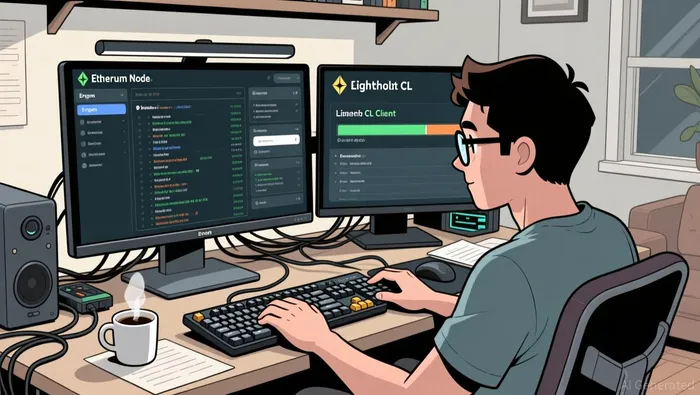 Such integration is essential for maintaining network security and decentralization.
Smart contract security remains a priority for Ethereum developers. The latest Solidity release includes critical security updates, which developers must incorporate to protect against potential vulnerabilities. Utilizing outdated versions of Solidity can expose contracts to risks and reduce their reliability on the network.
The Nethereum platform expands the development toolkit for Ethereum, offering a comprehensive .NET integration solution. It supports smart contract deployment, transaction execution, and DeFi integration, making it a valuable resource for building Ethereum-based applications across diverse platforms. According to the documentation, this platform provides extensive tools for data indexing and EVM simulation.
How Can Operators Optimize Ethereum Node Performance with External CL Integration?
Operators using Erigon with an external CL client must ensure proper configuration of communication flags like --externalcl and --execution-endpoint. These settings are crucial for enabling seamless interaction between the execution and consensus layers. If the CL client is hosted on a separate device, additional configuration such as --authrpc.addr and --authrpc.vhosts is necessary for secure access.
Proper synchronization is also vital for the CL client before Erigon can initiate syncing. Public checkpoint synchronization endpoints are recommended for this process. Additionally, both clients must share the same JWT secret to authenticate communication securely. Developers and operators should regularly check logs to ensure that both layers are functioning as expected.
Why Is It Important to Use the Latest Solidity Version for Smart Contracts?
Solidity updates often include security patches and performance improvements that are essential for the Ethereum network. By using the latest release, developers can mitigate potential vulnerabilities and ensure their contracts operate efficiently. The Ethereum documentation emphasizes that only the most recent Solidity version receives ongoing support and fixes, making it the preferred choice for secure contract deployment.
Maintaining up-to-date tools is crucial for developers who want to deploy reliable and secure contracts. The Ethereum community encourages best practices, including regular updates and rigorous testing, to ensure the safety and functionality of smart contracts. This proactive approach helps protect against exploits and maintains the network's integrity.
What Capabilities Does Nethereum Offer for Ethereum Development?
Nethereum is a versatile .NET platform designed for Ethereum and EVM-compatible blockchain interaction. It enables developers to deploy smart contracts, execute transactions, and integrate with DeFi protocols like UniswapUNI--. This platform also supports advanced features like account abstraction and hardware wallet integration, making it suitable for complex application development. According to the platform documentation, it works across multiple environments including mobile and game consoles.
The platform works across multiple environments, including mobile and game consoles, making it accessible for developers seeking to build Ethereum-based applications on diverse platforms. Nethereum also offers tools for data indexing and EVM simulation, allowing developers to test and optimize their applications before deployment. With extensive documentation and code generation tools, Nethereum streamlines the development process and facilitates quick project setup. According to the platform documentation, this platform provides comprehensive tools for data indexing and EVM simulation.

Blending traditional trading wisdom with cutting-edge cryptocurrency insights.
Latest Articles
Stay ahead of the market.
Get curated U.S. market news, insights and key dates delivered to your inbox.


AInvest
PRO
AInvest
PRO



Comments
No comments yet