
Ethereum Advances Institutional Staking and Network Efficiency in 2026
 Aime Summary
- Ethereum's institutional staking has grown, with 30% of its supply now secured through streamlined solutions like one-click staking.
- Network usage has surged, with over 2 million daily active addresses and 37 million ETHETH-- staked, despite ether's price declining by over 55% from its peak according to network data.
- Ethereum's roadmap includes major upgrades like Glamsterdam and Hegotá, which aim to improve scalability, user experience, and security.
Ethereum has evolved into a foundational platform for decentralized applications and cross-chain solutions. Its transition to a proof-of-stake consensus mechanism in 2022 enhanced scalability and security. Developers and users now leverage Ethereum's smart contract capabilities to create diverse applications.
Cross-chain interoperability has become a major focus as blockchains remain siloed. Bridges like ArbitrumARB-- enable users to move assets between chains efficiently, reducing reliance on a single blockchain. This is particularly beneficial for users seeking lower fees and faster transactions without sacrificing security.
However, bridge security remains a concern. High-profile incidents like the RoninRON-- Bridge and WormholeW-- hacks highlight the need for rigorous audits and transparency in bridge protocols. Users are advised to prioritize non-custodial bridges and to understand the risks associated with different bridge models.
Ethereum bridges typically operate using a lock-and-mint mechanism. When a user transfers assets from one chain to another, the original tokens are locked in a smart contract, and equivalent tokens are issued on the destination chain. This allows for seamless asset transfer while ensuring the original value is securely stored.
Smart contracts play a critical role in maintaining the integrity of these transfers but are not immune to vulnerabilities. Users must remain cautious and use reputable bridge platforms. The primary risks associated with EthereumENS-- bridges include validator risks, wrapped token risks, and phishing attacks.
Validator risks arise when a small number of participants control the validation process, increasing the likelihood of manipulation. Wrapped tokens—tokens representing the value of another asset on a different chain—can also pose risks if the underlying smart contracts are compromised. Users should ensure they understand the mechanics of wrapped tokens and the security measures in place before using them.
Phishing attacks remain a persistent threat, especially when users interact with multiple bridges and wallets. Attackers often mimic legitimate bridge platforms to steal user credentials and funds. Users should verify URLs and ensure they interact only with trusted and audited platforms.
Blockchain interoperability has moved from a niche engineering concern to a billion-dollar infrastructure priority. According to DeFiLlama, bridges TVL hit $21.94B as of March 2026, consistently exceeding $20B through market cycles. Bridges are one of the few crypto infrastructure categories that grow with market fragmentation rather than despite it.
Choosing the right bridge is not trivial due to historical failures like the Ronin Bridge exploit, which cost users over $600 million in 2022. Some protocols have since been rebuilt with stronger architectures, while others have not. An entirely different class of solution, exemplified by platforms like ChangeNOW, has sidestepped the most dangerous design patterns entirely.
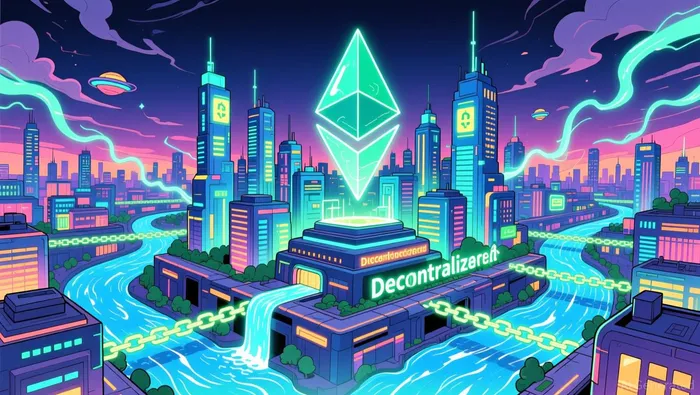
At its core, a blockchain bridge solves a specific problem: native assets on one chain cannot, by design, exist or be verified on another chain. The dominant architecture for most of bridge history has been "lock-and-mint": a user deposits an asset into a smart contract on Chain A, and an equivalent "wrapped" token is issued on Chain B. The wrapped token's value is backed by the locked original. When the user wants out, they burn the wrapped token and unlock the original.
In theory, it is elegant. In practice, it creates a single, obvious problem: the locking contract becomes a high-value target. A single vulnerability can expose all funds held within it simultaneously. The security environment has changed measurably. Audit standards have risen sharply, and reputable bridges now carry multiple independent audits, often including formal verification.
Bug bounty programs in the $1-10 million range have become standard for top-tier protocols. The market has increasingly penalized protocols that cut corners: users have migrated capital toward bridges with stronger security track records. Practical risks remain, and users should internalize them: Smart contract risk is never zero. Even audited code can contain exploitable edge cases, particularly in complex multi-chain messaging logic.
Validator and multi-sig risk persists in bridges that rely on permissioned operator sets. The question is not whether these are trustworthy today, but whether they will remain so under adversarial conditions. Wrapped token risk is underappreciated. Users who bridge using lock-and-mint models hold tokens whose value is contingent on the security of a contract on another chain they may never interact with directly.
Phishing risk is high and growing. Fraudulent bridge interfaces—visually identical to legitimate platforms—are among the most common vectors for crypto losses that never appear in security research.
Ethereum has built resilience into its core and is well-positioned to thrive in this bearish market environment. While BitcoinBTC-- and SolanaSOL-- have also made it, Solana's reliance on memecoins as a significant revenue source raises concerns about its long-term durability. Ethereum's L2s are protected by its security model, which allows them to thrive by providing market value without needing to bear the full cost of security.
ZKsync has made notable progress with its Prividium design and partnerships with banks and institutions, enabling tokenized deposits and private financial infrastructure on Ethereum's public, permissionless, and interoperable rails. Over the past few months, Ethereum has seen a surge in L1 adoption, with major financial institutions like BlackRock, JPMorgan, and Goldman Sachs deploying tokenized securities and asset bridges on the platform. This trend is expected to continue as Ethereum's L2s grow in utility, driven by increasing tokenized asset deployment on the L1.
Ethereum's lead in quantum-resistance research also sets it apart, with the potential to achieve a higher level of investor and market confidence compared to Bitcoin if it successfully navigates quantum threats. The broader industry is moving toward Ethereum as a central hub for blockchain-based finance, and the platform's adaptability and robust infrastructure are likely to ensure its continued relevance and growth.
Ethereum's 2026 roadmap includes two major upgrades: Glamsterdam (first half of 2026) and Hegotá (second half of 2026). Glamsterdam will introduce changes to improve scalability, execution speed, and sustainability, including parallelization and gas limit increases. Hegotá will focus on user experience improvements like native account abstraction and quantum-resistant cryptography.
Experts highlight the potential impact on on-chain activity, staking, and ETH's price, while also noting execution risks and market dynamics. On-chain data shows high network usage despite a 55% drop in ETH price since its peak in August 2025. Experts highlight the importance of execution risk, noting that ambitious upgrades may not fully materialize or may take longer than expected.
While the upgrades could improve Ethereum's scalability and usability, their impact on price will depend on broader market conditions and institutional adoption. Ethereum's position as a critical infrastructure layer for blockchain-based markets is being reinforced by the growing adoption of tokenized assets on the platform, suggesting it could become a central hub for blockchain finance.

Blending traditional trading wisdom with cutting-edge cryptocurrency insights.
Latest Articles
Stay ahead of the market.
Get curated U.S. market news, insights and key dates delivered to your inbox.


AInvest
PRO
AInvest
PRO



Comments
No comments yet