
Ethereum Accumulates Institutional Capital As DeFi And Real-World Asset Integration Accelerates
 Aime Summary
Institutional players are driving significant accumulation of EthereumENS--, with Bitmine Immersion Technologies adding 71,252 ETH to its holdings. This strategic move brings Bitmine's total holdings to approximately 4.8 million ETH, valued at over $10 billion. Such activity underscores growing confidence in Ethereum as a core asset for corporate treasuries and investment vehicles.
The network continues to serve as the primary decentralized computing platform, holding $55 billion in total value locked within decentralized finance protocols. This dominance significantly outpaces competitors like SolanaSOL-- and attracts major traditional finance entities including BlackRock and JPMorgan.
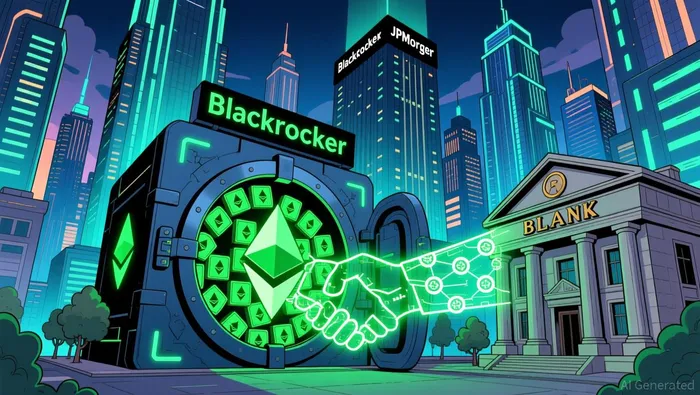
Recent developments highlight the convergence of traditional finance and decentralized markets, particularly through the integration of BlackRock's BUIDL fund with UniswapUNI--. This partnership bridges institutional real-world assets with the broader DeFi ecosystem, expanding utility beyond speculative trading.
How Does Ethereum Differ From BitcoinBTC-- In Current Market Dynamics?
Bitcoin functions primarily as a decentralized network for transferring value, characterized by extreme scarcity with a 21 million cap. Its value proposition centers on acting as a competitor to fiat-based monetary systems, offering a solution to currency debasement and rising federal debt levels.
Ethereum, launched in 2015, operates as a decentralized global computing network rather than just a monetary asset. It introduced smart contracts, enabling self-executable software for decentralized applications, which powers borrowing, lending, investing, and trading.
While Ethereum offers significant upside through its development pipeline and ecosystem growth, Bitcoin remains the preferred choice for long-term investors due to its simple structure. This simplicity reduces execution risk as the asset aims to become a widely adopted method for transferring and storing value.
Institutional confidence in both assets is evident, with Strategy resuming Bitcoin purchases and Bitmine heavily accumulating ETH. However, the focus for Ethereum remains on its role as the foundation for a vast ecosystem of financial platforms and developer tools.
What Structural Drivers Are Fueling Ethereum Growth In 2026?
Technological and structural developments are creating new value drivers across sectors, with the S&P 500 now licensed for on-chain trading on Hyperliquid. This marks a convergence of traditional finance and decentralized markets, allowing leveraged exposure to global indices without traditional brokerage accounts.
Economic conditions and regulatory decisions play significant roles in Ethereum's price, alongside competition from other smart contract blockchains like Solana and AvalancheAVAX--. The network transitioned from proof-of-work to proof-of-stake in 2022, replacing energy-intensive mining with a system where users lock ETH as collateral to validate transactions and earn rewards.
This shift improved efficiency and introduced a yield-generating mechanism for holders, distinguishing it from assets that do not offer staking rewards. Security and infrastructure upgrades remain prominent, with the broader ecosystem seeing increased attention on protection against exploits.
For investors, the focus remains on projects with working products, strong liquidity, and clear catalysts like token burns and ETF approvals. Established assets like Bitcoin and Ethereum offer robust fundamentals, while emerging platforms provide exposure to high-performance blockchain infrastructure.
Why Do Institutional Investors View Ethereum As A Strategic Holding?
Ethereum is the second-largest cryptocurrency by market cap, valued at approximately $233 billion, serving as a decentralized computing platform. Its core function allows developers to build and run applications without central management, with ETH used to pay for network activities.
The network is the leader in decentralized finance, holding $55 billion in total value locked, significantly higher than competitors like Solana. Key use cases include staking, lending, and the tokenization of real-world assets, attracting major traditional finance players like BlackRock and JPMorgan.
Tokenomics and supply dynamics remain critical, with the broader market seeing activity like BNB completing its 33rd quarterly burn. Ethereum's long-term potential is tied to its role as the foundation for a vast ecosystem of financial platforms and developer tools.
While highly volatile, its long-term potential is tied to its role as the foundation for a vast ecosystem of financial platforms and developer tools. The integration of institutional real-world assets with decentralized finance signals a maturation of the asset class.
For investors, the focus remains on projects with working products, strong liquidity, and clear catalysts. Established assets like Bitcoin and Ethereum offer robust fundamentals, while emerging platforms provide exposure to high-performance blockchain infrastructure.

Blending traditional trading wisdom with cutting-edge cryptocurrency insights.
Latest Articles
Stay ahead of the market.
Get curated U.S. market news, insights and key dates delivered to your inbox.


AInvest
PRO
AInvest
PRO



Comments
No comments yet