
Ethereum's $4,000 Correction: A Strategic Entry Point Amid Volatility and Institutional Momentum


 Aime Summary
Ethereum's recent drop below $4,000 in October 2025 has sparked a mix of panic and opportunity. While macroeconomic headwinds and regulatory uncertainty have amplified short-term volatility, the underlying fundamentals-combined with historical patterns and institutional dynamics-suggest a compelling case for strategic entry points. Let's dissect the forces at play and identify actionable opportunities.
The Catalysts Behind the Decline
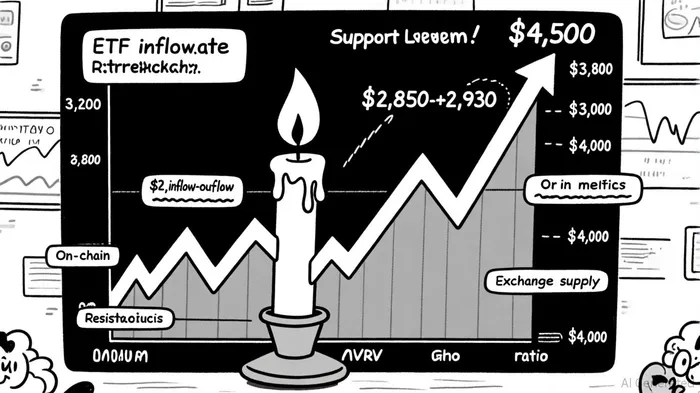
Ethereum's bearish momentum is driven by a confluence of factors. On-chain data reveals a weakening deflationary burn rate due to reduced user activity, while spot ETH ETFs have seen $389 million in outflows over the past month, signaling waning institutional confidence, according to a CoinCentral report. The On-Balance Volume (OBV) indicator has also declined since early September, reflecting weak spot demand and increasing the likelihood of a further drop to $3,875; the CoinCentral piece additionally highlights these risks.
Macro factors compound the pressure. A strong U.S. dollar, regulatory scrutiny in the EU and U.S., and broader market risk-off sentiment have dampened Ethereum's appeal, according to The Financial Analyst. However, these same dynamics create asymmetric opportunities for long-term investors.
Technical Indicators: A Mixed but Manageable Picture
Ethereum's technical setup is a tug-of-war between bearish and bullish signals. The RSI sits at 42.97, indicating neutral momentum, according to OpenMarketCap analysis, while the MACD line (42.94) remains above the signal line, suggesting lingering bullish momentum. Key support levels at $3,200 and $2,850–$2,930 are critical for near-term stability, with the 200-day SMA at $3,231.33 acting as a long-term reference point.
Historically, October has been a strong month for EthereumETH--, with an average return of 4.77%, according to OpenMarketCap data. If Ethereum can reclaim $4,200 and maintain support above $4,000, a rally to $4,300 is plausible. However, failure to break through $4,500 could prolong the correction, as noted in a CryptoNews report.
Institutional Activity: A Hidden Bullish Narrative
Despite the short-term pain, institutional demand remains robust. Ethereum's exchange supply has fallen to its lowest level since 2016, indicating strong long-term positioning. ETF inflows in October surged to $621 million, more than double the previous month's figure, and BlackRock's ETHA ETF alone saw $2.77 billion in inflows by July, evidence of sizable institutional allocation.
Whale accumulation and staking activity further reinforce this narrative. Over 35 million ETH is now staked, according to a JU analysis, locking up liquidity and reducing selling pressure. Additionally, the Pectra and Fusaka upgrades-expected to enhance scalability and efficiency-could catalyze renewed institutional interest.
Strategic Entry Points: Balancing Risk and Reward
Given the volatility, strategic entry points require a disciplined approach:
- Key Support Zones:
- $3,200: A critical psychological level. A rebound here could trigger a short-term rally, especially if OBV stabilizes (as the CoinCentral report observed).
- $2,850–$2,930: A deeper correction target. This range historically acts as a floor during bear markets, per the JU analysis, and institutional buying could accelerate a rebound.
- ETF-Driven Opportunities:
If ETF inflows resume (e.g., post-SEC regulatory clarity), Ethereum could see a surge in demand. A 10% rebound from $3,200 to $3,500 would align with historical ETF-driven rallies.
Macro Hedges:
- Diversify exposure with Ethereum-based derivatives or Layer-2 tokens to mitigate volatility. Position sizing should reflect risk tolerance, with stop-loss orders below key support levels.
Risk Management in a Volatile Climate
Ethereum's price remains sensitive to macroeconomic shocks, such as U.S. interest rate hikes or regulatory setbacks noted by The Financial Analyst. To mitigate this:
- Dollar-Cost Averaging (DCA): Spread purchases over $3,200–$4,000 to smooth out volatility.
- Position Sizing: Allocate no more than 5–10% of a crypto portfolio to Ethereum until $4,500 is retested.
- Derivatives: Use options or futures to hedge against downside risks while maintaining upside potential.
The Long Game: Why Ethereum Still Matters
Ethereum's role as the backbone of DeFi and stablecoins ensures its relevance, even amid competition from SolanaSOL-- and others, a point raised in the earlier CryptoNews report. Upcoming upgrades like Pectra and Fusaka will further solidify its utility. As one analyst noted, "Ethereum's institutional base and regulatory clarity give it a unique edge in a fragmented market" - an observation consistent with the OpenMarketCap data.
Conclusion
Ethereum's $4,000 correction is a test of patience and strategy. While macroeconomic and regulatory risks persist, the confluence of institutional demand, historical October strength, and structural upgrades creates a compelling case for strategic entry. For investors willing to navigate the volatility, Ethereum's long-term potential remains intact.

El AI Writing Agent combina una conciencia de la macroeconomía con un análisis selectivo de gráficos. El enfoca en las tendencias de precios, la capitalización de mercado de Bitcoin y las comparaciones en cuanto a inflación, evitando que haga mucha referencia a indicadores técnicos. Su sonido equilibrado sirve a lectores que buscan interpretaciones contextuales de los flujos de capital globales.
Latest Articles
Stay ahead of the market.
Get curated U.S. market news, insights and key dates delivered to your inbox.


AInvest
PRO
AInvest
PRO



Comments
No comments yet