
Ether.fi Transforms Into Defibank With Summer Upgrade As Treasury Launches $50M Buyback Plan
 Aime Summary
- Ether.fi launched the "Summer" upgrade on August 13, 2026, transitioning from a liquid restaking protocol to comprehensive neobank offering tokenized stock and metal trading.
- The protocol now integrates Aave-powered portfolio-backed borrowing on OptimismOP-- and processes approximately $2 million in daily real-world payment volume .
- A community proposal suggests allocating up to $50 million from the treasury to buy back ETHFIETHFI-- tokens when prices dip below $3 .
- Extreme whale concentration remains a critical risk, with the top 100 wallets controlling 94.28% of the circulating supply .
Ether.fi has significantly expanded its utility beyond its foundational role as a decentralized, non-custodial liquid restaking protocol. The platform originally solved the illiquidity of traditional EthereumETH-- staking by allowing users to deposit ETH and receive eETH, a liquid token that accrues staking rewards while remaining usable as collateral in decentralized finance applications. This architecture relies on Distributed Validator Technology to split validator duties across a network of node operators, enhancing security and eliminating single points of failure .
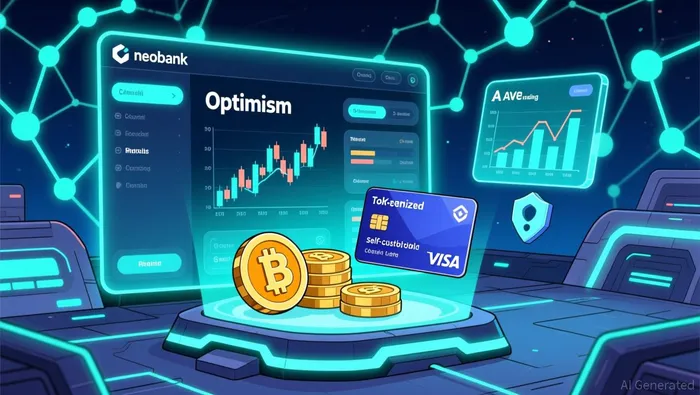
The August 13, 2026, "Summer" upgrade marked a pivotal shift in the protocol's strategic direction. By introducing tokenized stock and metal trading alongside an integrated AaveAAVE-- market on Optimism, EtherETH--.fi evolved into what the team describes as a comprehensive neobank . This expansion targets mainstream adoption by bridging traditional finance instruments with decentralized infrastructure, potentially driving significant growth in the user base and Total Value Locked .
The platform now processes approximately $2 million in daily real-world payment volume, indicating early traction in its broader financial suite . Beyond trading and lending, Ether.fi offers "Cash," a self-custodial Visa card that provides crypto cashback, further embedding the protocol into daily financial activities . These product integrations are designed to create a positive feedback loop where increased adoption directly boosts protocol revenue .
How Does The Treasury Buyback Plan Impact Tokenomics?
The expansion of protocol revenue has enabled new tokenomic mechanisms aimed at stabilizing the ETHFI price. A portion of the revenue generated from the platform's financial products funds programmatic buybacks of the native ETHFI token . This creates a direct link between user adoption and token supply dynamics, as higher engagement leads to increased repurchase activity .
A recent transaction demonstrated this mechanism in action, with the foundation using 73 ETH, valued at approximately $314,000, to repurchase and burn tokens . To further support the token price, the community has proposed allocating up to $50 million from the treasury to execute buybacks specifically when the price falls below $3 . This structured approach aims to reduce sell-side pressure and establish a higher price floor during market downturns .
Supply dynamics currently favor bulls due to minimal new sell pressure. With 96.5% of the 1 billion maximum supply already circulating, the impact of token unlocks on market price is largely mitigated . The combination of high circulation and active treasury-led repurchases suggests a deflationary pressure on the available float, assuming demand remains stable .
What Are The Centralization Risks Facing Ether.fi?
Despite bullish product developments and supportive tokenomics, on-chain data reveals severe centralization risks that could impact price stability. The top 100 wallets hold 94.28% of ETHFI's supply, creating a highly concentrated ownership structure . This level of concentration is exceptionally high for a decentralized protocol and introduces significant systemic risk .
Furthermore, 169 whale addresses collectively control over 96% of the market capitalization . Such extreme concentration creates vulnerability to sharp price movements if large holders decide to take profits . A coordinated sell-off from these entities could cap sustained rallies and increase volatility independent of the protocol's fundamental progress .
Traders are advised to monitor exchange inflow and outflow data from whale wallets as a leading indicator of potential price pressure . While the protocol has undergone rigorous security audits by firms including Certora, CertiK, and Halborn, focus on smart contract integrity rather than market structure. The security framework ensures that staking and lending modules remain solvent and function as intended, but it does not mitigate the risks associated with token distribution .
The contrast between Ether.fi's product-led growth and its on-chain centralization presents a complex risk profile for investors. The protocol's evolution into a defibank offers tangible utility and revenue streams that are rare in the liquid restaking sector . However, the dominance of a small number of whale wallets means that market sentiment may be disproportionately influenced by a handful of actors .
Investors must weigh the potential for sustained growth driven by the Summer upgrade's neobanking features against the threat of sudden liquidity shocks from concentrated holders . The treasury's $50 million buyback proposal serves as a buffer against downside risk, but it cannot fully offset the volatility inherent in such a concentrated supply distribution . As the protocol continues to integrate real-world assets and traditional financial products, monitoring both on-chain whale activity and total value locked metrics will be essential for assessing its long-term trajectory .

Blending traditional trading wisdom with cutting-edge cryptocurrency insights.
Latest Articles
Stay ahead of the market.
Get curated U.S. market news, insights and key dates delivered to your inbox.


AInvest
PRO
AInvest
PRO




Comments
No comments yet