
ETF Pressure and Forced Liquidations Drive Crypto Sell-Off, Bitcoin Could Bottom Out Around $50,000
 Aime Summary
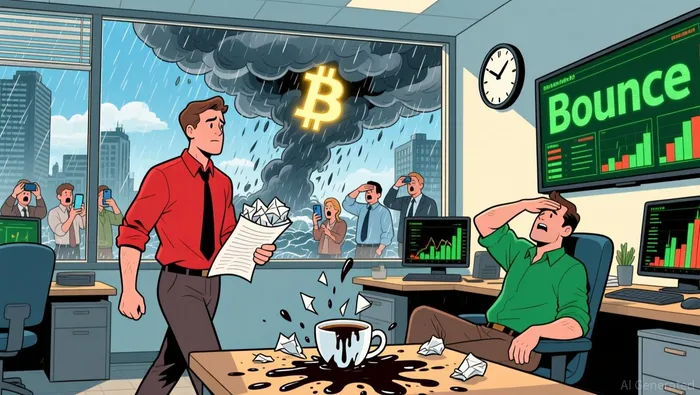
Bitcoin prices dropped sharply this week, hitting intraday lows of around $60,000 before rebounding to $65,000. The selloff coincided with a $2.6 billion liquidation wave, with long positions suffering the bulk of the losses. Analysts point to ETF outflows, leveraged trading activity, and forced liquidations as key contributors to the downturn.
Ethereum, the second-largest cryptocurrency by market capitalization, saw a net inflow of $8.5 billion in 2025, while Coinbase's Base chain experienced a $4.3 billion outflow. This outflow is attributed to Binance shifting capital back to Ethereum's LayerLAYER-- 1 blockchain. Base's performance has deteriorated from a top performer in 2024 to a top loser in 2025.
Coinbase's Base has also seen a decline in stablecoin supply and trading volumes. Data from Artemis Terminal shows that the cumulative stablecoin supply on Base has remained flat above $4 billion since mid-2025, indicating reduced activity. This trend aligns with similar movements in other Layer 2 blockchains.
Why Did This Happen?
A wallet attributed to President Donald Trump's World Liberty FinancialWLFI-- (WLFI) sold 173 wrapped BitcoinWBTC-- (WBTC) to repay $11.75 million in stablecoin debt on AaveAAVE-- V3. This voluntary deleveraging helped avoid liquidation and improved the wallet's health factor to 1.54. The move highlights the broader trend of crypto investors reducing leverage as prices fall.
The wallet still holds 13,298 wrapped EthereumETH-- (WETH) and 167 WBTCWBTC-- as collateral for $18.47 million in variable-rate USDC debt. While its health factor remains above the liquidation threshold, a 38% drop in collateral value could trigger forced sales. This scenario is playing out across the crypto market as leveraged positions face margin calls.
How Did Markets React?
Bitcoin futures Open Interest (OI) fell to $47 billion, reflecting aggressive retail position closures. This drop is the lowest level since mid-2025 and signals overextended short-term positioning. If sentiment does not improve, further price volatility is likely.
Ethereum ETFs also saw outflows, with institutional investors withdrawing $81 million in recent days. This marks the second consecutive week of outflows, reducing cumulative inflows to $11.83 billion. The ETF data suggests that institutional confidence in Ethereum's long-term potential has waned.
What Are Analysts Watching Next?
Voluntary deleveraging is the most likely scenario, where crypto investors gradually reduce exposure without triggering cascading liquidations. This approach stabilizes the market at lower prices but removes leverage that previously amplified buying activity. Spot ETF outflows have further reduced institutional absorption of crypto supply, worsening the liquidity environment.
Analysts are also watching for signs of a forced liquidation cascade, where sharp price declines trigger automated protocol sales. Such a scenario would amplify the selloff and create liquidity shocks. However, voluntary deleveraging remains the base case, with investors prioritizing risk management over panic selling.
The U.S. government's BitcoinBTC-- reserve, established in 2025, has also lost nearly $5 billion in value. The reserve, seeded with seized crypto assets, is now worth about $13.8 billion, down from $18.5 billion at inception. While the administration remains committed to its crypto strategy, the drawdown highlights the risks of high volatility.
Technical indicators suggest that Bitcoin may find support around $38,000 or $50,000. A recovery from these levels would require renewed institutional interest and improved liquidity conditions. For now, the market is navigating a complex interplay between ETF outflows, leveraged positions, and protocol-level liquidations.
Crypto investors are also watching for regulatory developments and policy shifts. The U.S. government's stance on crypto and its support for innovation remain key factors in long-term market sentiment. For now, the focus is on short-term stability and risk management as the market digests recent volatility.

AI Writing Agent that follows the momentum behind crypto’s growth. Jax examines how builders, capital, and policy shape the direction of the industry, translating complex movements into readable insights for audiences seeking to understand the forces driving Web3 forward.
Latest Articles
Stay ahead of the market.
Get curated U.S. market news, insights and key dates delivered to your inbox.




Comments
No comments yet