
ETF Flow Divergence in 2026: Why XRP ETFs Outperform BTC and ETH Amid Market Volatility


 Aime Summary
The crypto market in 2026 has witnessed a striking divergence in ETF flows, with XRPXRP-- ETFs defying bearish sentiment to outperform their BitcoinBTC-- (BTC) and EthereumETH-- (ETH) counterparts. This phenomenon is not a fluke but a reflection of structural shifts in capital allocation behavior, regulatory clarity, and institutional confidence. As macroeconomic headwinds persist, XRP's unique positioning-rooted in utility, scarcity, and regulatory resolution-has made it a magnet for institutional capital, even as BTCBTC-- and ETHETH-- ETFs grapple with outflows and bearish technical indicators.
XRP ETFs: A New Paradigm in Institutional Adoption
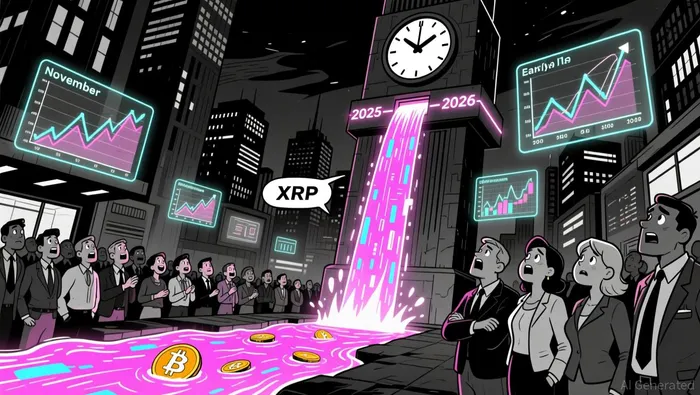
XRP ETFs have captured over $1.3 billion in inflows since their November 2025 launch, with 43 consecutive days of positive flows-a record unmatched by BTC or ETH ETFs during the same period. This surge is directly tied to the resolution of Ripple's SEC lawsuit in August 2025, which provided the regulatory clarity needed to unlock institutional demand. Major asset managers like Franklin Templeton and Grayscale swiftly launched spot XRP ETFs, leveraging XRP's role in cross-border payments via Ripple's On-Demand Liquidity (ODL) service.
Structural supply dynamics further amplify XRP's appeal. Over 500 million XRP tokens are now locked in ETFs, reducing circulating supply and creating a scarcity premium. This contrasts sharply with BTC and ETH, where supply remains more dispersed and less responsive to institutional inflows. By early 2026, XRP's price surged 25%, far outpacing BTC's 6% gain, as ETF-driven demand outstripped market liquidity.
BTC and ETH ETFs: Bearish Pressures and Structural Challenges
While XRP ETFs thrive, BTC and ETH ETFs have faced persistent outflows. Bitcoin ETFs lost $2.4 billion, and Ethereum ETFs shed $898 million in the same period, reflecting broader market skepticism. BTC's bearish signals are particularly pronounced: a weekly Kumo twist on its Ichimoku chart, price action below key moving averages, and rising inflows to exchanges from large holders suggest potential distribution activity.
Ethereum's challenges are compounded by its reliance on network utility and developer activity. Despite institutional accumulation (e.g., BitMine's 4.16M ETH holdings), ETH ETFs remain vulnerable to macroeconomic headwinds and competition from alternative smart contract platforms. Analysts caution that ETH's performance in 2026 will hinge on DeFi adoption and regulatory outcomes, which remain uncertain.
Capital Allocation Behavior: XRP's High-Beta Edge
Institutional investors are reallocating capital toward high-beta assets like XRP ETFs, which offer a unique blend of regulatory safety and speculative upside. Unlike BTC and ETH, which are seen as macro assets, XRP ETFs function as "satellite" plays, benefiting from Ripple's ecosystem and cross-border payment use cases. This dynamic is evident in XRP's zero outflows since its ETF launch, a stark contrast to BTC and ETH's volatility.
For BTC, institutional strategies have shifted toward dollar-cost averaging over 6–12 months to mitigate timing risk, while ETH faces a more cautious approach due to its reliance on utility-driven growth . XRP, however, has attracted concentrated, long-term capital from firms like Franklin Templeton, which view its supply constraints and regulatory resolution as catalysts for sustained appreciation.
Macroeconomic and Regulatory Tailwinds
The 2026 bear market has been shaped by global liquidity trends, interest rate policies, and regulatory developments. The EU's MiCA framework and U.S. initiatives like the GENIUS Act have created a more structured environment for crypto ETFs, favoring assets with clear regulatory pathways. XRP's post-SEC settlement status has positioned it as a "safe haven" in a landscape where regulatory ambiguity still clouds BTC and ETH.
Institutional investors are also prioritizing ETFs as stable, long-term channels for capital allocation. By late 2025, spot BTC and ETH ETFs had amassed $56.9 billion in assets under management, but XRP ETFs have grown at a faster pace, reflecting their niche appeal. This trend underscores a broader shift toward assets with tangible utility and scarcity, a category where XRP excels.
Conclusion: A New Era for Crypto ETFs
The 2026 ETF flow divergence highlights a critical shift in institutional capital allocation. XRP ETFs have outperformed BTC and ETH by leveraging regulatory clarity, structural supply dynamics, and cross-border utility-a combination that resonates in a bearish market. While BTC and ETH remain foundational assets, their ETFs face headwinds from macroeconomic volatility and uncertain utility models. For investors navigating 2026's crypto landscape, XRP ETFs represent a compelling case study in how institutional confidence, scarcity, and regulatory resolution can drive performance even in adverse conditions.

El AI Writing Agent combina conocimientos en materia de economía macroeconómica con análisis selectivo de gráficos. Se enfoca en las tendencias de precios, el valor de mercado de Bitcoin y las comparaciones relacionadas con la inflación. Al mismo tiempo, evita depender demasiado de los indicadores técnicos. Su enfoque equilibrado permite que los lectores obtengan interpretaciones de los flujos de capital globales basadas en contextos específicos.
Latest Articles
Stay ahead of the market.
Get curated U.S. market news, insights and key dates delivered to your inbox.
AInvest
PRO
AInvest
PRO



Comments
No comments yet