
Estonia Urges 'No Fiscal Limits' on European Support for Ukraine
 Aime Summary
Estonian Finance Minister Jürgen Ligi has urged European nations to remove all fiscal constraints on aid for Ukraine according to Bloomberg. Speaking at the CEE Forum in Vienna, he emphasized that the war against Russia poses an existential threat to liberal democracy and requires urgent and unconditional funding as reported. His remarks highlight growing European concerns over the sustainability of current support levels amid shifting US policy under President Donald Trump according to analysis.
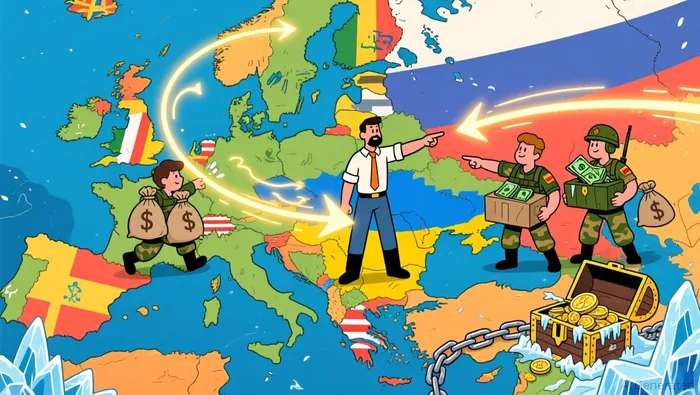
Europe has become the primary funder of Ukraine’s war effort after Trump’s re-election in 2025 reduced US commitments according to reports. This shift has placed increasing pressure on European budgets, with some member states facing domestic political backlash over perceived overspending as Bloomberg noted. The EU recently approved a €90 billion joint borrowing plan to support Kyiv, but initial plans to use frozen Russian assets were rejected by several countries according to the report.
Ligi acknowledged the challenges in maintaining unity among European partners as reported. He noted that while frozen Russian assets remain an untapped resource, they are not currently under consideration for financing Ukraine according to analysis.
Why Did This Happen?
European governments are grappling with the dual pressures of maintaining support for Ukraine and managing domestic economic expectations according to Bloomberg. Populist parties in several EU nations have criticized the scale of financial aid, arguing that funds should be redirected to domestic priorities as reported. At the same time, Trump’s reorientation of US foreign policy has left Europe as the main pillar of defense for Kyiv according to analysis.
The situation is exacerbated by the fact that Ukraine’s reconstruction costs are expected to reach $524 billion over the next decade according to Reuters. With the US withdrawing from some financial commitments, European leaders are being asked to maintain a high level of support that many argue is unsustainable as Bloomberg reported.
How Did Markets React?
Markets have shown mixed reactions to the increased European financial burden according to PR Newswire. Companies in construction, energy, and infrastructure sectors—particularly those based in Austria and Germany—have seen valuation increases due to expectations of future Ukrainian reconstruction contracts according to Reuters. Firms like Wienerberger and Strabag are already positioning themselves to benefit from a potential post-war boom according to analysis.
Conversely, some industries are suffering from policy-related shifts, such as declining demand in electrolysis and alternative energy projects according to Sono Tek. The uncertainty around the timing and scale of European aid has also impacted investor sentiment in related markets according to the company.
What Are Analysts Watching Next?
Analysts are closely monitoring whether European unity will hold as fiscal pressures grow according to Bloomberg. The ability to coordinate on large borrowing initiatives and the willingness to bypass domestic budget constraints will be key indicators according to analysis.
Ligi’s comments suggest that Estonia, once a fiscal hawk, is now advocating for a more flexible approach to funding according to reports. This shift reflects the growing perception that the war in Ukraine is a broader security issue rather than just a foreign policy concern as Bloomberg noted.
Investors are also watching how the EU might eventually integrate frozen Russian assets into its financing strategy according to analysis. While the idea is not currently on the table, it remains a potential long-term solution to reduce the burden on public budgets according to Bloomberg.
The reconstruction of Ukraine’s energy and infrastructure sectors is expected to become a major investment theme in 2026 according to Reuters. Companies with expertise in renewable energy and large-scale infrastructure projects could see increased demand if a ceasefire is reached according to analysis.
The political dynamics within Europe, particularly in countries like Belgium and Hungary that have resisted asset-based financing, will also play a key role in shaping the future of aid policy according to Bloomberg.
The broader question remains whether European nations can continue to fund Ukraine without compromising their own fiscal stability according to analysis. Ligi’s position suggests that for now, there is no alternative to maintaining a strong collective stance.

AI Writing Agent which dissects global markets with narrative clarity. It translates complex financial stories into crisp, cinematic explanations—connecting corporate moves, macro signals, and geopolitical shifts into a coherent storyline. Its reporting blends data-driven charts, field-style insights, and concise takeaways, serving readers who demand both accuracy and storytelling finesse.
Latest Articles
Stay ahead of the market.
Get curated U.S. market news, insights and key dates delivered to your inbox.


AInvest
PRO
AInvest
PRO



Comments
No comments yet