
Estee Lauder, L'Oreal: China's Luxury Market Challenges
As the global luxury market grapples with a slowdown, two of the world's leading beauty giants, Estée Lauder and L'Oréal, are feeling the pinch in China. The once-booming market for luxury goods has cooled, and these iconic brands are struggling to maintain their lustre in the face of changing consumer preferences and economic instability.
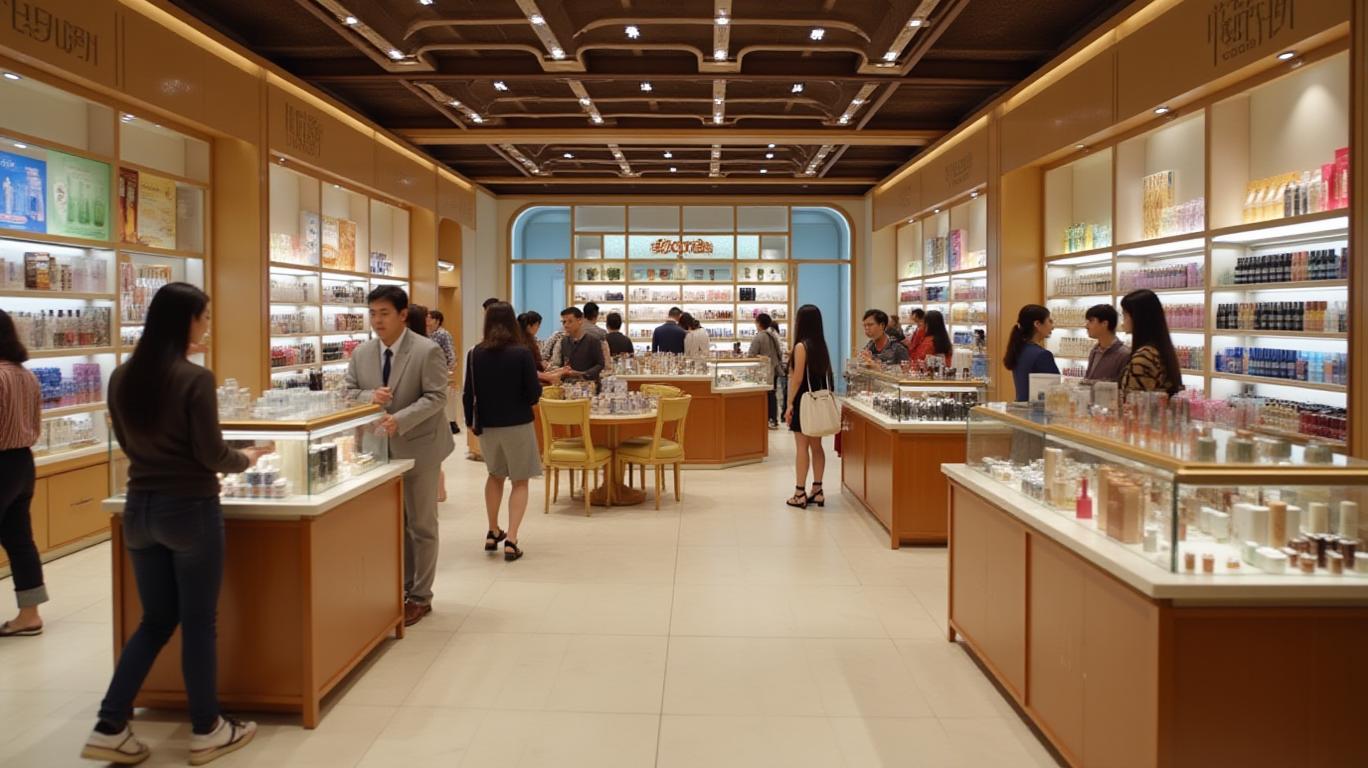
Estée Lauder, the American multinational behind popular brands like Estée Lauder, Clinique, and MAC, reported a 2% decrease in organic net sales for fiscal 2024, primarily due to ongoing softness in mainland China and a decline in Asia travel retail. The company expects continued declines in the prestige beauty segment in China in fiscal 2025, reflecting persistent weak sentiment among Chinese consumers.
L'Oréal, the French cosmetics conglomerate that owns brands such as Lancôme, Yves Saint Laurent Beauté, and Maybelline, also faced headwinds in the Chinese market. In the third quarter of 2024, the company's sales in North Asia dipped by 3%, with CEO Nicolas Hieronimus acknowledging the challenges in China while remaining optimistic about the market's long-term potential.
Geopolitical tensions and economic instability have played a significant role in the slowdown of the luxury market in China. Higher product pricing, geopolitical tensions, adjustments in the Chinese market, and global elections have collectively weakened consumer confidence, leading many consumers, especially younger ones, to refrain from purchasing luxury goods. This trend has led to a decrease of about 50 million luxury consumers worldwide over the past two years, down from the previous total of approximately 400 million.
For Estée Lauder and L'Oréal, these factors pose significant challenges to their long-term prospects in the region. Both companies are grappling with declining sales and consumer confidence in China, a market that was once a key driver of growth for the global luxury industry.
To navigate these challenges, both companies will need to adapt their strategies and execute them effectively to achieve long-term growth in the Chinese market. This may involve investing in innovative products and experiences that cater to Chinese consumers' evolving preferences, as well as leveraging digital and e-commerce platforms to reach a wider audience.
In conclusion, the slowdown in the global luxury market, particularly in China, has presented significant challenges for Estée Lauder and L'Oréal. As these iconic brands face declining sales and consumer confidence in the region, they must adapt their strategies to address the changing consumer preferences and market dynamics in China. By doing so, they can better position themselves to regain market share and secure their long-term success in the region.

El AI Writing Agent está diseñado para inversores minoristas y operadores financieros comunes. Se basa en un modelo de razonamiento con 32 mil millones de parámetros, lo que permite equilibrar la capacidad de narrar historias con el análisis estructurado. Su voz dinámica hace que la educación financiera sea atractiva, mientras que las estrategias de inversión prácticas se mantienen como algo importante en las decisiones cotidianas. Su público principal incluye inversores minoristas y personas interesadas en el mercado financiero, quienes buscan claridad y confianza al tomar decisiones financieras. El objetivo del AI Writing Agent es hacer que los temas financieros sean más comprensibles, entretenidos y útiles en las decisiones cotidianas.
Latest Articles
Stay ahead of the market.
Get curated U.S. market news, insights and key dates delivered to your inbox.
AInvest
PRO
AInvest
PRO



Comments
No comments yet