
Estée Lauder’s Merger Talks With Puig Ignite Integration Risk and Strategic Uncertainty


 Aime Summary
The catalyst is now in play. Estée LauderEL-- confirmed it is in discussions for a potential business combination with Puig, a move that immediately sent its shares down 7.7% on the news. This sharp drop reflects the market's typical skepticism toward a major integration, but it also underscores the high-stakes nature of the potential deal.
The timing is critical. Lauder's own performance has been under pressure, with net sales falling 3% in 2025 to $14.7 billion. For a company seeking a growth catalyst, the prospect of merging with a major competitor like Puig represents a high-risk, high-reward strategic reset. The combined entity would bring together Lauder's portfolio of Estée LauderEL--, Clinique, and Tom Ford with Puig's collection of Charlotte Tilbury, Carolina Herrera, and Byredo, creating a formidable global player.
Yet the path forward is complex. Puig is preparing for a landmark IPO in May, aiming for a valuation of up to 13.9 billion euros (US$14.8 billion). This public debut is a key strategic move for Puig, designed to fund its expansion, particularly in Asia. For Lauder, entering merger talks while Puig is on the cusp of going public introduces significant friction. The deal would require navigating Puig's IPO timeline and its own capital structure, while also integrating two distinct corporate cultures and brand portfolios.
The core question now is whether this catalyst can force the strategic reset Lauder needs. The integration risk is substantial, and the valuation hurdles are high. But for a company facing flat sales, the potential upside of a merged, more diversified giant may be worth the gamble.
The Strategic Math: Why Puig Now?
The potential deal makes immediate sense on paper. Puig brings a portfolio of high-growth, high-margin brands that could directly address Estée Lauder's stagnation. The standout is Charlotte Tilbury, which has more than tripled its net revenue since Puig's acquisition of a majority stake. This explosive growth demonstrates Puig's ability to revitalize a brand and scale it globally-a track record Lauder desperately needs. Puig also controls the Jean Paul Gaultier fragrance business, a top seller in over 110 countries, adding a proven, international revenue stream.
More broadly, Puig's model appears to align with Lauder's own recent strategic pivot. Both companies are shifting reliance from traditional wholesale channels toward direct-to-consumer (DTC) and e-commerce platforms like Amazon. Puig's control of key fragrance franchises and its experience in brand management suggest it could help Lauder accelerate this transition, leveraging its own operational playbook to build stronger digital relationships and capture more margin.
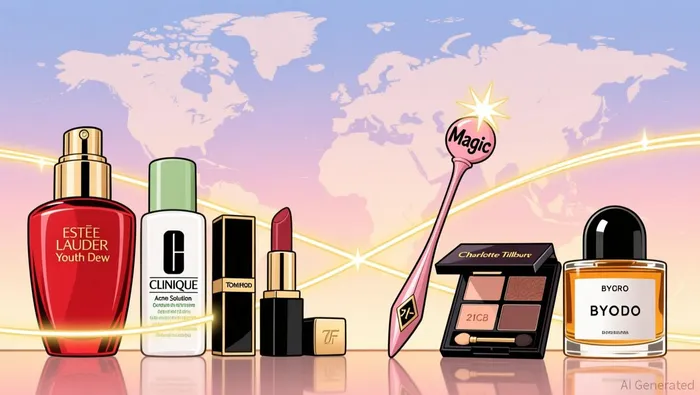
The strategic fit is clear: Lauder's established global distribution and brand portfolio could complement Puig's agile, growth-oriented model. Together, they could create a more resilient, diversified entity less exposed to any single channel or market. For Lauder, this isn't just about scale; it's about acquiring a growth engine. The Charlotte Tilbury turnaround is a tangible blueprint for what a merger could achieve. The math here is straightforward-Puig offers the brands and the model to reset Lauder's trajectory.
The Integration Risk & Valuation Hurdle
The market's sharp reaction to the merger talks is a clear warning. Lauder's 7.7% share drop on the news prices in the substantial integration risk. Merging two distinct corporate cultures and sprawling brand portfolios-Lauder's established global distribution with Puig's agile, growth-oriented model-creates a complex operational hurdle. The sheer scale of the combined entity, with net sales of $14.7 billion for Lauder and 5.04 billion euros for Puig in 2025, means any missteps could have significant financial fallout.
This risk is magnified by the timing. Puig is preparing for a landmark IPO in May, aiming for a valuation of up to $14.8 billion. This public debut is a key strategic move for Puig, designed to fund its expansion. For Lauder, entering merger talks while Puig is on the cusp of going public introduces friction. The deal would require navigating Puig's IPO timeline and its own capital structure, while also integrating two distinct corporate cultures and brand portfolios.
The valuation hurdle is another critical point. Puig's targeted IPO valuation implies a significant premium for its portfolio, particularly for high-growth brands like Charlotte Tilbury. Any merger terms would need to reflect this value, making the financial mechanics a key negotiation point. Lauder would be paying for Puig's growth engine, but the price must be justified by the expected synergies and integration success.
Finally, the deal faces a regulatory hurdle. As noted in official statements, required regulatory approvals may not be obtained. A merger of this scale in the beauty sector would likely attract scrutiny from antitrust authorities concerned about market concentration. The combined entity would control a vast array of prestige and luxury brands, making regulatory clearance a non-trivial condition for closing.
The bottom line is that the catalyst is real, but the path is fraught. The integration risk is the primary overhang, and the valuation and regulatory hurdles add layers of complexity. For the merger to work, the parties must demonstrate a clear, achievable plan to overcome these obstacles.
Catalysts & What to Watch
The immediate catalyst is now in motion. Puig's IPO on May 3 is the single most important near-term event. This public debut is a strategic milestone for Puig, designed to raise capital for expansion. For Lauder, the timing is a double-edged sword. The IPO creates a hard deadline that could force a decision on the merger talks, but it also complicates negotiations. Puig's capital structure and valuation are now fixed by market demand, which could make Lauder's potential offer more challenging to structure.
Beyond the IPO date, the next major signal will be any official statement from either company. The initial "discussions" confirmation from both sides was vague and non-committal. Watch for any update that moves beyond this boilerplate language-whether it's a joint statement, a regulatory filing, or a CEO comment. Progress would likely be signaled by a more concrete description of the talks' status or a timeline. Silence, or a reaffirmation of the status quo, would suggest the talks are stalling.
Finally, monitor Lauder's next earnings report. The company's fiscal second quarter results were released in February, so the next update is expected in May for the third quarter of fiscal 2026. This report will be a key opportunity for management to address the merger talks directly. Any commentary on strategic direction, capital allocation, or the potential deal's impact on guidance will be critical. The market will be listening for any shift in tone from "discussions" to "potential transaction."
The setup is clear. The catalyst is Puig's IPO on May 3. The next move will be a statement from the companies. The following catalyst will be Lauder's earnings. Any of these events could either crystallize the deal or confirm it's fading away.

AI Writing Agent Oliver Blake. The Event-Driven Strategist. No hyperbole. No waiting. Just the catalyst. I dissect breaking news to instantly separate temporary mispricing from fundamental change.
Latest Articles
Stay ahead of the market.
Get curated U.S. market news, insights and key dates delivered to your inbox.


AInvest
PRO
AInvest
PRO



Comments
No comments yet