
Estée Lauder's Leadership Shake-Up: Can "Beauty Reimagined" Revive a Luxury Icon?
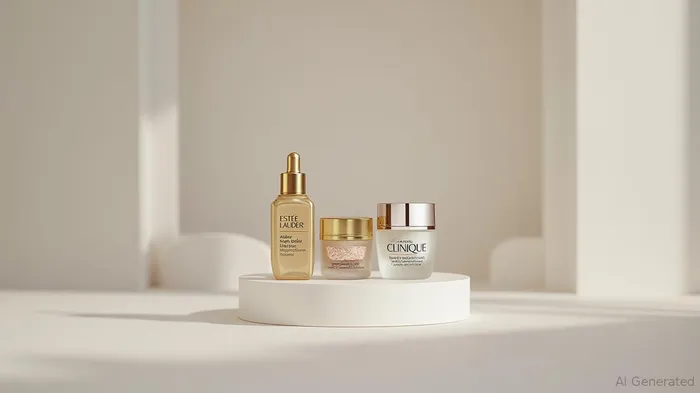
Estée Lauder Companies (EL) has been through a major leadership overhaul in 2025, with Stéphane de La Faverie stepping into the CEO role after 16 years of Fabrizio Freda's tenure. This transition comes at a critical juncture for the luxury beauty giant, which has faced sales declines, geopolitical headwinds, and a shifting consumer landscape. The question is: Can the new "Beauty Reimagined" strategy under de La Faverie's leadership restore growth, or is Estée Lauder's golden era behind it? Let's break it down.
The Leadership Shift: A New Era for a Legacy Brand
De La Faverie, a 25-year veteran of the prestige beauty industry, has wasted no time reorganizing the company's structure. He's consolidated regions into four clusters—EMEA/Emerging Markets, Americas, China, and Asia-Pacific/Travel Retail—to streamline decision-making. He's also introduced roles like Chief Brand Officer and prioritized digital marketing and data analytics. This shift reflects a clear pivot toward agility and consumer-centricity, which are vital in today's fast-paced beauty market.
But here's the catch: Estée Lauder's stock (EL) has been under pressure. shows a decline of roughly 20% since mid-2024, underperforming the broader market. Investors are skeptical—fairly so—given the company's struggles in key markets like China, where prestige beauty sales have weakened due to economic uncertainty and shifting consumer priorities.
The Financials: A Present Struggle, but a Long-Term Play?
Estée Lauder's Q2 2025 results were bleak. Net sales fell 6% to $4.0 billion, with Asia/Pacific sales down 11% due to China's softness and travel retail woes. The company reported an operating loss of $580 million, partly due to $861 million in goodwill impairments for brands like TOM FORD and Too Faced. However, the Profit Recovery and Growth Plan (PRGP) is delivering gross margin improvements, and the restructuring—aiming to cut 5,800–7,000 jobs by _—could free up $0.8–$1.0 billion annually by 2027.
The dividend cut to $0.35 per share (down from $0.62) underscores the need to conserve cash, but this is a necessary move. Investors should focus on the long game: de La Faverie's strategy includes accelerating e-commerce (e.g., expanding The Ordinary's reach on Amazon and TikTok) and boosting innovation (e.g., biotech partnerships with MIT). These steps could position Estée Lauder to capitalize on trends like clean beauty and personalized skincare.
The Luxury Beauty Landscape: Opportunities and Threats
The global luxury beauty market is still growing, albeit at a slower 5% pace through 2030. Estée Lauder's rivals—think LVMH (owner of Fenty Beauty and Benefit Cosmetics) or Coty (Burberry, Calvin Klein)—are also investing in e-commerce and sustainability. However, Estée Lauder's portfolio remains a powerhouse, with iconic brands like La Mer (still a prestige darling) and Clinique (a budget-friendly staple). The challenge is reigniting growth in China, where Estée Lauder's sales have been hit by weaker consumer sentiment and inventory issues in travel retail.
De La Faverie's focus on operational efficiency and brand revitalization could be the answer. For instance, the reorganization aims to reduce bureaucracy, enabling faster decision-making. The company's $15 billion valuation is a fraction of its peak, but its brand equity remains unmatched. If China's economy stabilizes—and the company executes its cost-cutting plan—Estée Lauder could rebound.
The Bottom Line: Is This a Buy?
Estée Lauder is a classic "value trap" at the moment, but there are reasons to be cautiously optimistic. The stock trades at around 12x forward earnings, well below its five-year average of 18x. The restructuring and strategic shifts under de La Faverie suggest management is serious about turning things around. However, investors must weigh the risks:
- Near-Term Risks: China's recovery timeline is unclear, and Asia travel retail remains a drag. The company's Q3 outlook predicts an 8% sales decline, which could pressure the stock further.
- Long-Term Upside: If Estée Lauder executes its Beauty Reimagined strategy—streamlining costs, boosting e-commerce, and leveraging its brands' heritage—it could capture a larger share of the growing prestige beauty market. The stock's dividend cut isn't ideal, but it's better than seeing cash reserves dwindle.
shows EL has lagged peers, but this could present a buying opportunity if the restructuring succeeds. Historically, buying 5 days before quarterly earnings and holding through the next announcement has yielded an average return of 4.2% with a 60% hit rate, suggesting potential upside around earnings events despite periods of volatility.
Final Takeaway: Buy the Dip, but Keep an Eye on China
Estée Lauder is a brand with immense potential but execution risks. For income investors, the dividend cut is a red flag, but growth-focused investors might see value here. I'd recommend a cautious approach: dollar-cost averaging into EL stock while monitoring Q3 results (due in late 2025). If China's prestige beauty market stabilizes and the restructuring savings materialize, this could be a multiyear winner. But until then, proceed with patience and a stop-loss.
In the words of a certain Mad Man: “Estée Lauder isn't dead—it's just in a holding pattern. If de La Faverie can ignite growth, this could be a comeback story. But if China stays flat, we're in for a long wait.”

Stay ahead of the market.
Get curated U.S. market news, insights and key dates delivered to your inbox.


AInvest
PRO
AInvest
PRO



Comments
No comments yet