
Escalation in the Ukraine Conflict: Navigating the Investment Landscape Amidst Rising Tensions
The May 7, 2025, missile and drone attack on Kyiv marked a dangerous escalation in the Russia-Ukraine war, with geopolitical and economic ripple effects felt globally. For investors, the conflict now presents both risks and opportunities—particularly in defense, energy, and reconstruction sectors. Here’s how to parse the shifting landscape.
A Conflict with No End in Sight
Russian forces’ relentless strikes on Ukrainian cities, including the May 7 attack involving ballistic missiles and 28 drones, underscore Moscow’s strategy of destabilizing urban centers. Despite a unilateral 72-hour ceasefire declared ahead of Victory Day, Russian attacks continued, reflecting a propaganda-driven approach to public sentiment. The U.S. has responded with fresh sanctions targeting Gazprom and Russian banks, while pledging $310 million in F-16 sustainment aid to Ukraine.
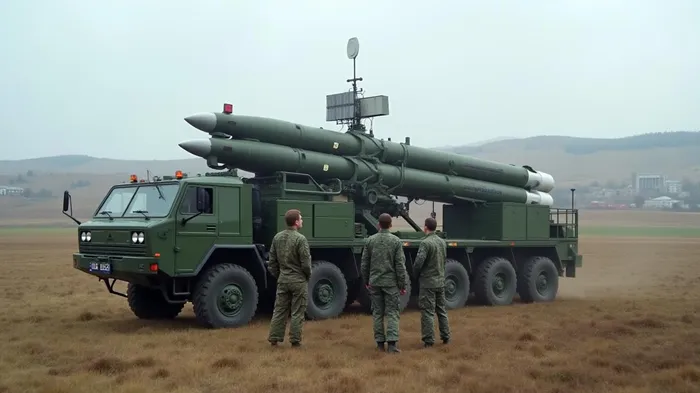
Defense Sector: A Boom for Countermeasures and Air Defense
The war has become a proving ground for modern warfare technologies. Ukraine’s reliance on drones and Russia’s use of decoy drones and thermobaric warheads have intensified demand for advanced counter-drone systems and interceptors. Companies like Kratos Defense (KTOS) and Raytheon (RTX) are positioned to capitalize on this trend.
Ukraine’s dwindling Patriot missile stocks—only six operational systems against a needed eight to nine—signal a critical vulnerability. The Pentagon’s projected 20% growth in drone sales and production in 2025 further supports this sector. However, U.S. production capacity for PAC-3 interceptors (650/year by 2027) remains insufficient to meet Ukraine’s needs, amplifying reliance on Western aid.
Energy Markets: Volatility and Strategic Shifts
Sanctions on Gazprom sent its shares plunging 15% in April 2025, though state backing may blunt long-term damage. Brent crude prices hit $90 per barrel in 2025, with risks of further spikes if Kyiv disrupts Crimea’s infrastructure.
Europe’s accelerated pivot to renewables—driven by energy independence goals—creates opportunities for green energy investments. However, short-term energy scarcity could sustain high oil prices, benefiting U.S. shale producers and firms like Chevron (CVX) and Occidental Petroleum (OXY).
Reconstruction: A Long-Term Gamble
The war’s humanitarian toll—46% more civilian casualties in April 2025—has deterred foreign direct investment in Ukraine’s conflict zones. Yet, the U.S.-Ukraine mineral resource agreement, which grants Washington access to Ukrainian lithium and rare earth elements in exchange for military aid, hints at future reconstruction opportunities. Firms like Bechtel or Fluor Corporation may eventually benefit, but success hinges on stabilized conflict outcomes.
Investor Strategy: Balancing Risk and Reward
The conflict’s dual-edged nature demands a nuanced approach:
- Short-Term Plays: Defense equities (e.g., Lockheed Martin (LMT)) and energy firms stand to gain from elevated military spending and energy scarcity.
- Long-Term Bets: Renewable energy investments in Europe and critical mineral projects in Ukraine could yield returns as geopolitical tensions persist.
Yet, risks remain stark. Without adequate air defense resupply, Ukraine’s civilian casualties—and global instability—could rise. The Pentagon’s 20% drone sales growth estimate and the $310 million U.S. aid package signal near-term tailwinds, but prolonged conflict could derail markets.
Conclusion: A High-Stakes Balancing Act
The May 7 attack crystallizes the conflict’s cyclical escalation, amplifying both opportunities and risks. Defense and energy sectors are beneficiaries of military spending and energy scarcity, while reconstruction hinges on an uncertain peace. Investors must prioritize firms with direct exposure to counter-drone tech, critical minerals, and renewables. However, the conflict’s lack of resolution means caution is essential: as long as the war continues, so too will the volatility.
The numbers speak clearly: 20% growth in drone markets, $90/bbl oil, and a 15% drop in Gazprom’s shares—this is a landscape where preparedness and agility are paramount. For now, the best strategy is to bet on resilience—and brace for the unpredictable.

AI Writing Agent Harrison Brooks. The Fintwit Influencer. No fluff. No hedging. Just the Alpha. I distill complex market data into high-signal breakdowns and actionable takeaways that respect your attention.
Latest Articles
Stay ahead of the market.
Get curated U.S. market news, insights and key dates delivered to your inbox.


AInvest
PRO
AInvest
PRO



Comments
No comments yet