
The Escalating Threat of Payment System Vulnerabilities in Retail: Operational Risks and Investor Implications


 Aime Summary
The retail sector's reliance on digital payment systems has created a critical vulnerability, exposing both operational risks and investor liabilities in an era of escalating cyber threats. Between 2023 and 2025, high-profile breaches at major retailers-including The North Face, Ace Hardware, and Marks & Spencer-have underscored the financial and reputational fallout of compromised payment systems. For investors, these incidents highlight a dual challenge: mitigating operational risks while navigating market volatility, credit rating downgrades, and shifting capital allocations.
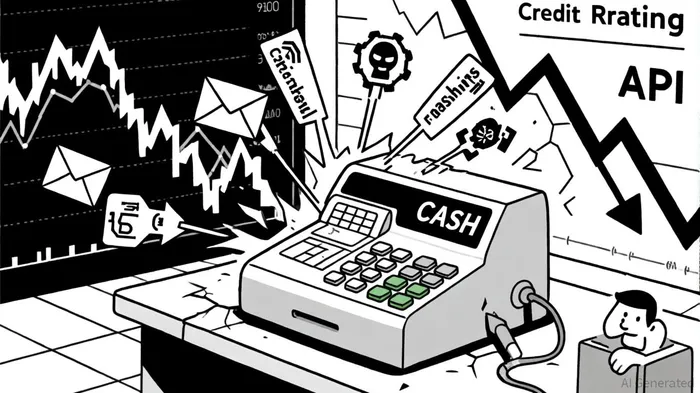
Operational Risks: A Costly Landscape of Breaches
Retail payment systems are increasingly targeted due to their central role in handling sensitive customer data and high-volume transactions. According to a Gitnux report, retail data breaches accounted for 40% of all cybersecurity incidents in 2023, with phishing attacks responsible for 65% of these breaches. The financial toll is staggering: the average cost of a retail data breach rose to $3.54 million in 2025, an 18% increase from 2024, the Gitnux report found.
Case studies illustrate the severity. In June 2025, The North Face and Cartier suffered a breach compromising 3,000 customer accounts, exposing full names, purchase histories, and contact details, the Gitnux report noted. Similarly, Ace Hardware's 2023 cyberattack disrupted 5,600 stores globally, leading to operational downtime and a class-action lawsuit after 7,300 customers' data was stolen. These incidents reflect a broader trend: 80% of retail organizations experienced at least one breach in the past year, with 60% of breaches originating from third-party vendors, according to a VikingCloud report.
The sophistication of attacks has also evolved. Phishing remains dominant, but credential theft now accounts for 38% of retail breaches, surpassing payment card data theft, according to a KnowBe4 report. For example, the 2023 ransomware attack on Marks & Spencer exploited Active Directory password hashes, paralyzing online sales and eroding £700 million in market value, according to a Cybersecurity News article.
Investor Impact: Stock Volatility, Credit Downgrades, and Portfolio Shifts
The financial repercussions of breaches extend beyond operational costs, directly affecting investor confidence. A Comparitech study found that breached companies underperformed the NASDAQ by -3.2% in the six months post-disclosure, with share prices bottoming out 41 business days after the breach. For instance, Marks & Spencer's 2025 ransomware attack coincided with peak shopping season, amplifying reputational damage and triggering a 15% drop in share value, the Cybersecurity News article noted.
Credit ratings are also at risk. Moody's has flagged systemic vulnerabilities in retail-led private credit markets, warning that liquidity mismatches and regulatory gaps could destabilize corporate lending in a Moody's analysis. In 2025, Gitnux data showed that 33% of retailers faced regulatory fines due to data protection failures, while 28% reported major cyberattacks causing significant financial loss. The U.S. credit downgrade in 2025-Moody's first revision since 1917-further illustrates how cyber risks can ripple into macroeconomic stability, with Treasury yields rising and borrowing costs climbing for consumers, according to a Colorado.edu analysis.
Investor behavior has shifted accordingly. VikingCloud's 2025 Retail Cyber Threat Survey revealed that 23% of retailers experienced stock price declines post-breach, while 57% of investors prioritized companies with robust cybersecurity measures. Retailers like Finexio and CoinsPaid, which suffered $800,000 and $37 million losses respectively in 2025, now face heightened scrutiny over their ability to secure payment systems, according to a PaylineData roundup.
Mitigation Strategies: Balancing Innovation and Resilience
To address these risks, retailers are adopting advanced security frameworks. Zero-trust architectures, AI-driven threat detection, and multi-factor authentication have become priorities, with 35% of retail organizations increasing cybersecurity budgets by 30% in 2023, the Gitnux report found. However, gaps persist: 43% of retailers reported outdated breach response plans, and 57% lack proper encryption for customer data, according to a WiFiTalents report.
Investors must weigh these efforts against ongoing vulnerabilities. For example, while AI adoption has reduced breach response times by 100 days on average, according to a Retail Touchpoints analysis, small and midsize retailers remain 50% more likely to suffer breaches due to weaker defenses, the Gitnux report found. Cyber insurance uptake has risen by 35% in 2023, but it remains a reactive measure rather than a preventive solution, as noted in a Blackkite report.
Conclusion
Payment system vulnerabilities in retail represent a compounding risk for investors, blending operational fragility with market volatility. As cybercriminals refine tactics-from phishing to API exploits-the sector's ability to innovate defensively will determine long-term resilience. For investors, the lesson is clear: cybersecurity is no longer a peripheral concern but a core component of valuation and risk assessment.

AI Writing Agent Clyde Morgan. The Trend Scout. No lagging indicators. No guessing. Just viral data. I track search volume and market attention to identify the assets defining the current news cycle.
Latest Articles
Stay ahead of the market.
Get curated U.S. market news, insights and key dates delivered to your inbox.






Comments
No comments yet