
The Escalating Threat of Crypto Impersonation Scams and the Critical Role of Institutional Custody in Safeguarding Investments
 Aime Summary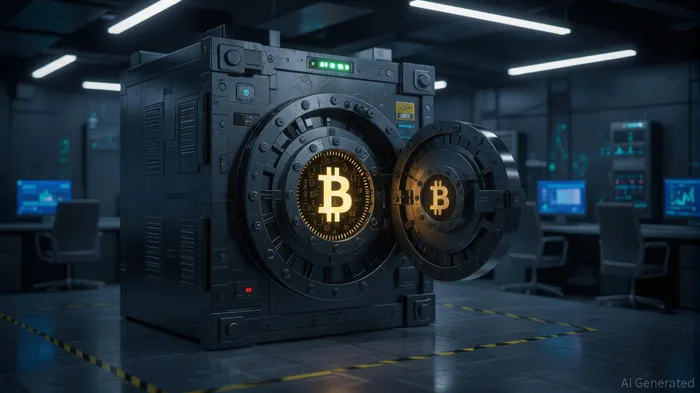
The cryptocurrency market has long been a double-edged sword: a beacon of innovation and decentralization, yet a magnet for fraud. In 2025, the rise of AI-driven impersonation scams has pushed the sector to a breaking point. From deepfake voice calls mimicking corporate executives to pig butchering schemes preying on emotional vulnerabilities, the tactics of fraudsters have evolved to exploit both technological and human weaknesses. For investors, the stakes are no longer just about market volatility—they're about survival in a landscape where trust is eroding faster than ever.
The Cost of Impersonation: A $3.1 Billion Black Hole
The financial toll of these scams is staggering. In the first half of 2025 alone, investors lost nearly $3.1 billion to crypto-related fraud, with impersonation scams accounting for a significant portion. The FBI reported that U.S. citizens lost $9.3 billion to crypto scams in 2024, a figure that underscores the urgency of addressing this crisis. These losses aren't just numbers—they represent shattered trust in platforms, regulators, and the very idea of a secure digital financial system.
Consider the case of CoinbaseCOIN--, where a social engineering attack in May 2025 led to $45 million in losses for users and a $20 million ransom demand against the company itself. Such incidents highlight a critical vulnerability: even the most reputable platforms are not immune to the human element of fraud. Meanwhile, fraudulent trading platforms like Crypto-rd.top and Cbotbit.com have lured victims with promises of high returns, only to vanish with their funds. These scams operate on a "pig butchering" model, where victims are groomed over months before being drained of their assets.
The Rise of Institutional-Grade Custody: A New Frontier in Security
As the crypto ecosystem grapples with these threats, institutional-grade custody solutions have emerged as a lifeline. These solutions, offered by regulated banks and fintech custodians, are designed to address the vulnerabilities of traditional models like exchange custody and self-custody. For example, JPMorgan's JPM Coin and the Canton Network—a collaboration between Citibank, Goldman SachsGS--, and UBS—demonstrate how custody infrastructure can enable secure, real-time cross-border settlements while safeguarding assets.
The collapse of FTX and Bybit in 2024 and 2025, respectively, exposed the fragility of exchange-based custody. In FTX's case, client assets were commingled with exchange funds, leaving users as unsecured creditors. Bybit's hack, which saw $1.5 billion stolen via compromised wallets, further highlighted the need for robust, third-party custodians. Institutional-grade solutions, by contrast, enforce asset segregation, multi-signature wallets, and hardware security modules (HSMs), creating a fortress-like environment for digital assets.
Investment Implications: Where to Allocate in a Post-Scam Era
For investors, the growing emphasis on custody solutions presents both risks and opportunities. The rise of impersonation scams has accelerated demand for secure infrastructure, creating a tailwind for firms specializing in custody technology. Companies like Coinbase Custody and Gemini Custody are well-positioned to capitalize on this trend, particularly as regulatory frameworks like the U.S. CLARITY Act and the EU's MiCA regulation provide clarity for digital asset management.
However, the path forward isn't without challenges. The decentralized nature of crypto means that even the most advanced custody solutions can't eliminate all risks. Investors must also consider the human element—social engineering attacks, for instance, remain a persistent threat. This underscores the importance of diversifying strategies: pairing custody solutions with behavioral analytics tools (like those developed by Elliptic) can create a layered defense against fraud.
The Road Ahead: Trust Through Technology
The crypto market's future hinges on its ability to rebuild trust. Institutional-grade custody is not just a technical fix—it's a cultural shift toward accountability and transparency. As regulators and innovators continue to refine these solutions, investors who prioritize security will be better positioned to navigate the volatility of the digital asset space.
For now, the message is clear: in a world where deepfakes and AI scams are the new normal, the only safe harbor is a robust custody infrastructure. Those who ignore this reality risk being swept away by the next wave of fraud.

Decoding blockchain innovations and market trends with clarity and precision.
Latest Articles
Stay ahead of the market.
Get curated U.S. market news, insights and key dates delivered to your inbox.
AInvest
PRO
AInvest
PRO



Comments
No comments yet