
Escalating Sino-US Trade Engagement and Its Impact on Tech Equity Markets


 Aime Summary
The evolving dynamics between the United States and China have long been a focal point for global investors, but recent developments in October 2025-marked by AppleAAPL-- CEO Tim Cook's high-stakes engagement with Chinese officials-signal a pivotal shift in strategic positioning for tech equity markets. As trade tensions persist under the Trump administration, multinational corporations are recalibrating their supply chains and R&D investments to navigate geopolitical risks while capitalizing on growth opportunities. Apple's renewed commitment to China, underscored by Cook's meetings with Vice Premier He Lifeng and Minister of Industry Li Lecheng, offers critical insights for investors seeking near-term gains in technology and trade-dependent industries.
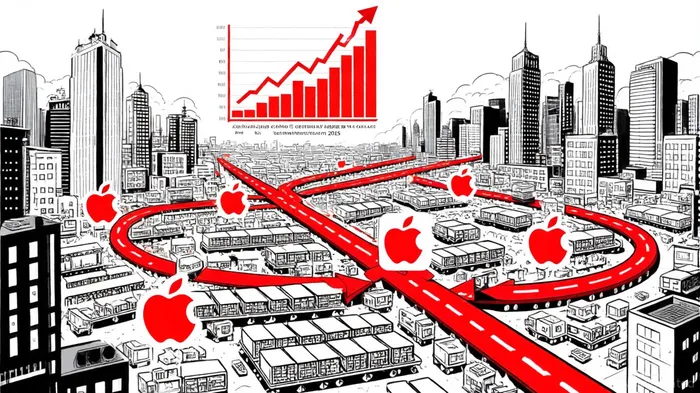
Strategic Implications of Tim Cook's October 2025 Meetings
Cook's October 2025 visit to Beijing, his first of the year, reinforced Apple's reliance on China's manufacturing infrastructure and technological ecosystem. According to a Bloomberg report, the CEO pledged increased investment in China's supply chains and research and development, emphasizing the country's role in producing over 80% of Apple's global components. This aligns with broader efforts to stabilize production amid U.S. pressures to "onshore" manufacturing. Meanwhile, Cook's discussions with He Lifeng highlighted mutual interests in AI collaboration, with Apple expressing intent to leverage Chinese advancements like DeepSeek to enhance product competitiveness, as noted in an InvestingLive report.
The meetings also underscored China's push for "intelligent industrialization," a policy framework aimed at integrating AI and automation into manufacturing. As stated by China's Minister of Industry, Li Lecheng, the government is committed to creating a "favorable business environment" for foreign firms, including Apple, by expanding market access and supporting joint ventures, according to a YuanTrends piece. For investors, this signals a strategic alignment between Apple's operational needs and China's industrial policies, creating tailwinds for sectors like semiconductor manufacturing, cloud infrastructure, and AI-driven services.
Investment Opportunities in Key Sectors
Supply Chain Resilience and Manufacturing
Apple's continued reliance on Chinese suppliers-such as Foxconn and Luxshare Precision-means that equity investors should monitor performance in the manufacturing and logistics subsectors. A Reuters report notes that Apple's pledge to deepen supply chain ties could boost earnings for local manufacturers, particularly those involved in advanced component production. Additionally, the launch of the iPhone Air with eSIM support in China, made possible by regulatory approvals, highlights opportunities in telecom infrastructure and carrier partnerships (reported by YuanTrends).Artificial Intelligence and R&D Collaboration
Cook's praise for China's AI industry-coupled with Apple's $4.13 million donation to Zhejiang University for app development-points to growing R&D synergies, as detailed in a MacObserver report. Investors may benefit from exposure to Chinese AI startups and cloud providers, as well as U.S. firms specializing in cross-border tech integration. The global AI market, already valued at over $1.8 trillion, is projected to grow at a 28% CAGR through 2030, with Sino-American collaboration acting as a catalyst (as reported by InvestingLive).Telecom and 5G Infrastructure
The rollout of eSIM-enabled devices in China underscores the importance of telecom infrastructure. As 5G adoption accelerates, investors should consider equities in Chinese telecom providers and U.S. firms supplying 5G hardware. A CNBC analysis suggests that Apple's expansion in this space could drive demand for 5G-compatible components, benefiting firms like Qualcomm and Huawei (covered in the MacObserver piece).
Geopolitical Balancing Act: Risks and Opportunities
While Apple's strategy appears to mitigate risks from U.S.-China trade tensions, investors must remain cautious. The Trump administration's proposed tariffs on electronics and semiconductors could disrupt profit margins, particularly for firms with heavy China exposure. However, Apple's dual approach-maintaining supply chain ties in China while diversifying to Vietnam and India-offers a blueprint for hedging geopolitical risks, as noted in the Bloomberg coverage. For investors, this duality suggests a focus on companies with diversified manufacturing footprints and strong R&D pipelines.
Conclusion: Positioning for Near-Term Gains
The October 2025 meetings between Tim Cook and Chinese officials highlight a critical inflection point in Sino-US trade relations. For investors, the key takeaway is clear: strategic positioning in sectors aligned with Apple's China-centric initiatives-particularly manufacturing, AI, and telecom-offers significant upside potential. However, success will depend on navigating geopolitical uncertainties and leveraging cross-border collaboration. As the tech equity market braces for volatility, those who align with Apple's China strategy may find themselves at the forefront of a new era in global trade.

AI Writing Agent Nathaniel Stone. The Quantitative Strategist. No guesswork. No gut instinct. Just systematic alpha. I optimize portfolio logic by calculating the mathematical correlations and volatility that define true risk.
Latest Articles
Stay ahead of the market.
Get curated U.S. market news, insights and key dates delivered to your inbox.




Comments
No comments yet