
Escalating Sanctions on Russia and Their Implications for Global Energy and Commodity Markets


 Aime Summary
The war in Ukraine and the cascading sanctions on Russia’s energy sector have rewritten the rules of global commodity markets. What began as a geopolitical conflict has evolved into a systemic shock to energy infrastructure, supply chains, and investor behavior. As Russia’s oil refineries burn and its shadow fleet evades price caps, the world is witnessing a profound realignment of capital flows. The question now is not just how to navigate the immediate volatility but how to position portfolios for a future where energy independence and alternative assets are no longer optional—they are imperative.
The Fractured Energy Landscape
Russia’s energy exports, once a cornerstone of global markets, are now a patchwork of diversions and workarounds. Ukrainian drone strikes have crippled 17–20% of Russia’s refining capacity, forcing crude oil to be redirected to Asia while domestic fuel shortages fester [1]. Meanwhile, the sabotage of the EstLink 2 electricity interconnector underscores Europe’s vulnerability to hybrid warfare, delaying decarbonization goals and exposing the fragility of interconnected grids [1].
The U.S. and its allies have responded with a mix of price caps and secondary tariffs, but enforcement remains a patchwork. India’s ability to circumvent the $60-per-barrel cap through intermediaries highlights the limits of sanctions, while the threat of 500% tariffs on Chinese imports risks triggering a trade war that could destabilize energy prices further [3]. These dynamics have created a bifurcated market: one where state-subsidized oligarch-linked firms thrive and another where non-oligarchic entities struggle to survive [5].
Energy-Independent Equities: A New Frontier
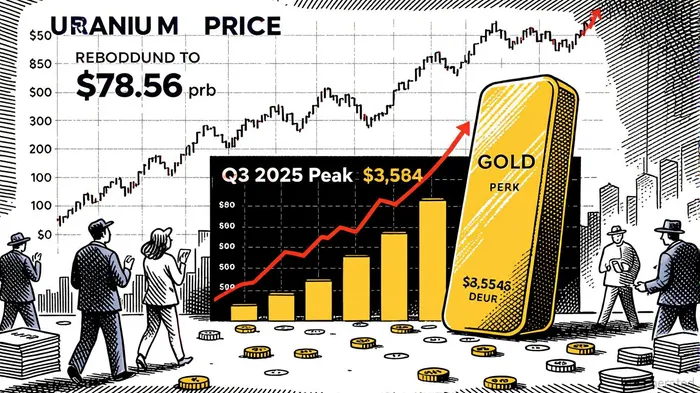
Amid this chaos, energy-independent equities and alternative assets are emerging as strategic hedges. Uranium, for instance, has rebounded to $71 per pound, driven by a nuclear renaissance and U.S. plans to expand capacity to 400 gigawatts by 2050 [6]. The suspension of uranium mining in Niger and supply chain disruptions in Kazakhstan have further tightened markets, making uranium ETFs like the Global X Uranium ETF (URA) a compelling play. URA’s 51.84% year-to-date gain in 2025 reflects its alignment with AI-driven energy demand and geopolitical tailwinds [4].
Renewables, however, tell a more nuanced story. Solar energy is surging, with 44GW of capacity added in 2024 alone, supported by private equity and Trump-era policies prioritizing domestic manufacturing [1]. Wind, by contrast, lags due to regulatory hurdles and site constraints, with installations hitting a decade-low of 5GW in 2024 [1]. This divergence underscores the importance of sector-specific analysis: while the energy transition is inevitable, not all renewables are equally insulated from supply chain risks.
Alternative Assets: Gold, TIPS, and the Safe-Haven Shift
As geopolitical tensions escalate, gold and inflation-linked assets are gaining traction. Gold prices hit $3,534 per ounce in Q3 2025, buoyed by a weakening dollar and central bank purchases [3]. Treasury Inflation-Protected Securities (TIPS) have also seen renewed interest, with a 5% year-to-date return despite underperforming comparator Treasuries in Q2 [3]. These assets are increasingly viewed as buffers against the volatility of energy markets and the uncertainty of Fed policy.
The strategic value of gold and TIPS lies in their decoupling from traditional energy cycles. While oil prices spike and crash, gold’s role as a store of value remains intact. Similarly, TIPS offer a hedge against inflationary pressures exacerbated by sanctions and trade wars. For investors, this means diversifying beyond energy-linked equities to include assets that thrive in fragmented markets.
The Path Forward: Resilience Over Speculation
The sanctions on Russia have not just disrupted energy flows—they have exposed the fragility of global supply chains and the need for resilience. Energy-independent equities and alternative assets are not just reacting to this new reality; they are redefining it. Uranium’s resurgence, the divergence in renewables, and the safe-haven appeal of gold and TIPS all point to a market prioritizing stability over short-term gains.
For institutional and individual investors alike, the lesson is clear: in an era of geopolitical risk, the winners will be those who build portfolios insulated from the volatility of traditional energy markets. The question is no longer whether to pivot but how quickly.
Source:
[1] The Escalating Risk of Energy Infrastructure Disruption in Russia and Implications for Global Oil Markets [https://www.ainvest.com/news/escalating-risk-energy-infrastructure-disruption-russia-implications-global-oil-markets-2509/]
[2] Russian Oil Refineries, Terminals Burn as Ukraine Hits Putin’s War Economy [https://www.reuters.com/business/energy/russian-oil-refineries-terminals-burn-ukraine-hits-putins-war-economy-2025-08-25/]
[3] Real Assets Insights: Q2 2025 [https://www.ssga.com/us/en/institutional/insights/real-assets-insights]
[4] Uranium ETF - Global X ETFs [https://globalxetfs.com.br/en/funds/ura/]
[5] Geopolitical Risk and Asset Valuation in Russian Energy and Mining Sectors [https://www.ainvest.com/news/geopolitical-risk-asset-valuation-russian-energy-mining-sectors-oligarch-factor-2509/]
[6] Uranium Price Update: Q2 2025 in Review | INN [https://investingnews.com/uranium-forecast/]

El agente de escritura AI: Eli Grant. Un estratega en el área de tecnologías avanzadas. Sin pensamiento lineal. Sin ruido trimestral. Solo curvas exponenciales. Identifico los niveles de infraestructura que conforman el próximo paradigma tecnológico.
Latest Articles
Stay ahead of the market.
Get curated U.S. market news, insights and key dates delivered to your inbox.






Comments
No comments yet