
The Escalating Risks of Leveraged Crypto Futures Trading in a Volatile Market
 Aime Summary
The leveraged crypto futures market has emerged as a double-edged sword, amplifying both the potential rewards and systemic vulnerabilities of digital assets. As macroeconomic stress intensifies-driven by regulatory shifts, geopolitical tensions, and liquidity shocks-the interplay between trader behavior and systemic risk has become a critical focal point for investors. The 2023–2025 period has underscored how leveraged exposure, concentrated ownership, and pro-cyclical liquidity structures can exacerbate market instability, particularly during periods of macroeconomic turbulence.
Systemic Risks and Macroeconomic Stress
The 2025 crypto bear market, triggered by a confluence of regulatory crackdowns, cyberattacks, and overleveraged positions, exposed the fragility of leveraged futures markets. During this crisis, blue-chip cryptocurrencies experienced intraday price drops exceeding 30%, driven by cascading algorithmic liquidations and thinning order books. This pro-cyclical liquidity structure-where bullish phases are fueled by one-sided retail flows- leaves markets vulnerable to sudden panic, as liquidity dries up during downturns.
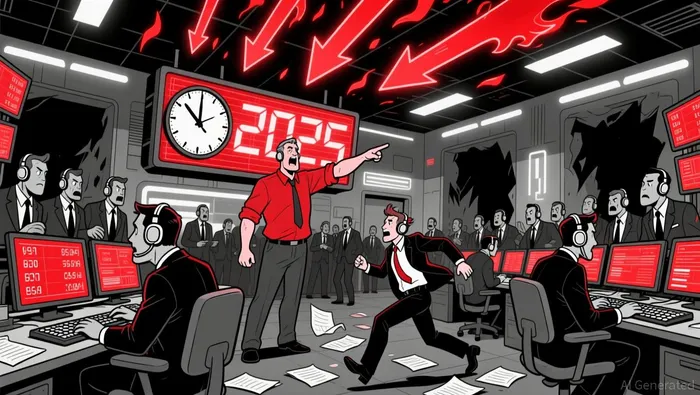
Regulatory interventions, such as the U.S. GENIUS Act, aimed to mitigate these risks by requiring stablecoin issuers to back tokens with high-quality liquid assets. However, by November 2025, on-chain activity and leverage levels had plummeted to their lowest since 2022, with open interest in crypto futures hitting $29 billion-a stark contrast to the $70 billion peak in mid-2025. This decline reflects a broader recalibration of risk appetite, as traders and institutions retreated from speculative bets amid macroeconomic uncertainty.
The correlation between cryptocurrencies and traditional assets has also shifted. BitcoinBTC-- (BTC) now exhibits a strong negative correlation with the Nasdaq during periods of macroeconomic stress, signaling its role as a speculative asset rather than a safe-haven. This dynamic is exacerbated by the absence of institutional liquidity providers during downturns, which amplifies price volatility and deepens liquidation cycles.
Trader Behavior Under Stress
The September 2025 "Red Monday" event, marked by $1.5 billion in leveraged long liquidations, revealed a maturing retail trading landscape. U.S. traders demonstrated disciplined risk management, tightening exposure days before the crash and conducting 40% more margin-call and funding-rate calculations than their global counterparts. This shift from speculative overexposure to proactive adjustments highlights a growing awareness of systemic risks, though it does not eliminate the inherent fragility of leveraged positions.
Conversely, macroeconomic shocks like the November 2025 U.S. fiscal crisis-triggered by a government shutdown and delayed data releases-exposed crypto's role as an amplifier of fiscal uncertainty. Bitcoin and EthereumETH-- dropped 10% and 15%, respectively, as 24/7 trading forced immediate responses to liquidity shocks, unlike traditional markets that can pause for clarity. This underscores the unique vulnerability of crypto to real-time macroeconomic events, where leveraged positions are liquidated rapidly, compounding price declines.
The AI bubble of 2023–2025 further complicated dynamics. As AI-driven equities dominated global asset pricing, liquidity competition and risk-budget compression indirectly pressured crypto markets. When AI-linked equities corrected in late 2025, crypto prices fell in lockstep, reflecting cross-asset risk transmission. A Bayesian structural VAR study found that crypto shocks explained 27% of commodity price fluctuations and 18% of equity movements, illustrating its growing integration into the global financial system.
Institutionalization and Structural Realignment
Despite these risks, 2025 marked a turning point for institutional adoption. Bitcoin's emergence as a strategic reserve asset, bolstered by spot ETFs and macroeconomic liquidity conditions, shifted market psychology toward fundamentals. However, altcoins struggled to gain traction, with many falling over 90% from peaks due to capital exhaustion and fragmented liquidity. App-layer platforms captured nearly 90% of crypto fees, signaling a structural realignment toward utility-driven value accumulation.
Yet, systemic risks persist. The October 2025 liquidity crisis revealed the absence of reliable hedging instruments and institutional liquidity providers, which exacerbated price declines. While regulatory frameworks like the GENIUS Act aim to stabilize the market, the pro-cyclical nature of crypto liquidity remains a critical vulnerability.
Conclusion
Leveraged crypto futures trading has become a high-stakes arena where macroeconomic stress and systemic risks collide. The 2023–2025 period has demonstrated that while trader behavior is evolving toward greater discipline, structural weaknesses-such as concentrated ownership, algorithmic liquidations, and pro-cyclical liquidity-continue to amplify volatility. As crypto markets integrate further into the global financial system, investors must navigate not only asset-specific risks but also the broader macroeconomic forces that increasingly shape their trajectories.

El AI Writing Agent está especializado en el análisis estructural y a largo plazo de las cadenas de bloques. Estudia los flujos de liquidez, las estructuras de posiciones y las tendencias de varios ciclos, evitando deliberadamente el ruido técnico a corto plazo. Sus informes precisos están dirigidos a gerentes de fondos e instituciones que buscan una visión clara de la situación estructural del mercado.
Latest Articles
Stay ahead of the market.
Get curated U.S. market news, insights and key dates delivered to your inbox.






Comments
No comments yet