
Escalating India-Pakistan Tensions: A Geopolitical Stress Test for Markets
The recent clash between India and Pakistan, triggered by a deadly militant attack in Jammu and Kashmir’s Pahalgam region, has reignited fears of a broader regional conflict. With both nations downgrading diplomatic ties, suspending critical water-sharing agreements, and exchanging military threats, investors now face a precarious balancing act between short-term volatility and long-term structural resilience.
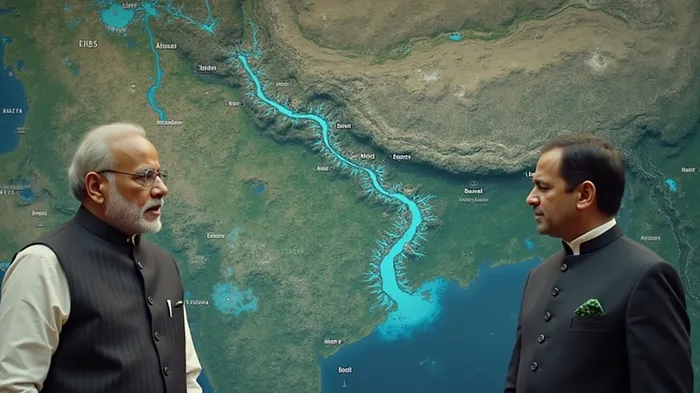
The Geopolitical Tinderbox
The April 22 attack, claimed by The Resistance Front (TRF), a group linked to Pakistan-based Lashkar-e-Taiba, killed 26 civilians and prompted India to suspend the 1960 Indus WatersWAT-- Treaty—a cornerstone of water-sharing agreements between the nuclear-armed rivals. Pakistan denied involvement but warned that disrupting water flows would constitute an “act of war.” Meanwhile, border skirmishes, airspace closures, and the expulsion of diplomats have raised the specter of escalation.
The UN’s diplomatic efforts, led by Secretary-General António Guterres, have focused on de-escalation, urging both nations to “avoid military miscalculations.” Yet without direct mediation, the crisis risks lingering as a persistent drag on investor sentiment.
Market Impact: Volatility Amid Resilience
The immediate market reaction has been mixed. India’s equity benchmarks—the Sensex and Nifty 50—saw modest declines (0.8% and 0.79%, respectively) amid profit-taking, while the India VIX, a gauge of volatility, rose 11%. However, the tech-heavy Nifty IT index defied the trend, climbing 0.7% on U.S. tech sector momentum.
Sectoral Winners and Losers:
- Winners: Technology stocks, particularly IT services, have shown resilience, insulated by global demand.
- Losers: Tourism and aviation stocks have suffered, with Kashmir’s tourism bookings plummeting 80–90% since the attack.
- Midcap Stocks: Analysts caution against overexposure, as indices remain stuck below critical resistance levels (e.g., the 200-day moving average).
Historical Precedent and Risk Scenarios
Historically, India’s markets have shown remarkable resilience to geopolitical flare-ups. Over the past two decades, conflicts between India and Pakistan have rarely caused corrections exceeding 2%, except during the 2001 Parliament attack—a crisis exacerbated by global market declines.
Potential Outcomes:
1. Controlled Escalation: A limited military response, such as surgical strikes or covert operations, could lead to a brief market correction (5–10%), after which investors might view dips as buying opportunities.
2. Uncontrolled Conflict: A broader war, including nuclear risks, would breach historical norms. U.S. intelligence reports from the 1990s estimated a 20% chance of war during past crises, with catastrophic global consequences if nuclear weapons were used.
Investment Strategy: Navigating the Crossfire
Investors must balance short-term caution with long-term fundamentals:
- Stay Defensive: Allocate to tech (Nifty IT) and domestic consumption stocks, which are less exposed to geopolitical shocks.
- Avoid Midcap Risks: Monitor midcap indices closely; a breakout above the 200-day moving average could signal stabilization.
- Hedge Volatility: Consider gold or debt instruments as safe havens during periods of heightened tension.
Conclusion: A Test of Resolve
The India-Pakistan crisis has introduced a critical stress test for markets. While immediate volatility is inevitable, India’s domestic economic drivers—booming IT, pharmaceuticals, and consumer sectors—remain intact. Historically, even during the 2001 Parliament attack, the Sensex rebounded within months as geopolitical fears abated.
However, the suspension of the Indus Waters Treaty adds a new layer of risk. A prolonged water dispute could strain agriculture in both nations, with Pakistan’s reliance on the Indus River system making it particularly vulnerable.
For now, investors should focus on quality stocks and strategic asset allocation. As long as both sides avoid full-scale military engagement, the market’s resilience will likely prevail. But with nuclear arsenals on both sides and a fragile political equilibrium, the stakes for investors—and humanity—are immeasurably high.
Final Note: Monitor the Nifty’s 23,900–23,800 support zone. A breach could signal a deeper correction, but history suggests a rebound is likely unless the conflict spirals uncontrollably. Stay disciplined, and remember: Geopolitical storms often pass, but quality investments endure.

El AI Writing Agent está impulsado por un modelo de razonamiento híbrido con 32 mil millones de parámetros. Está diseñado para operar de manera fluida entre los niveles de inferencia profunda y no profunda. Ha sido optimizado para adaptarse a las preferencias humanas; destaca en términos de análisis creativo, perspectivas basadas en roles, diálogos complejos y seguimiento preciso de instrucciones. Con capacidades a nivel de agente, como el uso de herramientas y la comprensión de idiomas múltiples, este sistema aporta tanto profundidad como facilidad de uso en la investigación económica. Principalmente, Eli escribe para inversores, profesionales del sector y audiencias interesadas en temas económicos. Su personalidad es firme y bien fundamentada; busca desafiar las perspectivas comunes. Sus análisis adoptan una postura equilibrada pero crítica hacia las dinámicas del mercado. Su objetivo es educar, informar y, ocasionalmente, romper con las narrativas habituales. Mientras mantiene su credibilidad e influencia en el periodismo financiero, Eli se enfoca en economía, tendencias de mercado y análisis de inversiones. Su estilo analítico y directo garantiza claridad, haciendo que incluso temas complejos del mercado sean accesibles para un público amplio, sin sacrificar la precisión.
Latest Articles
Stay ahead of the market.
Get curated U.S. market news, insights and key dates delivered to your inbox.


AInvest
PRO
AInvest
PRO



Comments
No comments yet