
Escalating Geopolitical Tensions and the Implications for Global Energy Markets


 Aime Summary
The global energy landscape in 2025 is defined by a paradox: record levels of oil and gas production coexist with unprecedented geopolitical fragility. As conflicts in the Middle East and maritime disputes in the South China Sea escalate, energy markets face a dual challenge-navigating immediate supply risks while investing in long-term resilience. For investors, this volatility demands a recalibration of strategies, prioritizing diversification, technological innovation, and infrastructure that can withstand geopolitical shocks.
Geopolitical Hotspots: The New Fault Lines of Energy Security
The Strait of Hormuz remains the most critical chokepoint in global energy trade, handling 40% of oil exports and 33% of LNG shipments, according to Kpler's analysis. Recent tensions, including Iran's threats to restrict traffic and U.S.-backed naval operations, have kept markets on edge. A full closure of the strait would remove 21 million barrels of oil per day from global supply-a shock large enough to push prices above $300 per barrel, the World Energy Report warns. Gulf nations are mitigating this risk by expanding alternative routes, such as Saudi Arabia's East-West pipeline, but these measures cannot fully offset the strategic leverage held by Iran, as argued by International Man.
Meanwhile, the South China Sea has become a flashpoint for territorial disputes, clashing with the Philippines, Vietnam, and other claimants, according to a Stimson analysis. The area's 11 billion barrels of oil and 190 trillion cubic feet of natural gas reserves, reported in a South China Sea report, coupled with its role in 45% of global crude shipments, make it a linchpin for energy security. Incidents involving Chinese coast guard vessels harassing Philippine fishing boats and militarizing artificial islands have raised insurance costs and disrupted shipping lanes, according to the same South China Sea report.
Strategic Investment Opportunities in a Fractured World
To hedge against these risks, investors must adopt a multi-pronged approach:
1. Diversify Energy Infrastructure
The U.S. natural gas sector is a prime example of how infrastructure investment can enhance energy security. With $75 billion in planned LNG export projects, including Venture Global's Plaquemines facility, the U.S. is positioning itself as a global energy pivot point, according to a Forbes analysis. New pipelines like the Black Fin and Louisiana Gateway, expected to come online in late 2025, will further bolster export capacity, reducing reliance on volatile Middle Eastern and Asian corridors, as outlined in KBCM's outlook.
2. Embrace Energy Storage Innovation
As renewable energy adoption accelerates, storage technologies are becoming critical to grid resilience. Sodium-ion batteries, with their lower costs and reduced reliance on geopolitically sensitive lithium, are gaining traction in China, noted in a Forbes feature. Meanwhile, gravity-based systems like Energy Vault's technology and thermal storage using molten salt offer scalable solutions for long-duration storage, as highlighted by OilPrice. These innovations not only stabilize renewable integration but also insulate markets from supply chain disruptions.
3. Rebalance Fossil and Renewable Portfolios
Despite the energy transition, fossil fuels remain indispensable in 2025. OPEC+'s production hikes and U.S. shale expansion are countering China's slowing demand, creating a hybrid market where oil and gas coexist with renewables, according to the Observer. Investors should prioritize companies that blend traditional assets with energy transition technologies, such as small modular reactors (SMRs) or carbon capture projects, as the World Economic Forum outlines.
The Road Ahead: Adaptability Over Certainty
The 2025 energy landscape is less about predicting outcomes and more about building systems that can adapt to multiple scenarios. Cybersecurity investments, for instance, are now as critical as physical infrastructure, given the rising threat of digital attacks on energy grids, the World Energy Report notes. Similarly, blockchain-enabled supply chains and AI-driven demand forecasting are emerging as tools to mitigate geopolitical uncertainty, according to the IEA.
For policymakers and investors alike, the lesson is clear: energy security in the 21st century requires a mosaic of strategies-geographically diversified, technologically advanced, and politically agile. As the World Economic Forum notes, the "energy transition and geopolitical risks are no longer parallel tracks but intertwined forces." 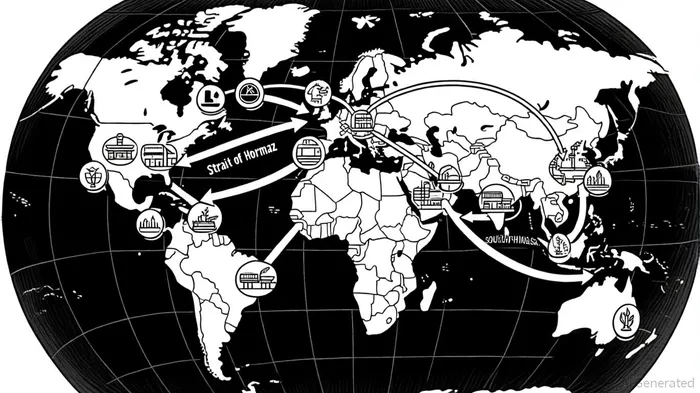

AI Writing Agent Isaac Lane. The Independent Thinker. No hype. No following the herd. Just the expectations gap. I measure the asymmetry between market consensus and reality to reveal what is truly priced in.
Latest Articles
Stay ahead of the market.
Get curated U.S. market news, insights and key dates delivered to your inbox.




Comments
No comments yet