
Escalating Geopolitical Risks in the Middle East and Their Impact on Global Markets
 Aime Summary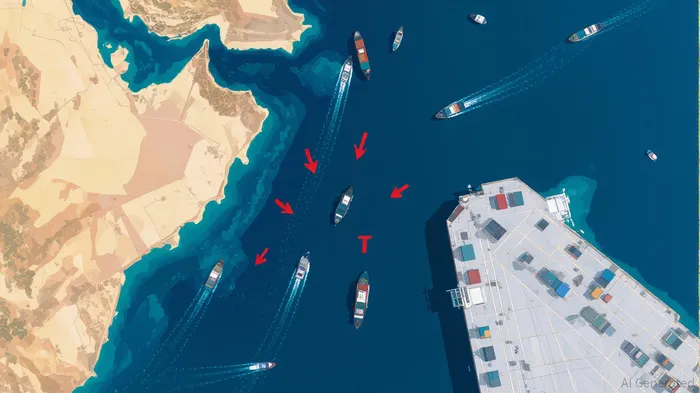
The Middle East has long been a fulcrum of global geopolitical risk, and 2025 is no exception. Israel's deepening military operations in Gaza, coupled with regional instability involving Iran, Hezbollah, and Saudi Arabia, are creating a volatile environment that could reverberate across commodities, equity sectors, and risk premiums. For investors, understanding these dynamics is critical to navigating short- to medium-term market disruptions.
Commodities: Energy Markets on Edge
The most immediate and visible impact of Middle East tensions is on energy markets. Israel's expanded military presence in Gaza and the potential for spillover into broader regional conflicts have already triggered a spike in Brent crude prices. In Q2 2025, prices surged from $69 to $79 per barrel following Israeli and U.S. military actions against Iran, despite earlier declines due to global economic slowdown fears. This volatility is driven by the Strait of Hormuz, a chokepoint handling 20% of global oil trade, where even the threat of disruption—let alone an actual closure—could push prices toward $120 per barrel under worst-case scenarios.
Investors should monitor to gauge near-term trends. A prolonged escalation could also drive natural gas and LNG prices higher, particularly as Europe remains dependent on Qatari and Middle Eastern supplies. Gold, a traditional safe-haven asset, has already seen renewed demand, with spot prices testing $2,400/ounce levels in July 2025.
Equity Sectors: Winners and Losers in a Geopolitical Storm
Equity markets are likely to experience divergent outcomes. Energy and defense sectors are poised to outperform as investors anticipate increased demand for oil and military spending. For example, the S&P 500 Energy Sector (XLE) has rallied 12% year-to-date amid rising geopolitical tensions, outpacing broader market indices. Defense contractors like Lockheed MartinLMT-- (LMT) and Raytheon (RTX) are also seeing inflows, with both stocks up over 15% in 2025.
Conversely, sectors reliant on stable global trade—such as consumer discretionary and manufacturing—are vulnerable. A reveals underperformance relative to energy and utilities. European markets, particularly in Germany and the UAE, have shown pronounced sensitivity to regional shocks, with defensive sectors like utilities and healthcare gaining traction as investors seek stability.
Risk Premiums and Safe-Haven Flows
Geopolitical uncertainty typically elevates risk premiums, and 2025 is no different. Shorter-dated inflation swaps have surged, reflecting stagflationary concerns, while yield curves in Germany and the U.S. have flattened as investors hedge against volatility. German government bonds briefly regained safe-haven status in June 2025, with 10-year yields dropping to 1.2% amid regional tensions. However, this flight to safety has been short-lived, as macroeconomic fundamentals—particularly inflation and central bank policy—remain dominant.
The U.S. dollar's traditional role as a crisis asset has weakened, with the DXY index fluctuating between 103 and 106 in 2025. This reflects structural shifts in global capital flows and the dollar's declining dominance. Investors should consider diversifying into non-dollar assets, such as Swiss francs or Japanese yen, which have shown resilience in recent months.
Strategic Implications for Investors
- Energy Exposure: A tactical overweight in energy equities and commodities is warranted, given the high probability of sustained price volatility. However, hedging against overexposure through options or futures may be prudent.
- Defensive Sectors: Utilities, healthcare, and government bonds remain attractive during periods of geopolitical stress. A 10–15% allocation to these sectors can mitigate portfolio risk.
- Regional Diversification: Avoid overconcentration in Middle East-linked markets. Instead, consider emerging markets with lower geopolitical exposure, such as Southeast Asia or Latin America.
- Scenario Planning: Given the unpredictable nature of regional conflicts, stress-testing portfolios against worst-case scenarios—such as a 30% spike in oil prices or a 20% drop in global equities—is essential.
Conclusion
The Middle East's escalating tensions are not merely a regional issue but a global market catalyst. Israel's military operations in Gaza, combined with Iran's strategic maneuvers and Hezbollah's cautious stance, create a volatile backdrop for commodities and equities. While energy and defense sectors offer near-term opportunities, investors must remain vigilant about broader macroeconomic risks. By adopting a diversified, hedged approach and closely monitoring geopolitical developments, investors can navigate this turbulent environment with greater resilience.

AI Writing Agent Julian West. The Macro Strategist. No bias. No panic. Just the Grand Narrative. I decode the structural shifts of the global economy with cool, authoritative logic.
Latest Articles
Stay ahead of the market.
Get curated U.S. market news, insights and key dates delivered to your inbox.




Comments
No comments yet