
Escalating Geopolitical Risks and Energy Security: Implications for Commodity Investors


 Aime Summary
The Chernobyl Incident: A Catalyst for Uranium Market Volatility
The February 2025 drone strike on the New Safe Confinement (NSC) at Chernobyl-a €1.5 billion structure designed to prevent radioactive leaks from the 1986 disaster-has introduced a new layer of uncertainty into uranium markets. According to a report by , the attack caused a fire that compromised the NSC's cladding and structural integrity, rendering it incapable of fulfilling its primary function of radiation containment. While radiation levels remain stable, the IAEA has warned of long-term risks to nuclear safety, emphasizing the need for urgent restoration efforts.
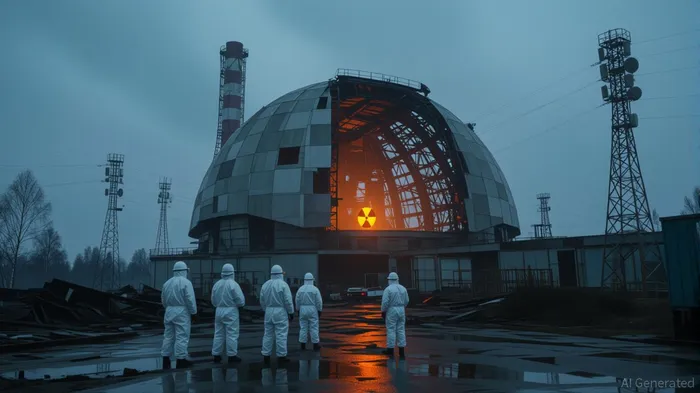
This incident has amplified existing structural vulnerabilities in the uranium supply chain. A 2025 analysis by highlights that uranium prices are already volatile due to geographic concentration of production (with Kazakhstan supplying over 40% of global output) and inflationary pressures in the nuclear fuel cycle. The Chernobyl strike adds a geopolitical dimension to these challenges, as investors now factor in the risk of deliberate attacks on nuclear infrastructure. The result is a market increasingly sensitive to geopolitical shocks, with utilities and governments prioritizing supply chain diversification.
Nuclear Policy Shifts: Safety, Resilience, and the Energy Transition
The attack has also forced a reevaluation of global nuclear energy policies. The 1986 Chernobyl disaster already established stringent safety protocols, but the 2025 incident has exposed new vulnerabilities in conflict zones. As noted in a study published in , the incident underscores the need for international cooperation to reinforce nuclear infrastructure and ensure transparency in crisis management.
Simultaneously, the energy transition is reshaping demand for nuclear power. With artificial intelligence and industrial electrification driving energy consumption, nuclear energy is being reconsidered as a low-carbon, reliable power source. However, the weaponization of nuclear facilities-branded as "nuclear terrorism" by advocacy groups-has complicated this narrative. Governments are now balancing the need for energy security with the imperative to protect nuclear sites from military targeting.
Rare Earth Minerals: The New Frontier of Supply Chain Vulnerability
While uranium markets grapple with geopolitical risks, rare earth minerals (REMs) face their own set of challenges. China's dominance in REM production and processing-accounting for 60% of global mining and over 90% of refining-has created a critical bottleneck. The IEA has warned that China's 2025 export controls on heavy rare earths and related compounds have disrupted supply chains for electric vehicles, wind turbines, and defense technologies.
The U.S. and its allies are responding with aggressive strategies to reduce dependency. The Biden administration's $134 million investment in domestic REM processing, coupled with the Trump administration's fast-tracked permitting and equity stakes in mining projects, signals a bipartisan push for energy independence. Similarly, the EU's €22.5 billion allocation for 47 mining and refining projects across 13 member states reflects a coordinated effort to diversify supply.
For investors, the rare earth sector offers high-potential opportunities. Companies like MP MaterialsMP-- (expanding magnet production with support from the Department of Defense and Apple) and Pilbara Minerals (enhancing lithium conversion capacity) are positioned to benefit from this shift. However, the sector remains fraught with risks, including price volatility and geopolitical tensions as China tightens its grip on exports.
The Investment Imperative: Balancing Risk and Resilience
The interplay of geopolitical instability and energy transition demands is reshaping commodity markets. Uranium and rare earth minerals, while distinct in their applications, share commonalities in their exposure to supply chain vulnerabilities and policy-driven shifts. Investors must adopt a dual strategy: hedging against geopolitical risks in uranium while capitalizing on the structural demand for REMs in the energy transition.
For uranium, the focus should be on companies with diversified supply chains and partnerships in politically stable regions. For rare earths, the priority is on firms with advanced processing capabilities and access to alternative sources, such as Brazil's emerging role in responsible mining. Both sectors require long-term capital commitments, as infrastructure and refining projects take years to scale.
Conclusion
The Chernobyl incident and the global response to rare earth supply chain risks illustrate a broader truth: energy security in the 21st century will be defined by the ability to navigate geopolitical turbulence while accelerating the transition to clean energy. For commodity investors, the path forward lies in strategic diversification, policy alignment, and a willingness to invest in resilience. As the world grapples with the dual crises of climate change and conflict, the markets for uranium and rare earth minerals will remain at the intersection of risk and reward.

Delivering real-time insights and analysis on emerging financial trends and market movements.
Latest Articles
Stay ahead of the market.
Get curated U.S. market news, insights and key dates delivered to your inbox.




Comments
No comments yet