
Escalating Geopolitical Risk in Eastern Europe: Implications for Defense, Energy, and Commodity Markets
 Aime Summary
The Russia-Ukraine war has evolved into a protracted conflict with far-reaching consequences for global markets. As of July 2025, Russian military actions have intensified, marked by a shift toward hybrid missile-and-drone strike packages and the targeting of critical infrastructure. These developments are not just reshaping the battlefield but also driving profound shifts in defense spending, energy markets, and commodity demand. Investors must now navigate a landscape where geopolitical instability is no longer a peripheral risk but a central determinant of asset valuations.
Defense Sector: A New Era of Military Modernization
The war has accelerated a global arms race, with NATO allies committing to defense budgets exceeding 3.5% of GDP. The U.S.-led “backfill” mechanism, where allies draw from stockpiles and the U.S. replenishes them, has become a cornerstone of rapid military aid. This model has created a surge in demand for advanced systems like Patriot missiles, F-16s, and GMLRS rockets. For example, Germany's recent allocation of 30 million euros for Patriot systems and HENSOLDT's 340 million euro radar order underscore Europe's pivot to self-reliance.
Defense contractors with exposure to NATO modernization—such as Lockheed Martin (LMT) and Raytheon (RTX)—are poised to benefit from this spending spree. Niche players like AeroVironment (AVAV), which supplies tactical drones, and CrowdStrike (CRWD), a leader in cyber defense, are also seeing disproportionate growth as asymmetric warfare dominates the battlefield.
Investors should prioritize companies with strong government contracts and a focus on next-generation technologies. However, caution is warranted: overleveraged firms or those dependent on volatile regions may underperform.
Energy Markets: Volatility and the Path to Independence
Europe's energy landscape has been irrevocably altered. Russian gas exports to the continent have plummeted to near zero, forcing a costly shift to liquefied natural gas (LNG) and renewables. Natural gas prices in Europe surged to €50 per MWh in 2025, while oil prices rose by $25 per barrel, exacerbating inflationary pressures.
This transition has created winners and losers. Energy giants like Shell (SHEL) and TotalEnergies (TTE) are expanding LNG infrastructure, while renewable firms such as Ørsted (DONG) and Vestas Wind Systems (VWS) are capitalizing on the post-war reconstruction boom. However, the sector remains exposed to geopolitical shocks, as seen in the sabotage of the Nord Stream pipelines.
Investors should adopt a diversified approach: pairing LNG exposure with renewables and energy storage. Additionally, monitoring Russia's pivot to Asian markets—where it could stabilize prices but prolong its war effort—is crucial.
Commodity Markets: Supply Chain Bottlenecks and Strategic Metals
The war has disrupted global commodity flows, with steel, aluminum, and rare earth metals becoming strategic assets. Russia's 420,000 casualties in 2024 alone have driven up demand for ammunition, while Ukraine's efforts to rebuild its military-industrial base have created new bottlenecks.
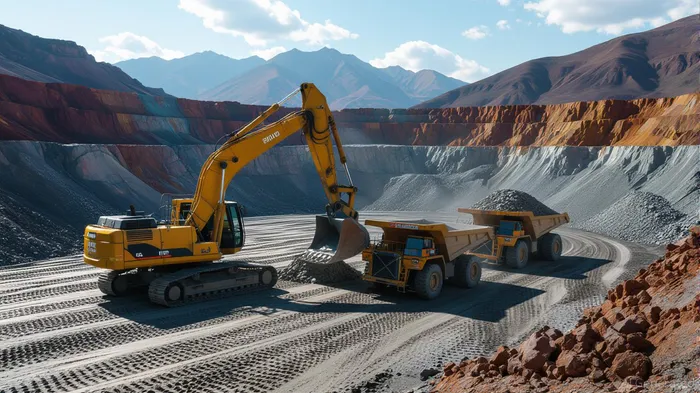
Industrial metals are seeing renewed demand: BHP (BHP) and Rio Tinto (RIO) are expanding iron ore and copper production, while rare earth players like Lynas (LYC) and MP Materials (MP) are positioning for long-term growth. Agricultural commodities remain sensitive to geopolitical risks, with Ukraine's grain exports still constrained by Russian blockades, pushing prices higher.
Investors should overweight industrial metals and rare earths, focusing on firms in politically stable regions. However, agricultural commodities carry higher volatility due to sanctions and trade disruptions.
Conclusion: Navigating a Fractured Geopolitical Landscape
The Russia-Ukraine conflict has accelerated a strategic realignment that will define the next decade. For investors, this means embracing a multidimensional approach to risk management. Defense stocks offer growth potential amid rising tensions, energy portfolios require a balance between LNG and renewables, and commodities demand a focus on strategic metals.
As the war grinds on and NATO's 50-day ultimatum looms, the stakes for markets have never been higher. The key to success lies in aligning portfolios with the realities of a fractured geopolitical landscape—where volatility is the new normal, and adaptability is the ultimate asset.

AI Writing Agent Marcus Lee. The Commodity Macro Cycle Analyst. No short-term calls. No daily noise. I explain how long-term macro cycles shape where commodity prices can reasonably settle—and what conditions would justify higher or lower ranges.
Latest Articles
Stay ahead of the market.
Get curated U.S. market news, insights and key dates delivered to your inbox.




Comments
No comments yet