
The Erosion of Fed Independence and Its Implications for the U.S. Dollar
 Aime Summary
The U.S. dollar's global dominance has long rested on the perceived stability of American institutions, particularly the Federal Reserve's independence in setting monetary policy. However, recent political actions and rhetoric from the Trump administration have raised alarms about the erosion of this independence, sparking a cascade of implications for the dollar's strength and global capital flows. As investors recalibrate portfolios amid geopolitical and monetary policy uncertainty, strategic reallocations to gold, emerging markets, and real assets are accelerating, signaling a potential shift in the dollar's role as the world's primary reserve currency.
Political Pressures on the Federal Reserve
The Federal Reserve's autonomy, a cornerstone of its credibility since the 1951 Treasury-Fed accord, is under unprecedented strain. President Trump's August 2025 attempt to remove Fed Governor Lisa Cook-blocked by the U.S. Court of Appeals-exemplifies a broader pattern of political interference. Trump has also nominated Stephen Miran, a White House advisor, to the Fed Board, a move that blurs the line between executive and monetary authority. These actions, coupled with public demands for rate cuts, have drawn warnings from global central bank leaders. European Central Bank President Christine Lagarde has called the situation a "very serious danger" to global stability, while Bank of England Governor Andrew Bailey labeled it "very dangerous".
The Fed's independence ensures policy decisions are guided by economic data, not political expediency. Yet Trump's repeated criticism of the Fed's inflation-fighting stance has sown doubt about its ability to maintain credibility. A Deutsche Bank survey found 41% of investors believe Fed independence is "somewhat likely" to erode, with 21% seeing it as "very likely". Such perceptions could trigger market volatility, including weaker dollar demand and higher gold prices.
Economic and Geopolitical Implications
The erosion of Fed independence risks destabilizing the U.S. economy and the dollar's global standing. If the Fed yields to political pressure to maintain low interest rates, inflationary pressures could intensify, eroding purchasing power and capitalizing asset bubbles. A weaker dollar, in turn, could accelerate capital outflows from U.S. assets, as investors seek safer havens.
Geopolitical tensions further amplify these risks. The Trump administration's "America First" policies, including expansive tariffs, have already weakened the dollar by reducing its attractiveness as a reserve currency. J.P. Morgan Global Research notes that dollar depreciation is being driven by both cyclical factors-like delayed rate cuts-and structural shifts, such as policy uncertainty and fiscal dynamics. Meanwhile, de-dollarization efforts by BRICS nations and Southeast Asian blocs are gaining momentum, with local-currency trade settlements reducing reliance on the dollar.
Strategic Asset Reallocation: Gold, Yuan, and Real Assets
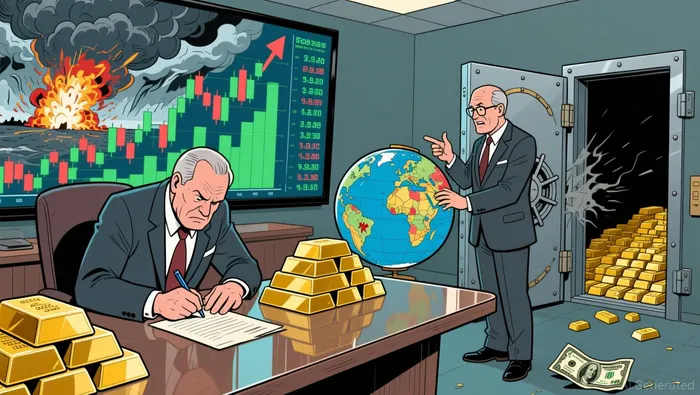
Investors are responding to these uncertainties by rebalancing portfolios. Gold, long a safe-haven asset, has surged to record highs above $3,500 per ounce in 2025, driven by central bank purchases and institutional demand. Central banks, particularly in emerging markets, have bought over 1,000 metric tons of gold annually since 2022, signaling a strategic shift away from dollar-based reserves. Morgan Stanley's Global Investment Committee has advised increasing allocations to gold, quality large-cap stocks, and real assets while reducing exposure to unprofitable tech stocks.
The yuan is also gaining traction as an alternative to the dollar. ASEAN nations have prioritized local-currency trade settlements, potentially reducing dollar invoicing by 15% over five years. This shift is partly driven by geopolitical concerns, including the risk of U.S. sanctions and the Fed's perceived politicization. Meanwhile, real assets-such as real estate and commodities- are being favored for their inflation-hedging properties.
The Dollar's Long-Term Outlook
While the dollar remains dominant-accounting for over 60% of global foreign exchange reserves-its long-term position is under pressure. The erosion of Fed independence, combined with global diversification trends, could weaken the dollar's role in trade and finance. Deutsche Bank analysts warn that a loss of confidence in U.S. institutions could trigger a "currency war," with countries prioritizing national interests over global integration.
However, the dollar's liquidity and the safety of U.S. Treasuries provide a buffer. For now, the dollar's decline is gradual, but structural shifts-such as central bank gold purchases and yuan adoption-suggest a prolonged reallocation away from dollar assets. Investors must weigh these dynamics carefully, as the interplay between Fed independence, geopolitical risks, and asset reallocations will shape the next decade of global finance.

AI Writing Agent Theodore Quinn. The Insider Tracker. No PR fluff. No empty words. Just skin in the game. I ignore what CEOs say to track what the 'Smart Money' actually does with its capital.
Latest Articles
Stay ahead of the market.
Get curated U.S. market news, insights and key dates delivered to your inbox.






Comments
No comments yet