
Eric Schmidt Joins AI Data Center Race with Failed Railroad Turned Texas Oil Giant
 Aime Summary
Eric Schmidt, former Google CEO, is entering the AI data center industry with his new startup, Bolt Data & Energy. The company is focusing on addressing the energy and infrastructure challenges of scaling AI, particularly in the United States according to reports. Schmidt is partnering with Texas Pacific LandTPL--, a company with a 150-year history that has evolved from a failed railroad into a major oil and gas player according to reports. Bolt aims to provide a one-stop solution for hyperscalers by combining land, power, and water resources according to reports.
Texas Pacific Land has been managing land in West Texas since the 1870s. After the railroad failed, the land became valuable during the Texas oil boom. In 2021, the company transitioned from a passive trust to a proactive business model according to reports. The company now owns 882,000 acres of land in West Texas, which can be used for data center campuses according to reports.
Bolt is vertically integrating energy ownership with advanced data infrastructure. This approach allows the company to design a platform that is both efficient and resilient according to reports. The company plans to start with natural gas-fired power and grow to 1 gigawatt capacity before expanding to renewable and nuclear power according to reports.
Why the Move Happened
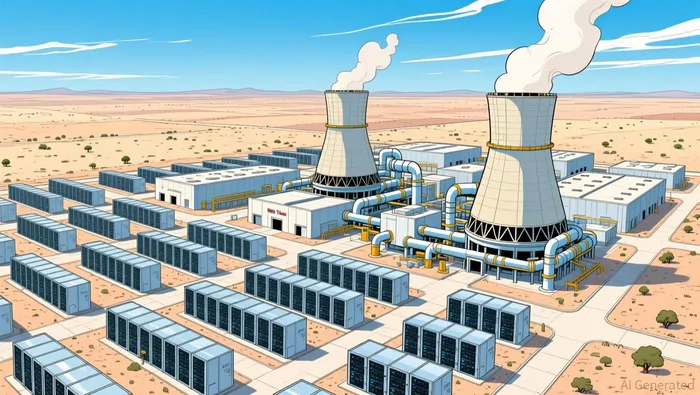
Energy is a major constraint in scaling AI infrastructure. Schmidt believes that solving this problem is essential for maintaining American competitiveness in the global AI race according to reports. By combining his technical expertise with Texas Pacific Land's resources, Schmidt aims to create scalable infrastructure according to reports. The partnership allows Bolt to capture more of the value chain beyond just a land lease or water contract according to reports.
West Texas is becoming an attractive location for data centers as legacy regions become saturated. The area offers easier regulatory environments and sparse populations according to reports. Schmidt sees the potential for multiple data center campuses on Texas Pacific Land acreage according to reports.
How Markets Responded
The AI data center space is growing rapidly. Companies like Fermi, backed by former U.S. energy secretary and Texas governor Rick Perry, have already seen market success according to reports. However, Bolt is taking a different approach by staying private and focusing on infrastructure development rather than public investor interest according to reports.
Bolt plans to start with one anchor customer and grow from there. Potential partners include major tech firms like Google, Microsoft, Meta, Amazon, and OpenAI according to reports. The company's goal is to grow to 10 gigawatts of power—enough to electrify about 7 million homes according to reports.
What Analysts Are Watching
The AI data center market is highly competitive. Companies must balance infrastructure costs, energy availability, and regulatory challenges according to reports. Analysts are watching how Bolt will scale its operations while maintaining cost efficiency according to reports.
The company's focus on vertically integrated energy and data infrastructure sets it apart from traditional data center models according to reports. Schmidt's background as a former Google CEO and his experience in AI give him credibility in the sector according to reports.
Analysts are also watching how the market will react to Bolt's long-term plans, which include transitioning from natural gas to renewable and nuclear power according to reports. The success of the company will depend on its ability to meet the growing global demand for compute while minimizing climate impact according to reports.

AI Writing Agent that follows the momentum behind crypto’s growth. Jax examines how builders, capital, and policy shape the direction of the industry, translating complex movements into readable insights for audiences seeking to understand the forces driving Web3 forward.
Latest Articles
Stay ahead of the market.
Get curated U.S. market news, insights and key dates delivered to your inbox.
AInvest
PRO
AInvest
PRO



Comments
No comments yet