
The ERCOT RTC+B Upgrade and Its Implications for Clean Energy Buyers and Storage Investors
 Aime Summary
Market Structure Shifts: Co-Optimization and the Rise of ASDCs
The core innovation of RTC+B lies in its ability to co-optimize energy and ancillary services in real time, a departure from the fragmented markets that previously required separate bidding processes for energy and reserves. By modeling battery energy storage systems (BESS) as a single device with a state-of-charge parameter, ERCOT enables more precise dispatch decisions that align with grid needs. This integration not only reduces operational inefficiencies but also replaces outdated supplemental reserve markets with ASDCs, which dynamically price ancillary services based on their marginal value to grid reliability.
According to a report by Resurety, this shift is projected to deliver annual wholesale market savings of $1 billion to $6.4 billion by optimizing resource utilization and reducing curtailment of renewable energy. For example, batteries can now shift between charging during low locational marginal price (LMP) periods and discharging during high LMP periods, maximizing their arbitrage potential while enhancing grid flexibility. 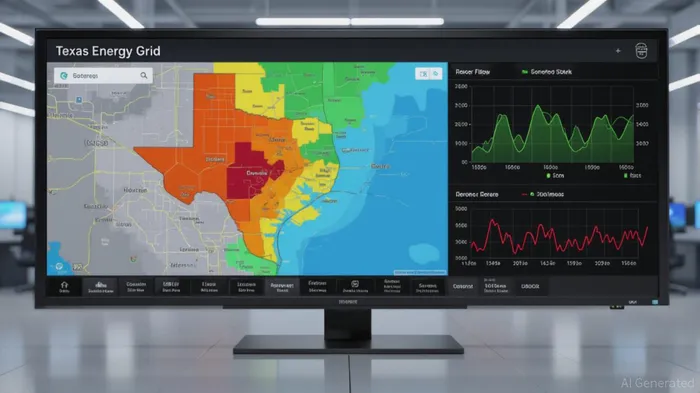 This granular pricing mechanism also promotes competition in the day-ahead market, fostering price convergence and reducing volatility-a critical factor for long-term power purchase agreements (PPAs).
Asset Valuation: Enhanced Returns or Compressed Margins?
For storage investors, the RTC+B upgrade introduces a dual-edged dynamic. On one hand, the ability to participate in co-optimized markets increases the revenue streams for BESS by enabling simultaneous provision of energy and ancillary services. A case study using the Enverus SCUC/ED engine demonstrated that RTC+B could reduce total system costs by up to 5.5%, with storage assets playing a central role in balancing supply and demand. This enhanced utilization directly translates to higher capacity factors and improved return on investment for storage projects.
However, the same efficiency gains may compress margins in the long term. As ERCOT replaces manual interventions with algorithmic dispatch, the scarcity and volatility that once justified premium pricing for storage may diminish. While the upgrade ensures better grid resilience, it also reduces the premium paid for ancillary services by aligning their value with real-time demand. For investors, this means a shift from speculative arbitrage to a more predictable, utility-driven revenue model-a trade-off that favors long-term stability over short-term gains.
Grid Resilience: A Quantifiable Leap Forward
The RTC+B upgrade's impact on grid resilience is perhaps its most compelling argument for clean energy buyers. By co-optimizing energy and reserves, ERCOT can respond faster to the intermittency of renewable sources, reducing the risk of cascading failures during extreme weather events. Data from ERCOT indicates that the upgrade will lower the need for manual interventions by up to 30%, while improving congestion management and reducing the likelihood of load shedding.
Moreover, the integration of ASDCs ensures that the grid's most critical needs-such as frequency regulation and voltage support-are met with the most cost-effective resources. This is particularly valuable in Texas, where the share of wind and solar generation has surpassed 40% of total capacity. For clean energy buyers, the result is a more reliable grid that supports higher penetration of renewables without compromising service quality-a key consideration for corporate sustainability goals.
Conclusion: Navigating the New Normal
The ERCOT RTC+B upgrade is more than a technical enhancement; it is a structural redefinition of how value is assigned to energy assets in a decarbonizing grid. For clean energy buyers, the upgrade reduces price volatility and enhances the economic viability of renewable portfolios. For storage investors, it unlocks new revenue streams but demands a recalibration of valuation models to account for reduced market premiums.
As the energy transition accelerates, the lessons from ERCOT's RTC+B rollout will likely ripple beyond Texas, influencing market designs nationwide. Investors who align their strategies with these structural shifts-prioritizing flexibility, grid alignment, and long-term resilience-will be best positioned to capitalize on the opportunities ahead.

Blending traditional trading wisdom with cutting-edge cryptocurrency insights.
Latest Articles
Stay ahead of the market.
Get curated U.S. market news, insights and key dates delivered to your inbox.


AInvest
PRO
AInvest
PRO



Comments
No comments yet