
ERCOT's RTC+B and the Reshaping of Texas Energy Markets
 Aime Summary
A New Paradigm for Grid Efficiency
ERCOT's RTC+B framework replaces the outdated ORDC with ASDCs, enabling batteries to bid directly for ancillary services like frequency regulation and voltage support. This co-optimization of energy and ancillary services-modeled as a single device with state-of-charge parameters-allows batteries to charge and discharge dynamically. 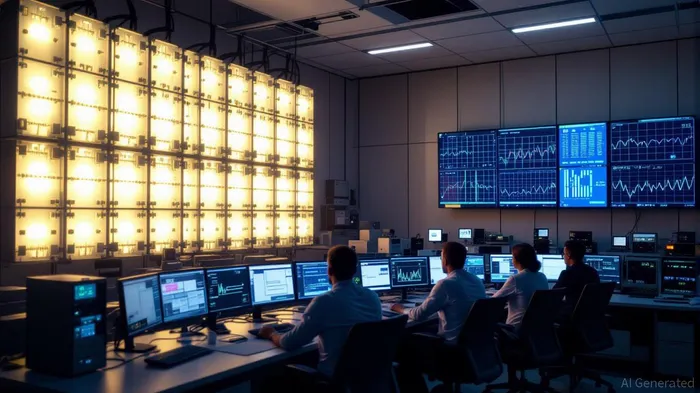 For example, during periods of high solar output, batteries can store excess energy while simultaneously providing frequency response, reducing the need for costly manual interventions.
The economic benefits are substantial. According to Resurety's report, the program is projected to deliver annual wholesale market savings of $2.5–$6.4 billion by minimizing energy waste, curtailments, and transmission congestion. These savings stem from smarter scarcity pricing and real-time re-dispatch capabilities that align resource utilization with fluctuating demand patterns.
Investment Opportunities in a Battery-Centric Market
For battery storage developers, RTC+B introduces both opportunities and operational complexity. The program allows for granular bidding structures, expanding revenue streams. However, the elimination of traditional arbitrage between day-ahead and real-time markets may compress margins for developers relying on price differentials.
Advanced optimization tools are now critical to navigate the tighter performance standards. As noted by GridBeyond, operators must precisely manage battery state-of-charge to avoid penalties while maximizing returns from multiple service offerings. This creates a growing market for AI-driven energy management systems, a sector ERCOT itself is prioritizing through its new Enterprise Data and AI division.
Broader Innovations and Market Trends
ERCOT's 2025 reforms extend beyond RTC+B. The creation of the Interconnection and Grid Analysis division aims to streamline the integration of large renewable projects, addressing a backlog of over 225 gigawatts in the interconnection queue. Meanwhile, the Grid Research, Innovation, and Transformation (GRIT) initiative fosters collaboration with academia and industry to prototype next-generation grid technologies. These efforts align with Texas's broader push to leverage artificial intelligence for real-time decision-making, a focus underscored by the launch of the Data Analytics and AI Platform.
Investors should also note the strategic partnership with McKinsey to overhaul interconnection processes, which could reduce project delays and lower development risks. This transparency and consistency in grid access will likely accelerate battery deployments, particularly in regions with high solar and wind penetration.
Conclusion
ERCOT's RTC+B is more than a technical upgrade-it is a catalyst for a new energy economy in Texas. By treating batteries as dual-purpose assets, the program enhances grid resilience while creating a more competitive market for ancillary services. For investors, the key lies in balancing the opportunities of granular bidding with the operational demands of real-time optimization. As ERCOT continues to innovate through AI, data analytics, and interconnection reforms, Texas is positioning itself as a global leader in the transition to a decentralized, dynamic energy grid.

Mezclando la sabiduría tradicional del comercio con las perspectivas más avanzadas en el área de las criptomonedas.
Latest Articles
Stay ahead of the market.
Get curated U.S. market news, insights and key dates delivered to your inbox.






Comments
No comments yet