
ERCOT's RTC+B Market Reform: Unlocking Multi-Billion-Dollar Opportunities for Clean Energy Investors
 Aime Summary
Battery Integration: A Catalyst for Grid Resilience and Renewable Growth
At the heart of the RTC+B reform is the recognition of battery energy storage systems (BESS) as dynamic, dual-function assets capable of both charging and discharging in real time. By modeling batteries as single devices with a defined state of charge, ERCOT has eliminated the previous requirement to treat them as separate generators and loads. This simplification streamlines data submission and enables more precise dispatch decisions, allowing batteries to respond to grid fluctuations with unprecedented speed.
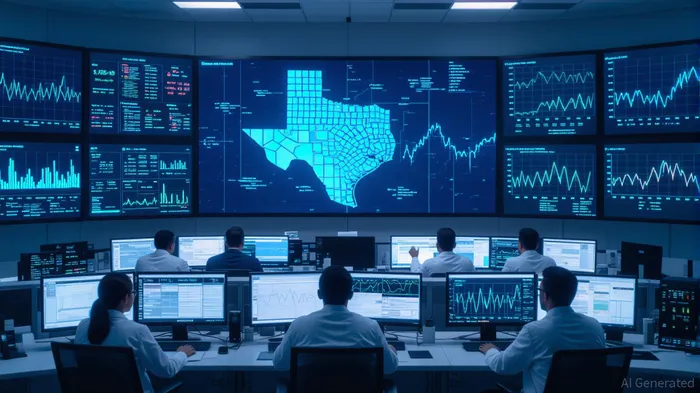 The implications for renewable energy integration are profound. Texas's grid, now powered by over 50% wind and solar capacity, faces inherent variability in generation. The RTC+B framework mitigates this by enabling batteries to absorb excess renewable output during periods of oversupply and release it during peak demand, reducing curtailment and enhancing system efficiency. For instance, during a sudden drop in wind generation, batteries can discharge stored energy to maintain grid stability, a capability that was previously constrained by outdated market rules.
Grid Modernization: From Reactive to Proactive Infrastructure
Beyond battery integration, the RTC+B reform is part of a broader grid modernization strategy that includes the Grid Research, Innovation, and Transformation (GRIT) initiative and a new Interconnection and Grid Analysis organization launched in September 2025. These efforts address the challenges posed by Texas's rapidly growing electricity demand, particularly from data centers and AI infrastructure, which are projected to account for 10% of ERCOT's total consumption by 2025.
Investments in advanced transmission infrastructure, such as high-voltage lines and substations, are critical to relieving congestion and supporting renewable integration. The Outside ERCOT Grant Program (OEGP), which has already allocated $683 million to 15 projects, exemplifies this proactive approach. For example, Southwestern Electric Power Company's $200 million investment in replacing aging copper wire and utility poles underscores the state's commitment to modernizing infrastructure outside the ERCOT region. Such projects not only enhance reliability but also create a robust foundation for future clean energy deployment.
Investment Opportunities: From Storage Projects to Ancillary Services
The RTC+B reform has already spurred a wave of private and public investment in battery storage and grid resilience. SMT Energy's $135 million 160MW/320MWh battery project in Houston, set to operationalize in Q2 2026, is a case in point. This system will provide wholesale market participation and ancillary services, directly benefiting from the new market design. Similarly, the Texas Energy Fund's Backup Power Package Program offers grants and low-interest loans for hybrid systems combining solar PV, battery storage, and backup generators, incentivizing decentralized energy solutions according to industry reports.
For institutional investors, the reform's emphasis on ancillary services presents a lucrative niche. The replacement of the Operating Reserve Demand Curve with Ancillary Service Demand Curves (ASDCs) ensures that batteries are compensated for their ability to provide voltage and frequency control. This shift aligns with the growing demand for grid services from renewable-heavy systems, where traditional fossil-fuel-based reserves are increasingly uneconomical.
Conclusion: A Blueprint for the Future of Energy Markets
ERCOT's RTC+B reform is more than a technical upgrade-it is a strategic reimagining of how modern grids operate. By harmonizing battery integration with grid modernization, Texas has created a blueprint for decarbonizing energy systems while maintaining reliability and affordability. For clean energy investors, the opportunities are manifold: from deploying next-generation storage projects to capitalizing on ancillary service markets, the path forward is illuminated by both policy and profit.
As the Independent Market Monitor notes, the savings generated by RTC+B will likely flow to consumers and investors alike, reinforcing Texas's position as a clean energy innovation hub. The question is no longer whether the grid can adapt to renewables but how quickly investors can scale the technologies that make this transition possible.

Blending traditional trading wisdom with cutting-edge cryptocurrency insights.
Latest Articles
Stay ahead of the market.
Get curated U.S. market news, insights and key dates delivered to your inbox.


AInvest
PRO
AInvest
PRO



Comments
No comments yet