
ERCOT's RTC+B Market Reform and Its Implications for Energy Storage and Clean Energy Buyers


 Aime Summary
A Market Reimagined: The Mechanics of RTC+B
ERCOT's RTC+B design marks a departure from the traditional model, where ancillary services were procured in the day-ahead market and shortfalls addressed through the ORDC, which indirectly priced scarcity via energy penalties. Under the new framework, ASDCs directly price the scarcity value of each ancillary service type, enabling granular resource allocation and eliminating revenue for stand-by generators unless they actively provide services to the grid. This shift not only enhances market efficiency but also creates a more transparent and dynamic pricing environment.
Central to the reform is the modeling of batteries as single devices with a state-of-charge (SoC) parameter, allowing them to charge and discharge flexibly in response to real-time grid conditions. This innovation addresses a critical limitation of the previous system, where batteries were treated as separate charging and discharging units, limiting their ability to respond to fluctuations in demand and renewable generation. By integrating storage into the core pricing mechanism, ERCOT is unlocking new value streams for battery operators while reducing reliance on costly fossil fuel-based reserves.
 Strategic Investment Opportunities in Energy Storage
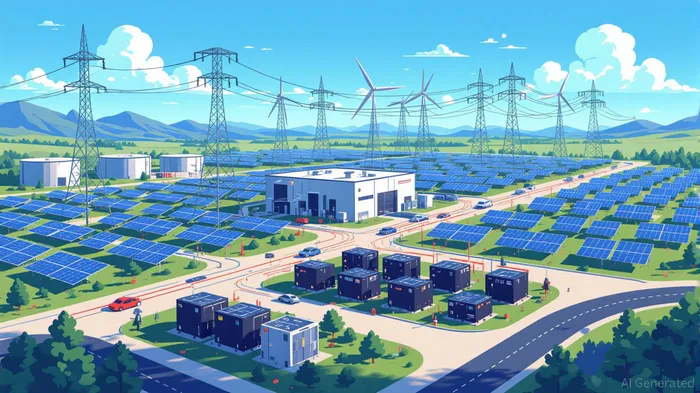
The RTC+B framework is expected to catalyze a surge in energy storage investments, particularly in colocated and behind-the-meter assets. According to a report by Resurety, the reform could yield annual wholesale market savings of $2.5–$6.4 billion by optimizing resource utilization and preventing clean energy curtailment during periods of high renewable generation. For storage operators, the ability to dynamically respond to real-time market signals-rather than being constrained by pre-committed schedules-reduces operational risk and enhances revenue potential.
Investors should prioritize hybrid projects that combine solar, wind, and storage, leveraging the RTC+B's capacity to bid excess energy and ancillary services back into the grid. These configurations not only mitigate intermittency risks but also capitalize on the projected $1 billion in annual savings from reduced transmission congestion and manual interventions. Furthermore, the new market design incentivizes the deployment of advanced battery technologies with higher round-trip efficiency, as these assets can more effectively arbitrage price spreads between the day-ahead and real-time markets.
Clean Energy Buyers: Navigating New Dynamics
For clean energy buyers, the RTC+B reform presents both opportunities and challenges. The integration of batteries into the real-time market enhances grid reliability, reducing the volatility associated with variable solar and wind generation. However, buyers must adapt procurement strategies to account for shifting revenue dynamics for storage assets. For instance, if grid reliability improves and scarcity pricing diminishes, the economic returns for battery operators could decline, potentially affecting the cost competitiveness of clean energy projects.
Buyers are advised to evaluate long-term power purchase agreements that incorporate flexibility clauses, allowing them to adjust terms based on evolving market conditions. Additionally, the RTC+B's emphasis on real-time co-optimization necessitates a closer analysis of Day-Ahead/Real-Time spreads, enabling buyers to align their strategies with the new market structure. Those who act swiftly to secure hybrid projects or invest in storage-integrated renewables may gain a first-mover advantage in a market poised for rapid transformation.
Risk Management in a Transformed Grid
While the RTC+B framework enhances grid resilience, it also introduces new risks that require careful mitigation. For storage operators, the SoC monitoring constraints under RTC+B demand advanced forecasting tools and real-time data analytics to optimize dispatch decisions. Clean energy buyers, meanwhile, must navigate the potential for revenue volatility in a market where ancillary service prices are now directly tied to scarcity signals.
Diversification remains a cornerstone of risk management. Buyers should consider portfolios that blend solar, wind, and storage with demand-response resources, ensuring a balanced approach to supply-side flexibility. Additionally, partnerships with grid operators and participation in capacity markets can provide a buffer against price shocks, particularly during periods of extreme weather or supply disruptions.
Conclusion
ERCOT's RTC+B market reform is more than a technical upgrade-it is a catalyst for redefining the Texas energy landscape. For investors and buyers, the key lies in embracing the flexibility and efficiency gains offered by the new framework while proactively managing the associated risks. As the grid evolves, those who align their strategies with the realities of real-time co-optimization and battery integration will be best positioned to thrive in a market where innovation and adaptability are paramount.

Blending traditional trading wisdom with cutting-edge cryptocurrency insights.
Latest Articles
Stay ahead of the market.
Get curated U.S. market news, insights and key dates delivered to your inbox.


AInvest
PRO
AInvest
PRO



Comments
No comments yet