
ERCOT's RTC+B Market Reform and Its Impact on Energy Storage Valuation
 Aime Summary
A Structural Overhaul for Grid Efficiency
RTC+B replaces the traditional Operating Reserve Demand Curve (ORDC) with Ancillary Service Demand Curves, which individually value different types of ancillary services, such as frequency regulation and voltage support. This change allows batteries to be modeled as single devices with a state of charge, enabling more precise dispatch decisions and reducing manual interventions by grid operators. According to a report by Resurety, the reform is projected to deliver annual wholesale market savings of $2.5–$6.4 billion by optimizing resource utilization and reducing curtailment of renewable energy. For investors, this efficiency gain could translate into lower operational costs and improved asset utilization, but it also introduces new uncertainties about revenue predictability.
Revenue Streams and Risk Profiles
Prior to RTC+B, battery operators in ERCOT primarily relied on ancillary service markets for income. However, post-implementation data indicates a nearly 90% decline in battery revenues from these services since 2023, reflecting market saturation and reduced volatility. This shift has forced operators to pivot toward energy arbitrage-buying low during off-peak hours and selling high during demand spikes-as their primary revenue stream. While this strategy offers flexibility, it also exposes investors to greater price swings and the need for sophisticated hedging mechanisms.
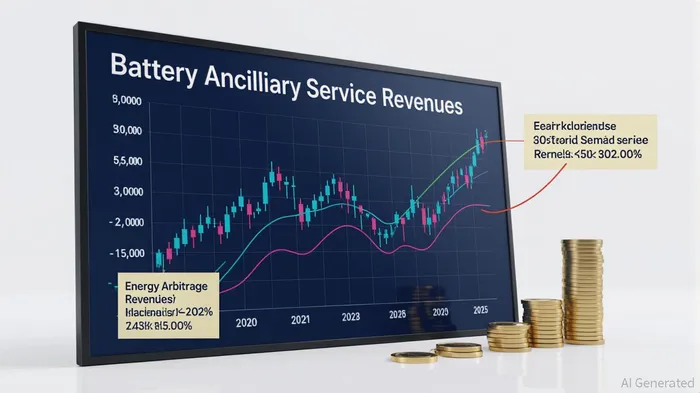
Ascend Analytics highlights the dual-edged nature of this transition. For instance, battery operators can lock in revenues during peak summer months (July and August), where spreads can reach up to $70 per MWh. Yet, the same volatility that creates these opportunities also necessitates robust risk management. As one case study from Enverus demonstrates, strategic redispatching of batteries in scenarios like solar generation drops or mid-day demand surges can reduce total system costs by 5.5%, illustrating the potential for enhanced returns through operational agility.
Quantifying the Impact on NPV and IRR
While specific NPV and IRR figures for post-RTC+B projects remain scarce, the reform's structural changes suggest a recalibration of investment metrics. The integration of batteries into real-time co-optimization likely improves their capacity to capture value during high-demand periods, thereby increasing cash flow predictability. However, the decline in ancillary service premiums and the cannibalization effect-where increased battery capacity suppresses real-time prices-could erode margins. For example, demand levels that once drove prices to $199/MWh now yield $59/MWh, a drop attributed in part to battery-driven grid stabilization.
Investors must also account for the long-term implications of ASDCs. By more accurately reflecting the scarcity value of ancillary services, these curves may reduce the premium pricing that batteries previously enjoyed. Yet, this same mechanism could enhance market liquidity and price convergence between day-ahead and real-time markets, potentially stabilizing returns over time.
Strategic Considerations for Investors
The RTC+B framework demands a nuanced approach to project valuation. Operators must now balance the trade-offs between energy arbitrage, ancillary services, and location-specific grid needs. For instance, batteries in regions with high solar penetration may benefit more from mid-day discharging to offset curtailment risks, while those in load centers could capitalize on peak-hour pricing.
Moreover, the reform's emphasis on real-time responsiveness underscores the importance of advanced forecasting tools and dynamic bidding strategies. As noted by PCI Energy Solutions, protocol updates-including modifications to energy offer curve caps and settlement processes-require operators to adapt their operational models to align with the new market structure.
Conclusion
ERCOT's RTC+B market reform represents a transformative step toward a more resilient and efficient grid, but its impact on energy storage valuation is neither uniformly positive nor negative. While the reform enhances operational flexibility and reduces system costs, it also introduces new risks tied to revenue stream volatility and market saturation. For clean energy investors, success will hinge on their ability to navigate these dynamics through strategic hedging, technological innovation, and a deep understanding of regional market conditions. As the Texas grid evolves, the RTC+B model may serve as a blueprint for other markets seeking to integrate storage at scale-providing both challenges and opportunities for those willing to adapt.

Blending traditional trading wisdom with cutting-edge cryptocurrency insights.
Latest Articles
Stay ahead of the market.
Get curated U.S. market news, insights and key dates delivered to your inbox.


AInvest
PRO
AInvest
PRO



Comments
No comments yet