
ERCOT's RTC+B Market Reform and Its Impact on Energy Storage Assets: Strategic Investment Positioning in the U.S. Energy Transition
 Aime Summary
The RTC+B Framework: A Paradigm Shift for Energy Storage
ERCOT's RTC+B model replaces the traditional Operating Reserve Demand Curve (ORDC) with Ancillary Service Demand Curves (ASDCs), enabling dynamic pricing of grid support services based on real-time scarcity values. This shift allows BESS to be modeled as single devices with a state-of-charge (SoC), rather than as separate charging and discharging resources. By co-optimizing energy and ancillary services in real time, the market can respond more efficiently to fluctuations in renewable generation, such as sudden drops in solar output or surges in wind production.
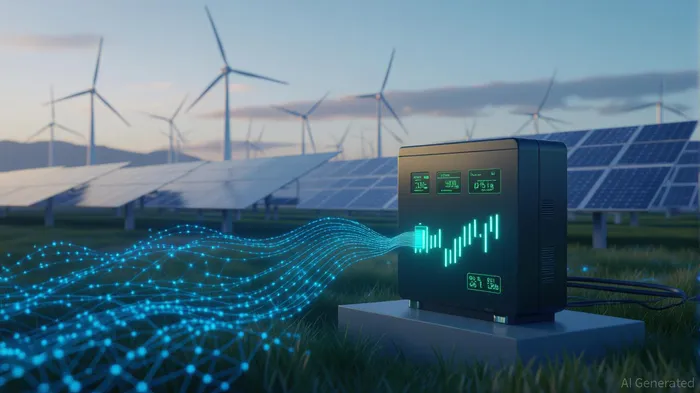 The benefits of this reform are substantial. According to a report by Resurety, RTC+B is projected to reduce total system costs by up to 5.5% annually, with potential savings of $2.5–$6.4 billion in wholesale market expenses. For storage providers, the ability to dynamically adjust dispatch based on grid conditions-rather than pre-committed profiles-reduces operational risks and enhances asset utilization. For example, in test scenarios, RTC+B enabled faster reallocation of thermal resources during unexpected solar generation dips, avoiding price spikes and maintaining grid stability.
However, the reform also introduces complexities. The increased efficiency and reduced volatility of the market may lower the premium prices that batteries previously commanded as backup resources. This dynamic underscores the need for investors to balance short-term gains with long-term strategic positioning.
Strategic Investment Opportunities in the Post-RTC+B Era
The U.S. energy storage market is poised for exponential growth, with installations expected to exceed 74 GW between 2024 and 2028, supported by the Inflation Reduction Act (IRA) and declining battery costs. For investors, the key lies in aligning projects with the operational realities of the RTC+B framework while navigating broader market trends.
Hybrid vs. Standalone Projects
Hybrid projects that combine BESS with renewable generation (e.g., solar + storage) are gaining traction due to their ability to optimize revenue streams through multiple market participation. In ERCOT, the RTC+B model enhances the value of such hybrids by enabling BESS to arbitrage energy and ancillary services simultaneously. Standalone storage projects, meanwhile, benefit from the flexibility to respond to real-time price signals but may face revenue compression in a more efficient market.Procurement and Financing Strategies
Power purchase agreements (PPAs) and tolling agreements remain dominant, particularly in Texas, where utilities seek to manage charging costs. However, hedging contracts are emerging as critical tools for mitigating revenue volatility in energy-only markets. For instance, fixed-price EPC contracts and build-transfer agreements are being adopted to secure cost predictability and streamline project ownership transitions.Technology and Operational Adaptation
The RTC+B framework demands advanced operational capabilities, including real-time bidding platforms and automated dispatch systems. As noted by Habitat Energy, operators must now shift obligations dynamically while aligning with client-specific risk preferences. This necessitates investment in integrated software solutions that optimize SoC management and market participation.Regulatory and Trade Considerations
While the IRA provides a robust policy tailwind, investors must also contend with emerging challenges. Tariffs on Chinese-origin batteries are set to increase in 2026, potentially impacting costs and deployment timelines. Additionally, new safety regulations may delay permitting for certain projects. Diversifying supply chains and prioritizing domestic manufacturing partnerships can mitigate these risks.
Global Context and Long-Term Outlook
The U.S. energy storage market is not operating in isolation. Globally, battery pack costs have fallen to $70/kWh in 2025, driven by manufacturing overcapacity and deflationary pressures. While this reduces project margins, it also lowers barriers to entry for new players. Emerging markets like Saudi Arabia, with its expanding solar and wind capacity, are becoming key growth hubs. For U.S. investors, this underscores the importance of global diversification and technology export strategies.
Meanwhile, domestic demand for grid stability is intensifying, fueled by the rise of data centers and AI-driven energy consumption. Energy storage remains a cornerstone of this transition, with ERCOT's RTC+B model serving as a blueprint for other regions. As noted by Wood Mackenzie, the U.S. achieved 40 GW of deployments by Q3 2025, though revenue challenges persist in markets like California and Texas. Investors must prioritize projects with diversified revenue streams and strong regulatory alignment.
Conclusion
ERCOT's RTC+B reform represents a generational leap for the Texas grid, unlocking new value streams for energy storage while redefining market dynamics. For investors, the path forward requires a nuanced approach: leveraging hybrid project models, adopting advanced operational technologies, and navigating regulatory and trade complexities. As the U.S. energy transition accelerates, those who align their strategies with the realities of real-time co-optimization and global market shifts will be best positioned to capitalize on the opportunities ahead.

La combinación de la sabiduría tradicional en el comercio con las perspectivas más avanzadas relacionadas con las criptomonedas.
Latest Articles
Stay ahead of the market.
Get curated U.S. market news, insights and key dates delivered to your inbox.


AInvest
PRO
AInvest
PRO



Comments
No comments yet